
Aprovechar la ciencia comunitaria para aumentar la educación y la restauración de las cuencas hidrográficas
San Diego, California, United States
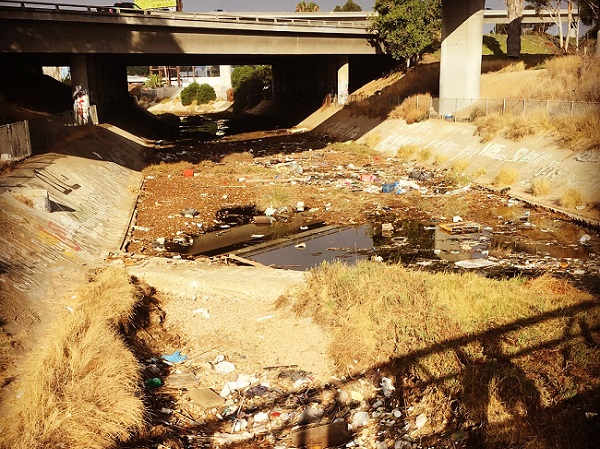
Photo Courtesy of Kristen Hurst
Resultados
El reto inicial:
How can we measure the amount of trash pollution in Chollas Creek? And how can we involve elementary school students in this process of measurement in a safe and fun way?
The Methods
- What methodology did you use to produce the project outcome(s) to address the community challenge?
We enlisted a classroom full of 4th graders to design and carry out a trash monitoring program. We modified the California State Water Resources Control Board’s SWAMP Rapid Trash Assessment to be kid-friendly and then had the students carry out trash surveys both on-site and through photography.
- What resources, tools, data, or other inputs did you need to complete the project, and how did you get these inputs?
We utilized iPads with cameras, Google Forms as survey tools, clipboards, 100-foot tape measures, and lots of input from our students at Carver Elementary. We wrapped up in the pandemic era with assistance from Public Lab, an open source community science platform.
- How often did the project team meet, and what was the overall time commitment involved?
The project team met in person and with students approximately once a month and spent just a couple hours a week on planning, emails, site visits, and other various forms of outreach through AGU Thriving Earth Exchange and Public Lab. The project team had monthly calls of 30 mins to 1 hour.
The Results
- OUTPUTS: What did you build or deliver through this project?
- We published our methodology and our modified trash assessment survey (Google Forms) on Public Lab: https://publiclab.org/notes/ikcal11/05-10-2020/trash-tography-mapping-trash-in-creeks-through-photography
- We wrote a blog post on the Thriving Earth Exchange website that lays out the complete story of our project:
https://thrivingearthexchange.org/trash-tography-san-diego-4th-graders-take-on-water-pollution/
- IMPACT: What was the impact of the project? Who is better off and how are they better off? Did your outputs inform decision-making, policy changes or actions taken by community members?
- Elementary age students have become fully aware that they are capable of identifying, and helping to solve, real word problems in their community. They have become environmental stewards and are empowered to share what they have discovered with people that are in a position to make changes at a city level.
- The students are now capable of passing on their knowledge of the survey methodology to their juniors, and thus continue the process of trash assessment surveys.
- How might other people use the outputs, impacts or lessons from this project?
- This methodology is reproducible for other creeks and can serve as a hands-on exercise for elementary school students.
Reflections
- List 1-3 things that contributed to your success.
- From the start, the team had a very clear and common understanding about the goal of this project in helping the students become environmental stewards. This common understanding helped develop excellent team cohesion and dedication.
- The team was very flexible in workload distribution. This was very helpful in building trust and in keeping the project running strong.
- The team had the right members: a creative and dedicated teacher, curious hard-working students, scientists who could help guide the research approach, and a strong project manager who kept everything moving forward.
- List 1-3 things you might do differently if you were to do it over again.
- It was a learning experience for us to realize how using digital tools like iPads really encouraged the students to take more initiative. If we had this foresight, we would have used digital tools from the start.
- Can you provide some advice for people pursuing similar community science projects?
- Look for ways to involve students in the project and give them some control (e.g., taking photos, naming the project, presenting results). You can even add their photos into the Google Forms surveys to highlight different kinds of trash.
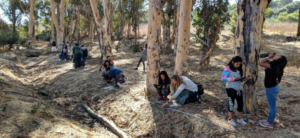
Trash-tography in progress
Students filling out the trash assessment Google Form for their 10-foot sections.
Descripción
Chollas Creek, which traverses through the neighborhood of Encanto, is a diverse community located in southeast San Diego, California. Today, there are as many as 35 languages or dialects spoken in local schools. The community faces multiple challenges including drug- and gang-related crime, and increasing homelessness. These issues cause many residents to feel unsafe in their neighborhoods. The median income is well below the San Diego average, and many residents experience asthma, obesity, diabetes, and other long-term health challenges often associated with poverty. Community members have little to no access to green space, and the creek system (Chollas Creek) that runs through the community to the bay is polluted, serving as a dumping ground for large trash items. The area has also recently become a location for a growing homeless population to set up encampments. While creek restoration has been a priority for the city of San Diego as a whole, southeast San Diego has been underserved and possibly even ignored by the city in these efforts.
The goal of the Chollas Creek project is to encourage the community and its leaders to invest in the creek’s future, recognizing its history and potential for becoming a safe, healthy, enjoyable, and educational place, through engaging in citizen science.
Project Impacts: By bringing the community together around a common goal, the community leaders will be able to bring the needs of this underserved community to the forefront of policy- and decision-makers. The data collected through the citizen science project will provide the evidence needed for the city and others to take action to clean up and restore the creek system—including providing the evidence needed to write a proposal for funds authorized under Proposition 68 to create equitable access to parks and open spaces. In addition, the project will result in a community that is more educated about their watershed, the impacts of their actions, and about how science works.
Project Outputs: In order to achieve these impacts, the scientist(s) will work with the community leaders to develop easy-to-understand and use protocols for data collection and data sharing that can be used widely by upper-elementary students and their parents. The results of the citizen science project will be celebrated at a major event timed to coincide with Earth Day, 2020, which will showcase student research projects, art projects for installation along the creek, and neighborhood design charrettes to re-envision the creek system. Key city council and district representatives will be invited to the celebration and feel empowered to elevate the community’s work in the eyes of the city.
Equipo del proyecto
Project Coordinator
Indraneel Kasmalkar is a PhD student in Computational and Mathematical Engineering at Stanford University. Neel’s research interests lie broadly in the realm of sea level rise. For his PhD dissertation, he studies the physics behind why Antarctica and Greenland are losing ice so rapidly and how it will impact coastal communities over the next few decades. Neel is also part of the Stanford Sustainable Urban Systems team which investigates the impacts of coastal flooding and sea level rise in the San Francisco Bay Area. In particular, he studies how flooded roads can change traffic patterns and further worsen congestion in the Bay Area.
Neel completed his Bachelor of Arts in Mathematics at University of California, Berkeley in 2015 and his Masters in Computational and Mathematical Engineering at Stanford University in 2018.
Liderazgo comunitario
Kristen Hurst is the community lead for the project. Hurst is an elementary science teacher and employee of the non-profit GroundWork-San Diego. She is deeply connected to the community, teaches at two elementary schools, and serves as a leader in neighborhood council. She also serves on the board of EarthLab, an outdoor climate action park serving over 3,000 students and their families each year. She already has connections with professors at University of California San Diego and San Diego State University and seeks to expand those connections to include scientists with expertise in hydrology, riparian ecosystems, and soils. Kristen is committed to coordinating and developing the neighborhood network and engaging her students and other teachers in the citizen science project.
Science Liaisons
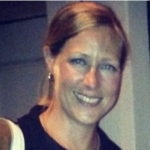
Kirstin Skadberg is the president of Kirstin Skadberg Consulting, an environmental consulting company, and an adjunct professor at the University of San Diego where she teaches Environmental Assessment Practices. She got her Ph.D. in ecology from the UC Davis/SDSU Joint Doctoral Program in 2008, where she studied CO2 exchange between the atmosphere and coastal oceans. After the Ph.D., Kirstin began working for an environmental consulting firm and has been in the business ever since. In 2017 she started her own company. Kirstin also works with Groundwork San Diego, a nonprofit organization which aims to improve conditions in the Chollas Creek watershed in south San Diego. Working with Groundwork, Kirstin has managed two creek restoration projects and contributed to educational programs and grant proposals.
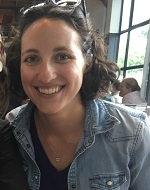
Carly Ellis is a Field Researcher at the Center for Western Weather and Water Extremes, part of Scripps Institution of Oceanography in San Diego. She is extremely passionate about soggy science (i.e. wading into streams and rivers during precipitation events to collect water quality samples and measure stream flow velocities). Prior to landing at Scripps, she earned her Masters in Environmental Science and Policy at Plymouth State University, where she completed her thesis on the temporal variability of aluminum concentrations in stream water. She attributes much of her success to her undergraduate research experiences in the Finger Lakes Region of New York and in the Hubbard Brook Experimental Forest of New Hampshire. When Carly is not working, she is likely hiking, skiing, napping, or attempting to surf!
Status:
Complete,
Location:
California,
San Diego,
Managing Organizations:
Thriving Earth Exchange,
Project Categories:
Natural Resources,
Project Tags:
No tags