
Assessing and Educating about Flood Risks and Building Resilience: Empowering Vermont’s Refugee and Immigrant Community
South Burlington, Vermont, United States
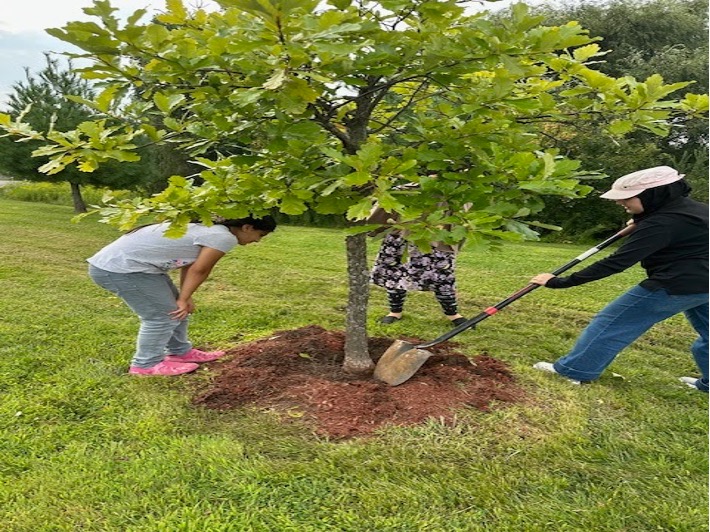
This project addresses the critical flooding challenges facing refugee and immigrant communities in South Burlington, Vermont due to climate change, where relocation is not viable. The project team will develop a comprehensive flood risk assessment toolkit that empowers residents with preparedness strategies and recovery plans while providing educational resources about climate change impacts. Through this initiative, community members will gain vital knowledge and practical tools to enhance their resilience against flooding, ultimately creating a more informed and better-prepared community. This project will establish a sustainable model for climate adaptation that can be replicated in other vulnerable refugee communities, fostering long-term resilience and community empowerment.
Resultados
Resumen del proyecto
This project served the Islamic Society of Vermont, a grassroots organization supporting approximately 6,000 immigrants and refugees from Syria, Iraq, Sudan, Palestine, Yemen, and other Middle Eastern and Asian countries residing in the greater Burlington area of Vermont. Following the devastating floods of 2023, many community members experienced significant home damage, loss of garden plots, and financial hardship. Compounding these challenges, language barriers and socioeconomic vulnerabilities left the community with limited access to disaster preparedness resources and government support.
The project team worked to address these gaps by co-developing multilingual educational materials and emergency preparedness resources tailored to the community’s specific needs. Activities included a community focus group to assess flood experiences and barriers, the development and distribution of a flood resilience toolkit, the assembly of flood response equipment kits available for community lending, and a hands-on flood preparedness and recovery workshop held in August 2025. Key findings from the focus group were also shared with local government leaders across Burlington, South Burlington, Winooski, and the Vermont state legislature to elevate the community’s needs in flood response planning.
Scientific expertise was provided through the AGU Thriving Earth Exchange program, which connected community leader Dr. Mona Tolba with Community Science Fellow Dr. Kyungsun Lee, project advisor Dr. Lesley-Ann Dupigny-Giroux, and Dr. Kathryn Semmens of the Nurture Nature Center. Together, they connected the project with scientists from Lake Champlain Sea Grant at the University of Vermont, including Dr. Kris Stepenuck, Samantha Grant, and Alison Spasyk. As locally based scientists with deep knowledge of Vermont’s flood landscape and community context, the UVM team is well positioned to continue this partnership and plans to work with Dr. Tolba on future flood resilience initiatives in the region.
Over the course of the project, approximately 70 community members participated across focus group interviews, workshops, training sessions, and educational events. Key outcomes included the development and distribution of a multilingual flood resilience toolkit, the assembly of flood response equipment kits available for community lending, and the delivery of a hands-on flood preparedness workshop in August 2025.
Resultados del proyecto
All materials and resources developed for this project can be found here: Thriving Earth Exchange
- Community Focus Group (July 2025)
- A focus group was hosted by UVM via Zoom with community members who had faced flooding. This provided an opportunity for the researchers to understand barriers of community members that influenced their awareness of and ability to prepare for flooding, the nature and impacts of flooding they faced, and the challenges they had to overcome following flooding. As community members could opt to participate anonymously (e.g., without turning on their camera), this method for hosting the focus group provided a safe space for people to share their flooding stories. The focus group was supported by Dr. Tolba who provided Arabic translation to aid community members in telling their flooding stories.
- ‘Key Themes from Community Focus Group on Flooding’ Handout: Key Themes from Community Focus Group on Flooding.pdf
- Community members want to feel that their voices are heard and their experiences matter in shaping flood response and policy. A handout was developed that summarized the key flooding-related needs and challenges identified by the community during the focus group, that would be shared with local leaders. UVM researchers also identified possible solutions that might be implemented to address challenges the community members identified (e.g., actions flood response agencies or organizations might take to help minimize or mitigate community members’ future flood impacts).
- Flood Resilience Resource Toolkit: Workshop Resources
- Educational materials that described simple yet practical methods individuals and families could follow to prepare for and respond to floods were developed and assembled into a Flood Resilience Toolkit. The goals of creating this toolkit were to reduce the potential that community members would be caught off guard by unexpected flooding in the future, to minimize impacts of future flooding, and ultimately, to increase community members’ resilience to flooding. These kits were given to community members. Key materials were translated into Arabic to increase accessibility of information to community members.
- Flood Response Kits: Thriving Earth Exchange Flood Equipment Guide.docx
- Flood response kits were assembled and are now available to the community through the Islamic Society of Vermont. The kits included Wayne Waterbug pumps, garden hoses, shop vacuums (wet dry vacuum), squeegees, and dehumidifiers. They are available library lending style to help individuals respond to flooding.
- Flood Resilience Workshop (August 2025): Flood Preparedness and Recovery Workshop_August5.pdf
- A workshop focused on flood preparation, response, and resilience practices was developed and delivered to community members. Community members learned how to sign up for emergency alerts, strategies to reduce property damage due to flooding that can be implemented inside and outside the home, and safe clean up practices after flooding occurs. During the workshop, materials that were a part of the ‘Flood Resilience Resource Toolkit’ were discussed. The workshop included a demonstration of the ‘Flood Response Kits’ that are available to ensure community members were aware of and felt confident in their ability to use the available resources to respond to flooding.
- Contact with Local Leaders
- The ‘Key Themes from Community Focus Group on Flooding’ handout (linked above) was sent to local leaders from Vermont Emergency Management, the Vermont Climate Action Office, the Burlington City Council, South Burlington City Council, Winooski City Council, Chittenden County Senators, and the Vermont State Representatives for Burlington, South Burlington, and Winooski. This outreach enabled local leaders to be aware of the community’s key flood preparation, response and resilience needs.
Community Impact
Short-Term Impacts
This project strengthened community resilience and preparedness by equipping participants with practical tools for disaster response and recovery. Through the funding, community members received hands-on resources that can be deployed both before and after flood events. Participants also gained critical knowledge about climate change and the causes of flooding, as well as concrete skills for addressing immediate post-flood health hazards such as mold remediation. Additionally, the project introduced participants to FEMA’s emergency alert systems alongside state and local notification platforms; all participants have since downloaded and activated these tools.
Long-Term Impacts
Beyond immediate preparedness, this project elevated awareness of the distinct vulnerabilities faced by low-income communities in the context of natural disasters, vulnerabilities that are frequently overlooked in government disaster response frameworks. While public resources tend to prioritize infrastructure and commercial interests, this project shed light on how events such as basement flooding or damage to a community garden can represent catastrophic losses for families with limited means. By centering these lived experiences, the project contributed to a broader, more equitable understanding of disaster resilience that communities can continue to build on.
Acknowledgements
Lake Champlain Sea Grant staff were supported in part using Federal funds under NA22OAR4170120 from the National Oceanic and Atmospheric Administration National Sea Grant College Program and in part using non-federal funds from the University of Vermont Extension. The project team also gratefully acknowledges the Nurture Nature Center, particularly Dr. Kathryn Semmens, for their expertise in flood risk communication and informal science education, and for their support.
Future Plans
Dr. Tolba shared that, “Climate change is an ongoing issue that is not ending soon. Therefore, we need to keep tackling the ongoing changes by providing continuous education and literacy programming, encouraging our community to move to renewable energy, teaching them about watersheds/rain gardens, and how to reduce emissions. We need to ensure disadvantaged communities are included in decision making and have access to resources.”
As such, the community and the University of Vermont, through the Lake Champlain Sea Grant Program and University of Vermont Extension, will continue to partner on this issue. Plans are being made to repeat the flood preparedness, response, and resilience training in summer 2026 to bring the knowledge and skills to more individuals and families that are vulnerable to flooding in the area.
In addition, Lake Champlain Sea Grant submitted a complementary grant proposal to another community organization, the Lake Champlain Basin Program, to document and share success stories of flood mitigation and adaptation efforts throughout the Lake Champlain Basin to educate residents on the range strategies being implemented to make communities more resilient to flooding. In addition, and in direct response to this Thriving Earth Exchange project, the grant proposal seeks to develop a Residential Flood Resilience Guide to provide information to individuals and families about how to prepare for and prevent damage from flooding at home. This would allow for development of a more in depth and user-friendly guidance document (e.g., supported by graphic design) and additional flood preparedness, response and resilience outreach to families and individuals vulnerable to flooding in the Lake Champlain Basin.
Descripción
Acerca de la Comunidad
The community served by this project is the Islamic Society of Vermont, a grassroots group located in Chittenden County that supports approximately 5,000 immigrants and refugees from Middle East Asian countries such as Syria, Iraq, Sudan, Palestine, and Yemen. Most members reside in the urban areas of Winooski, Burlington, and South Burlington, where they face unique challenges stemming from socio-economic vulnerabilities and language barriers. Following the devastating floods of 2023, many families witnessed damage to their homes, lost essential garden plots, and suffered significant financial hardships—highlighting their urgent need for targeted support and effective climate resilience strategies. The Islamic Society of Vermont’s key priority is to strengthen the community’s ability to prepare for and recover from climate-related disasters. By partnering with the Thriving Earth Exchange, they hope to tap into scientific expertise and co-develop practical tools that address flood preparedness, recovery, and long-term climate resilience. Historically, while state and municipal climate offices have engaged the community through listening sessions, direct assistance and sustainable solutions have been limited. This project seeks to build on that momentum, ensuring that the community’s voices are heard and translated into actionable plans.
Sobre el proyecto
The community would like to learn and implement practical flood prevention and recovery strategies and share these methods with over 5,000 refugee and immigrant members, so they can safeguard their homes and food security from climate disasters, which will result in a more resilient and informed community. To advance this goal, the project will focus on creating accessible flood prevention guidelines, developing emergency preparedness kits, establishing community education programs, and organizing hands-on training sessions. These efforts will be driven by refugee community members themselves, alongside volunteer scientists from the Thriving Earth Exchange, the Nurture Nature Center, local climate experts, and community leaders who understand the specific needs of immigrant populations.
Key outputs of this project include multilingual emergency preparedness guides, home protection tutorials, community workshops, and straightforward educational materials on climate change and flood mitigation. The outcomes will be twofold: first, community members will gain the practical skills needed to mitigate flood risks and recover quickly after disasters; second, they will deepen their understanding of broader climate change impacts, enabling them to respond proactively to issues like mold, mosquito-borne diseases, and future extreme weather events.
Ultimately, this initiative will have a significant impact by providing a replicable model for supporting vulnerable refugee communities in achieving climate resilience. In doing so, it will help bridge gaps between government disaster response plans and real community needs, ensuring that local voices and experiences guide sustainable, scientifically informed solutions.
Calendario e hitos
Phase 1: Community Assessment and Planning (February – March 2025)
- February 2025: Recruit and onboard scientific partners with expertise in flood prevention and climate resilience
- March 2025: Hold initial community meetings and needs assessment; establish working groups and begin collaborative planning with scientists
Phase 2: Tool Development and Education (April – June 2025)
- April 2025: Scientists and the community co-create a draft emergency preparedness toolkit
- May 2025: Develop multilingual educational materials with scientific guidance
- June 2025: Launch hands-on training sessions for home flood protection and recovery
Phase 3: Implementation and Community Engagement (July – September 2025)
- July 2025: Pilot testing of flood prevention strategies with scientific support
- August 2025: Expert-led garden protection workshop series
- September 2025: Conduct emergency response drills; gather community feedback; refine toolkit and resources
Phase 4: Evaluation and Sustainability (October – December 2025)
- October 2025: Assess program effectiveness with scientists and community members
- November 2025: Finalize revisions to materials and resources
- December 2025: Conclude the project and develop a sustainable action plan to maintain and expand the initiative
Equipo del proyecto
Community Leader

Dr. Mona Tolba is originally from Egypt and speaks both Arabic and English. She holds two PhDs—one in Veterinary Medicine and another in Food Science—and currently serves as a Public Health Inspector at the Vermont Department of Health. Over the past 12 years, she has worked closely with refugees and immigrants as an interpreter, translator, and cultural broker, fueling her passion for raising cultural awareness.
As a member of the Just Transition Subcommittee on climate, Dr. Tolba has consistently advocated for centering the voices of underprivileged communities, emphasizing how climate change disproportionately affects immigrants and refugees in poor housing conditions. She believes true resilience starts with empowering community members to prepare for climate disasters rather than relying solely on governmental plans and post-disaster relief. Her vision is to cultivate a stronger, more resilient community—one that is ready for the next flood or extreme weather event, instead of waiting to address its devastating impacts after the fact.
Científicos comunitarios

Kris Stepenuck is Associate Director and Extension Leader for Lake Champlain Sea Grant and Extension Associate Professor in the Rubenstein School of Environment and Natural Resources at the University of Vermont in the US. For more than 20 years, she has collaborated with community members to understand and address the impacts of land use and a changing world on surface waterbodies. Kris holds a Ph.D. in Environment and Resources from the University of Wisconsin-Madison. In her free time, she enjoys hiking, skiing, and bicycling.

Samantha Grant is a master’s student in the Rubenstein School of the Environment and Natural Resources, in the Watershed Education Science and Policy (WESP) Lab. Her research is focused on mapping intersections between social vulnerability, and flood risk for communities in Vermont. Samantha earned her B.S. in Environmental Science with minors in geospatial technologies, and community international development from the University of Vermont. During her time at the University of Vermont, she studied abroad in Iceland focusing her studies on carbon capture in basalt formations, and Arctic ecosystems. Her research interests are in finding data driven solutions to mitigate climate hazards, with a special interest on communities who experience increased vulnerability.

Alison Spasyk is the Flood Resilience Educator, with Lake Champlain Sea Grant. In this role, Alison helps promote enhanced municipal flood resilience by providing outreach and education on the topics of science-based watershed management and public policy supporting flood resilience. She assists in the development and delivery of educational programs and tools that help community leaders and the public understand and effectively prepare for and respond to the impacts of flooding within the Lake Champlain basin and Vermont.
Becario científico comunitario

Dr. Kyungsun Lee is an assistant professor of Geography in the Department of History at the University of Arkansas at Little Rock. As an interdisciplinary environmental social scientist, she investigates the governance of socio-technical systems for urban water sustainability transitions, with a particular focus on the social and political dimensions of unconventional freshwater resources such as desalination, wastewater reuse, and stormwater management. Her recent work explores how desalination technology is developed, diffused, and implemented, as well as the roles of key stakeholders and their networks in these processes. Dr. Lee earned her Ph.D. in Environmental and Natural Resources Policy from the State University of New York College of Environmental Science and Forestry, completed her postdoctoral training at Texas A&M University, and holds both a master’s degree in the History of Science and a bachelor’s degree in Chemical and Biological Engineering from Seoul National University.
Collaborating Organizations
The Nurture Nature Center

The Nurture Nature Center is a non-profit located in Easton, PA, that supports building community resiliency to environmental risk by leveraging the power of informal science education, art-centered approaches to learning, and community dialogue and networking. Started in response to flooding in Easton, NNC has over a decade of work related to flood outreach, education, and social science research. NNC is currently an AGU TEX Community Science Hub and Dr. Kathryn Semmens is the AGU TEX Community Science Hub coordinator. Dr. Semmens is also the Science Director at NNC with a background in earth and environmental sciences and 10 years of experience with social science research related to risk communication.
Dr. Lesley-Ann Dupigny-Giroux: Advisor

Dr. Dupigny-Giroux is a Distinguished Professor of Climatology in the Department of Geography & Geosciences, the Vermont State Climatologist since 1997, and the President of the American Association of State Climatologists from 2020-2022. In 2020, she was appointed by the Vermont House of Representatives to the Vermont Climate Council as a member with expertise in climate change science. An applied climatologist by training, Dr. Dupigny-Giroux’s research interests intersect a number of interdisciplinary fields including hydroclimatic natural hazards and climate literacy, climate services, geospatial climate and land-surface processes, all within the context of our changing climate. She is an expert in floods, droughts and severe weather and the ways in which these affect the landscape and peoples of Vermont and the US Northeast. A Fellow of both the American Association of Geographers, as well as the American Meteorological Society, Dr. Dupigny-Giroux is currently serving 3-year terms on three committees/boards of the National Academies of Science, Engineering and Medicine, including the Board of Atmospheric Sciences and Climate.
Status:
Complete,
Location:
South Burlington,
Managing Organizations:
Nurture Nature Center,
Thriving Earth Exchange,
Project Categories:
Climate Resilience,
Flooding,
Project Tags:
No tags