
Developing a Feasibility Study for Community Choice Aggregation Renewable Energy Options
Arlington, Virginia, United States
Results
Project Title: Developing a Feasibility Study for a potential Community Choice Aggregation in Arlington County
Location: Arlington, VA
The Team:
- Lily Hahn
- Katherine Kulik
- Mikael Matossian
- Morris Meyer
- Nick Scherer
- Silvia Zinetti
The team would like to thank and acknowledge Eric O’Shaughnessy and Jenny Heeter for providing peer review of the feasibility study.
The Initial Challenge
The project’s goal was to carry out a feasibility study for the creation of a Community Choice Aggregation (CCA) program to provide options for the residents and businesses of Arlington, outside the incumbent electric utility, to choose their rate plans and energy sources.
The Methods
We divided the study content into several chapters and assigned each member of the team with the chapter aligned with their specific expertise on the subject. Some team members worked together on a particular subject as well. This way the group could work independently and more efficiently on the assigned area. Every couple of weeks we would meet all together to discuss the advancement of the research, updates, challenges and how to overcome them, and brainstorm for future steps.
To complete the project, we needed a lot of different data inputs, most of them we were able to retrieve from the internet from public databases. Arlington County staff also pointed us on where to find some local data on energy consumption from their public database. For the greenhouse gas emissions chapter, we also used EPA eGRID data and Dominion’s Integrated Resource Plan. Previous CCA feasibility studies in California were also useful as a reference.
We met regularly, every couple of weeks for around 1 hour and a half, alternating face-to-face and virtual meetings (via Skype). We created a group on Whatsapp for daily exchanges and quick questions. We also used emails at times. We shared a folder in Dropbox where we would upload all our documents for storage.
The Results
The outputs of the project include the following:
- Feasibility Study (April 2020). A 110 pages research report divided into nine chapters, along with an executive summary of around 20 pages, summarizing the key results, conclusions and recommendations.
- Webinar, including Webinar’s Presentation (May 11, 2020). We held a 1 hour webinar presenting the findings and conclusions of the feasibility study on May 11, 2020. The webinar was recorded.
All deliverables can be find at this link: https://www.virginiacleanenergy.org/cca-feasibility-study.html
We are hoping our study will support Arlington County while evaluating the different options to reach their 100% renewable energy and carbon neutrality goals. This study and our webinar may also inspire CCA development in other communities.
Other municipalities in the Commonwealth of Virginia and in other states could use the methodology and outputs from the feasibility study and adapt them to the local context to investigate the feasibility of developing CCAs programs in their communities.
Reflections
Things that contributed to success:
- Team work
- Combination of different skills and expertise among the team
- Very good communication
- Passion to the subject
- Learning new things
- Want to be part of the solution
- Support from the AGU team along the process
Things you might do differently if you were to do it over again:
- Start early to address the challenges to avoid delays
Advice for people pursuing similar community science projects:
- We benefited from the open communication with the Arlington County staff about our project and taking advantage of their public data as well as other publicly available datasets, but access to data remained an overarching challenge for many of the chapters. Future projects would benefit from identifying data gaps early on and working closely with local government and other entities to obtain relevant data.
Description
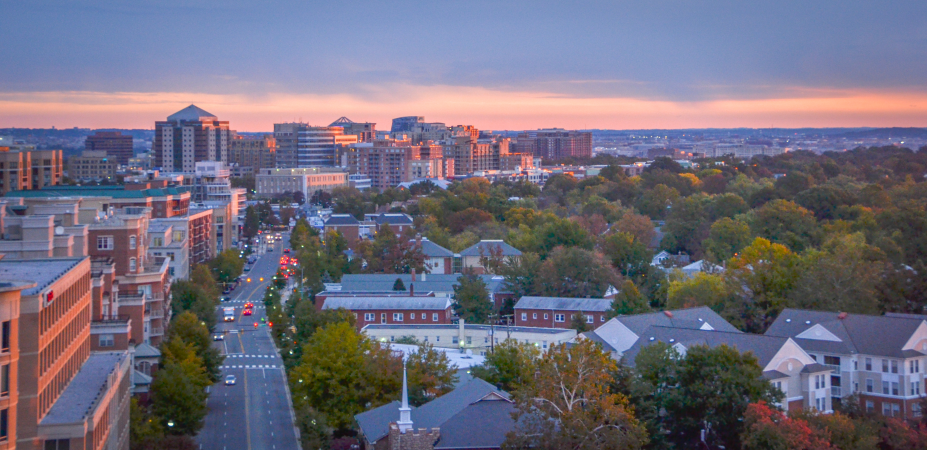
Arlington, VA is an urban county of about 26 square miles directly across the Potomac river from Washington, DC without any incorporated towns or cities. As of January 1, 2018, Arlington had an estimated population of 225,200, reflecting an increase of 8.5% since 2010. In 2006 CNN money ranked Arlington as the most educated city in 2006 with 35.7% of residents having held graduate degrees. The county is governed by a five-person County Board; members are elected at-large on staggered four-year terms. The Board appoints a County Manager, who is the chief executive of the County Government.
The project’s goal is to carry out a feasibility study for the creation of a Community Choice Aggregation (CCA) program to provide options for the residents and businesses of Arlington, outside the incumbent electric utility, to choose their rate plans and energy sources. Arlington was chosen due to its transformative Community Energy Plan, though Arlington is not an official partner of this effort. This project will be accomplished through a study on CCA options to explore how Arlington could procure, generate and competitively fund renewable energy projects and inform policymakers and ratepayers of opportunities for renewable energy generation. The options to use of solar photovoltaic (PV) and solar thermal energy in buildings has become increasingly cost-effective over time and aids in energy resilience to peak load events at the macro level when coupled with advanced energy storage. This project will align with Arlington County’s commitment to climate action and stand in accordance with the goals outlined in the Paris Agreement, and may serve as a demonstration model for similarly-urbanized communities or those with comparable energy use patterns and volumes.
Project Team
Community Leads
Virginia Clean Energy is lead by local residents Silvia Zinetti and Morris Meyer. Virginia Clean Energy is a new nonprofit fiscally sponsored by LEAN Energy US, a 501 (c)(3) organization based in California.
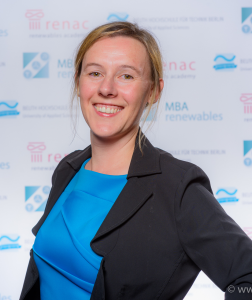 Silvia Zinetti is a sustainable energy expert and has worked on several international projects on renewable energy and energy efficiency. Among others, she specializes in alternative business models for counties, cities and local governments wishing to shift towards more sustainable energy, and achieve efficiency, resiliency, and sustainability. Silvia recently obtained the title of Certified Energy Procurement Professional (CEP) with the Association of Energy Engineers, and a professional certificate on Energy Innovation and Emerging Technologies from Stanford University. She holds a Master of Business Administration (MBA) focusing on Renewable Energy and Energy Efficiency from the Beuth University of Applied Sciences Berlin. Silvia is co-founder and President of Virginia C lean Energy, a new nonprofit organization, whose mission is to accelerate the expansion of renewable energy and energy efficiency via Community Choice Aggregation (CCA) in Virginia.
Morris Meyer is the senior systems architect at Wärtsilä-Greensmith and has designed and commissioned hybrid solar with storage system for Tucson Electric Power and the nation’s reference energy storage research platform for EPRI at LGE-KU in Harrodsburg, Kentucky. Morris has worked for Steve Jobs at NeXT and with Marconi Award winner Paul Baran at Com21. He recently earned a Master in Renewable Energy and Sustainability Systems from Penn State, and holds a Bachelor’s in Computer and Electrical Engineering from Purdue University. Morris is the co-founder and Chief Technology Officer of Virginia Clean Energy.
Scientific Partners
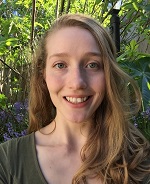
Lily Hahn studies Atmospheric Sciences as a graduate student at the University of Washington. She graduated from Yale with a B.S. in Geology & Geophysics, and has investigated atmosphere-ocean-ice interactions through research internships at the Woods Hole Oceanographic Institution and the University of Oslo. She looks forward to applying her research experience and background in solar planning and outreach towards assessing environmental benefits of Community Choice Aggregation in Arlington, VA.
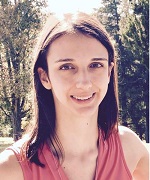
Katherine Kulik is from the greater Boston area and graduated from Harvard College in 2015, with a concentration in the History of Science and secondary in Earth and Planetary Sciences. She traded in pre-med for data science, and now works as an analyst for a boutique quantitative investment firm. She has also been involved with the Environmental Data and Governance Initiative and is interested in all things energy, environment, and data. Additionally, she loves long-distance bicycling, short-distance running, hosting through District Trivia, and exploring DC’s rooftop and restaurant scene.
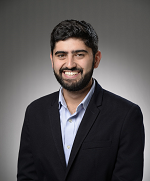
Mikael Matossian is a technical associate working in Tetra Tech’s international energy services unit. Prior to moving to Washington, DC, he worked on climate action plan reporting and greenhouse gas inventorying for the City of Santa Monica, CA and solar PV and energy efficiency system design at the United Nations Development Programme in Copenhagen, Denmark. He is fascinated by the intersection of technology and policy in the energy space, and is excited about mapping out pathways to community choice aggregation in Arlington, VA. Mikael holds a Master of Science degree in Energy Science, Technology and Policy from Carnegie Mellon University.

Nick Scherer is an energy analyst with a wide range of experience in energy & sustainability including energy efficiency, demand response, energy management, deregulated energy markets, renewable & distributed generation, and emerging technologies. He graduated with a BA in Economics from the University of Michigan and an MS in Engineering Management with a concentration in Energy Systems from the University of North Carolina at Charlotte. He is supporting Virginia Clean Energy as a research analyst.
Collaborating Organizations
Status:
Complete,
Location:
Arlington,
Virginia,
Managing Organizations:
Thriving Earth Exchange,
Project Categories:
Climate Change,
Project Tags:
No tags