
Mapping Climate Resilience & Organizational Impact: Building GIS and StoryMap Capacity in Baltimore Neighborhoods
Baltimore, Maryland, United States
Brief Description
Baltimore Green Justice Workers Cooperative (BGJWC), in partnership with the Clean, Green & Beautiful Community Change Collaborative (CG2B3C), has launched an 18‑month community-driven research and training project that combines Geographic Information Systems (GIS) and interactive StoryMaps to visualize local climate and organizational impacts/solutions across nine frontline communities/neighborhoods. With support from several GIS experts and a GIS Fellow, community organizations are learning to create and interpret digital maps that highlight organizational impact or climate issues (i.e. heat islands, flooding, and pollution) while showcasing green infrastructure and climate resilience. The project builds the capacity of residents to use data and storytelling for advocacy, planning and community engagement.
Description
About the Community:
The Clean, Green & Beautiful Community Change Collaborative (CG2B3C) represents a network of 13 neighborhood associations and community-based nonprofits working in nine historically marginalized and underserved Baltimore communities to address the adverse effects of climate change and build community resilience. CG2B3C partners share a common commitment to advancing environmental justice by reducing disproportionate environmental burdens and expanding equitable access to green infrastructure and climate-resilience solutions across Baltimore neighborhoods. Baltimore’s legacy of redlining and racially and economically discriminatory policies has concentrated risk in frontline communities, often resulting in fewer trees, more impervious surfaces, and heightened vulnerability to extreme heat and flooding. CG2B3C connects residents to resources and tools that help them face environmental challenges, strengthen resilience, and nurture relationships. Partnering with Thriving Earth Exchange expands the community’s capacity to understand and visualize environmental risks through GIS technology, building skills that support climate planning and advocacy.
About the Project:
Baltimore Green Justice Workers Cooperative (BGJWC), in partnership with Clean Green & Beautiful Baltimore Community Change Collaborative (CG2B3C), is leading a community-centered GIS and StoryMap project designed to build technical and storytelling capacity with 12 CG2B3C partners (Baltimore-based nonprofits). The project aims to assist CG2B3C partners in creating GIS StoryMaps as a way to document, analyze, and communicate (1) environmental conditions and climate vulnerabilities in their communities; and/or (2) overall community impact of their organizations’ work.
This project is intentionally designed with accessibility, adaptability, and long-term impact in mind. The project team is working with CG2B3C partners to establish a flexible framework for community-based GIS and storytelling that can evolve. To support this goal, the team hopes to build long-term relationships with Esri and other GIS professionals while simultaneously developing protocols in the long term to adapt training materials for free and open-source GIS platforms. This dual approach ensures that communities with varying levels of technical capacity and financial resources can adopt, modify, and sustain the mapping and storytelling practices introduced through this project.
The project aims to remain useful well beyond its initial implementation in Baltimore. This approach positions the work as a scalable model for other cities and community organizations seeking to (1) introduce GIS technology to community residents; and (2) use spatial data and narrative tools to understand and communicate local environmental challenges and/or organizational impact..
Anticipated Outcomes:
- Short & Mid-Term outcomes include: Introduction to ESRI StoryMaps via CG2B3C retreat trainings and hands-on technical assistance, resulting in the completion of individual StoryMaps for 12 community-based organizations (CG2B3C partners) and increased capacity to use and interpret GIS data (geographic & environmental).
- Long-term outcomes include:
- Institutionalized GIS capacity across partners: CG2B3C partners routinely use ESRI tools (e.g., ArcGIS Online, dashboards, StoryMaps) to plan, implement, and evaluate EJ and climate-related projects, not just for a one-time product.
- Data-driven decision-making: CG2B3C partners learn how to apply climate resilience and demographic data (heat, flooding, tree canopy, impervious surface, health burden indicators) to identify priority blocks, set measurable goals, and track progress over time.
- Stronger community engagement and accountability: StoryMaps become living communication tools used in meetings, outreach, and coalition work, improving transparency, resident trust, and participation in project design.
- Improved funding competitiveness: CG2B3C partners leverage StoryMaps and GIS outputs in grant applications, reports, and presentations, resulting in stronger proposals and increased community resources.
Timeline:
Phase 1 (Months 1–3):
- GIS fellow recruited
- Hosted a GIS day (received one license in return)
- Community leads attended the North Star GIS Annual Conference 2025
- Building an example Story Map displaying the organizational impacts of BGJWC
- Developed a relationship with ESRI
- Connected with GIS experts
- Identified communities/neighborhoods of focus
Phase 2 (Months 4–17)
- One month of focused engagement per partner organization, including workshops and StoryMap creation.
Phase 3 (Months 17)
- Consolidate all of the CG2B3C Climate Resilience & Organizational Impact StoryMaps onto the CG2B3C website.
- Create QR codes for all of the CG2B3C StoryMaps
Phase 4 (Month 18):
This final phase sets the foundation for BGJWC to explore additional resources (funding & technical) to move toward completing the anticipated long term outcomes; Additionally, it creates the opportunity to explore resource sharing beyond CG2B3C partners.
Project Team
Community Leads

Lynn Pinder is a Co-founder of Baltimore Green Justice Workers Cooperative (BGJWC), a community-based nonprofit working to advance green workforce development and climate resilience in Baltimore’s frontline communities. With more than three decades of experience in adult education, environmental justice and nonprofit advocacy, Lynn is a Baltimore native and a passionate advocate for community collaboration and cooperative economics. She works to connect people and organizations with the resources, partnerships, and training to build healthier and more resilient neighborhoods. In addition to her work with BGJWC, Lynn is an author, church deacon and a FAA-authorized Drone Pilot. Her work is grounded in a belief that sustainable change happens when communities most impacted by environmental and economic inequities are equipped with the knowledge, tools, and collective power to shape their own future.

Krishna Chaitanya Mummadi is a GIS Fellow at BGJWC, and He is currently pursuing a Master’s in Geographical Information Systems (GIS) at the University of Maryland, Baltimore County. Krishna’s work focuses on spatial analysis, geoprocessing, and geospatial visualization. As a GIS Fellow, he is working with community-level data and saw how geospatial tools can support local environmental initiatives at a granular level. Through this Thriving Earth Exchange cohort, we aim to prepare 12 StoryMaps for CG2B3C organizations focused on environmental sustainability and climate resilience. I enjoy translating complex data into maps, StoryMaps, and infographics to make information more accessible and meaningful for communities.
Community Science Fellow
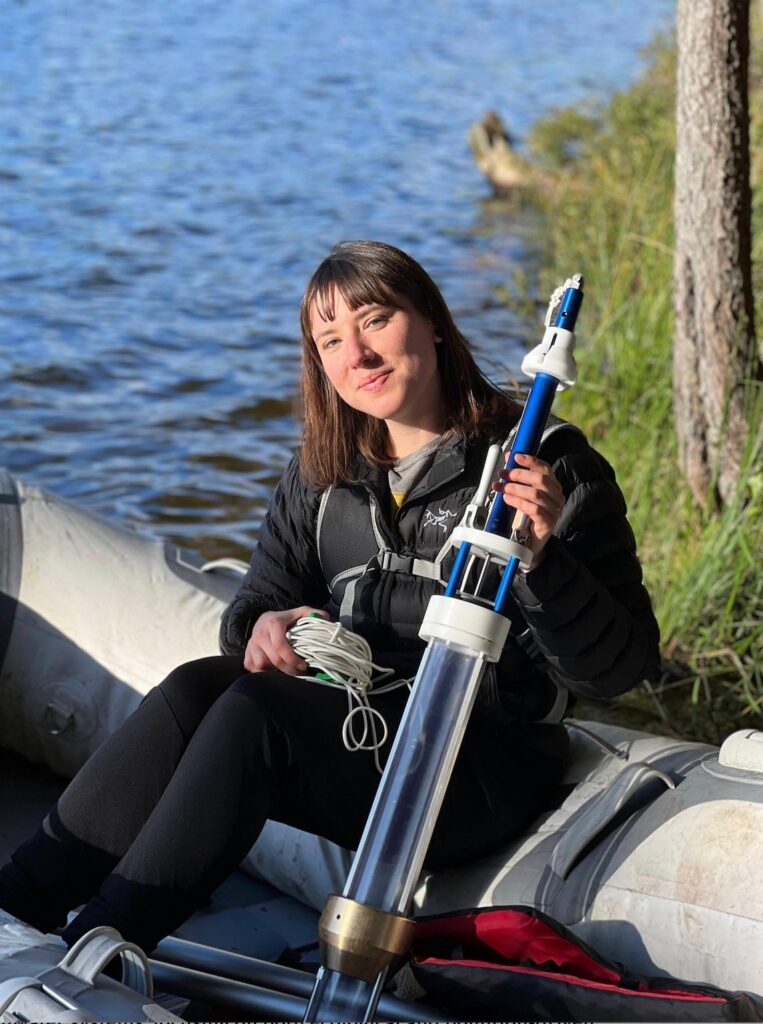
Sky Hooler is a PhD candidate in Climate Science at the University at Albany, SUNY. Her research integrates paleolimnology, geochemical analysis, and hydrologic modeling to investigate how human-driven stressors, such as climate warming, acid rain, logging, and pollution, have triggered ecological tipping points and recovery in Adirondack, NY lake ecosystems. Her dissertation reconstructs long-term lake records to analyze resilience and regime shifts in freshwater systems, focusing on both ecological and pollution-driven change. Skylar previously worked on an international collaboration reconstructing a 60,000-year paleoclimate record from India to study monsoon variability through lake sediments. She has also participated in national science-policy training through the American Meteorological Society in Washington, D.C. Dedicated to science communication and inclusion, Skylar has organized community climate events, mentored students, and served as a student ambassador promoting accessibility in the geosciences. Her work bridges research, policy, and public engagement to advance sustainable water management and climate resilience.
Scientist Wanted
BGJWC is seeking scientists or technical experts who are GIS/StoryMap proficient with strong community-centered storytelling experience to help CG2B3C partners meet our long-term goals for this project. The ideal partners understand not only how to analyze spatial data, but how to translate it into visual narratives that uplift community knowledge, lived experience, and local priorities. Remote participation is welcome, though familiarity with Baltimore’s environmental and social landscape is advantageous.
Desired Skills & Qualifications
- Experience with GIS platforms (QGIS, ArcGIS, Google Earth Engine) and digital storytelling tools, especially ArcGIS StoryMaps
- Ability to translate technical data into engaging, community-informed narratives
- Understanding of urban climate risks, including heat, flooding, and air pollution
- Strong communication and facilitation skills, especially with community-based organizations
- Experience in participatory science, co-production of knowledge, or community-engaged research
- Commitment to equity, inclusion, and culturally grounded collaboration
- Interest in mentoring and supporting a GIS intern and/or GIS Fellow
- Creative mindset and willingness to experiment with different storytelling formats
Collaborating Organizations
Clean Green & Beautiful Baltimore Community Change Collaborative (CG2B3C) Partners included on this project:
- North Avenue Hilton Street and Business Task Force
- YES/Langston Hughes Community Business Resource Center
- Community Law Center
- Fayette Street Outreach
- Greater Mt. Holly Community Development Corporation
- Hilltop 4100 Neighborhood Association
- The People’s Association of Oliver Community
- Maryland Justice Project
- Network for Developing Conscious Communities
- Langston Hughes Community Business Resource Center
- Plantation Park Heights Urban Farm
- Baltimore Green Justice Workers Cooperative
Community Resource Partners included in this project:
- Trevor Clark, Baltimore City District 10 Council Office
- Dr. Linda Loubert, Morgan State University
- Dr. David Padgett, Tennessee State University & BGJWC Board Member
Status:
Scientist Wanted,
Location:
Baltimore,
Managing Organizations:
Thriving Earth Exchange,
Project Categories:
Climate Resilience,
Community Engagement,
Environmental Justice,
Extreme Heat,
Justice,
public health,
Project Tags:
No tags