
Developing an Environmental Impact Monitoring Plan
Evanston, Illinois, United States

Photo courtesy of the City of Evanston
Results
The Team
- Kumar Jensen – Sustainability Coordinator, City of Evanston, Illinois ([email protected] / 847.448.8199)
- Gajan Sivandran – Assistant Professor, Loyola University Chicago, ([email protected] / 773.508.8244)
- Thriving Earth Exchange Task Force
Peter Braithwaite – 2nd Ward Alderman
Robin Rue Simmons – 5th Ward Alderman
Ashley McIlwee – Environmental Health Practitioner
Ray Doerner – Recreation Program Manager
Janet Alexander Davis – Resident and Member of Environmental Justice Evanston
Rick Nelson – Resident and Member of Environmental Justice Evanston
Jerri Garl – Resident and Member of Environmental Justice Evanston
Cindy Levitt – Resident
The Initial Challenge
For decades, residents in a small community within the City of Evanston have complained of bad odors, traffic congestion and rodents surrounding a waste transfer station estimated to process 130,000 tons of solid waste each year. In addition to these more obvious nuisances, neighbors worry that the transfer station might be causing unknown negative impacts to their air quality, water quality, infrastructure, natural environment and health.
In early 2016, the City settled a lawsuit with the facility operator which resulted in the Evanston receiving $1.26 million in cash funds but allows the facility to continue operation under a modified host agreement. The City and neighboring residents are now in the process of determining how to allocate those funds to effectively monitor, evaluate and mitigate the negative impacts of the waste transfer station on the surrounding neighborhood.
Unfortunately, Evanston lacks the experience or technical understanding to best determine exactly how to allocate funds. The community has expressed its hesitancy to fund a large environmental impact study by consultants given the City’s funding allocation limitations. Given these factors the City partnered with the Thriving Earth Exchange program to seek out technical assistance and partnership opportunities to address the primary obstacles of limited funding allocation, lack of staff experts in the field and staff time.
The Methods
In early 2016, the City settled the lawsuit with the Waste Transfer Station operator and was awarded funds from the settlement and future revenue from a tipping fee. Subsequently community members organized to urge City Council to allocate those funds toward neighborhood improvements and an environmental monitoring study. These community members called on the City to issue a survey to evaluate the community’s priorities for how the funds would be spent. The City obliged. This group of community members and residents continued to push the City towards meaningful action in evaluating the impact of the station operations and ultimately joined the Thriving Earth Exchange Task Force as community representatives.
Community member willingness to join the Thriving Earth Exchange Task Force and their volunteer hours were key in developing a project that was largely community drive, advised and informed by the Thriving Earth scientist, Dr. Sivandran and ultimately implementable by City staff.
In early 2017, as the Thriving Earth Exchange Task Force was forming it became clear that expectations for each group of stakeholders needed to be made clear. Ultimately, in early 2018 the Task Force compiled a Memorandum of Understanding between all stakeholders that clearly outlined the roles of each stakeholder group. The MOU was signed by all parties and has served as valuable guidance and indication of trust.
We first undertook a literature and regulations review to identify the most likely contaminants associated with urban waste transfer stations. After identifying the most likely contaminates, we laid out a two phased monitoring plan. Soil sampling to identify historical contaminants and stationary air quality monitors to capture data on contaminants that have been associated with negative health impacts.
The objective of this study was to plan a cost effect monitoring plan for the waste transfer station. The frequency and timing of nuisance complaints were obtained from the city staff who monitor and respond to resident phone calls. The proposed soil sampling would be conducting in line with current EPA guidelines. Air quality sampling followed a standard fence line monitoring deployment. The majority of site specific resources were obtained directly from the City of Evanston and city staff, this includes a survey conducted by the city regarding the operations of the Waste transfer station.
The team met as a taskforce once every couple of months. Communications between the Project Lead and Scientific Lead were more frequent via phone and email (at least weekly). The project and scientific leads both made approximations as to how much time they spent on this project:
Project Lead: 250hrs over the year
Scientific Lead: ~ 100hrs over the year
The Results
The project identified the following list of potential pollutants associated with waste transfer stations:
- Heavy metals (e.g. Lead, Mercury) generated by the improper disposal of lightbulbs, batteries and electronics
- Organic compounds released during decomposition
- Vehicle pollutants (e.g. Nitrogen dioxide, carbon monoxide) due to increased large vehicle traffic
- Particulate matter generated during transfer operations.
Based on these contaminants, a sampling plan and equipment recommendations (WTS Environmental Study Handout 8-22-18_edits) were made to the City of Evanston.
Reflections

The team attributed the following to the success of the project:
- A very responsive and supportive city staff
- A very active community group
- A Memorandum of Understanding (MoU) which clearly identifies roles and responsibilities.
Some things they might do differently, if they had the chance to do this project all over again include:
- Be clearer about expected project outcomes (although this was discussed a lot in our meetings, it should have been written down earlier)
- Develop an MoU at the outset.
- Would not involve more people in the process – but they continued to focus more on the budget part of the project (became more of advocacy component of the EJ committee).
- Educate the task force on what advocacy might look.
For other community science teams embarking on this type of work, the team recommends:
- Regular meetings and discussions
- The City spent considerable energy dedicated to managing the expectations of elected officials, community members and staff as to the anticipated outcomes of the project. Communicating and reinforcing the expectations of each stakeholder is key to building trust.
- Communicating project scope, timeline and goals can allow all stakeholders to feel comfortable with the pace and direction of the project. Co-creating project scope, timeline and goals is likely to create more advocates within the community rather than if those are determined solely by the City.
Description
The City of Evanston, Illinois is a diverse northern suburb of Chicago along Lake Michigan with a population of approximately 75,000 residents. As a community, Evanston faces many challenges relating to natural resource use and hazards particularly as the instances of extreme weather events and changing climatic conditions accelerate. A particularly longstanding issue that faces the community relates to the Environmental Justice impacts of a waste transfer station located in a middle-lower income neighborhood on the western side of the City and within steps of residential homes, community centers and the local high school. The facility’s operation has resulted in decades of complaints and health and environmental concerns from neighboring residents who historically have been predominately African-American. Primary concerns have been odor, air quality, lack of transparency about waste moving through the facility, noise, traffic congestion and impact on infrastructure, runoff/discharge and rodent control.
In early 2016, the City settled a lawsuit with the facility operator which resulted in the Evanston receiving $1.26 million in cash funds but allows the facility to continue operation under a modified host agreement. The City and neighboring residents are now in the process of determining how to allocate those funds to effectively monitor, evaluate and mitigate the negative impacts of the waste transfer station on the surrounding neighborhood.
Unfortunately, Evanston lacks the experience or technical understanding to best determine exactly how to allocate funds. The community has expressed its hesitancy to fund a large environmental impact study by consultants given the City’s funding allocation limitations. Given these factors the City is looking for technical assistance and partnership opportunities to address the primary obstacles of limited funding allocation, lack of staff experts in the field and staff time.
Project Team
Community Lead

Kumar Jensen, Environmental Project Coordinator, serves as one half of the City of Evanston’s Office of Sustainability. His work revolves around a few primary projects including habitat restoration, forestry education, solid waste contracting, waste reduction, broad community engagement implementing the City’s energy and water benchmarking ordinance. Kumar has a B.A. in Environmental Studies from Earlham College, Richmond, IN and recently achieved ISSP-SA certification.
Scientific Lead
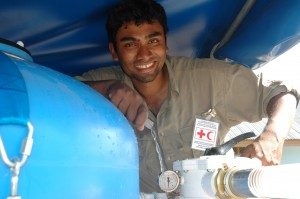
Dr. Gajan (Gaj) Sivandran is Clinical Assistant Professor in Engineering Science at Loyola University Chicago. Gaj has been engaged with community science work through Engineers without Borders (EWB) and the International Federation of the Red Cross and Red Crescent Societies (IFRC). He has a PhD in Civil and Environmental Engineering from Massachusetts Institute of Technology, and both Bachelor of Engineering (Environmental) and a Bachelor of Commerce (Corporate Finance and Accounting) from the University of Western Australia, Perth, Australia (1998-2003).
Status:
Complete,
Location:
Evanston,
Illinois,
United States,
Managing Organizations:
Thriving Earth Exchange,
Project Categories:
Natural Resources,
Project Tags:
No tags