
Spotlighting Local Climate Action with an Interactive Digital Hub to Increase Community Engagement
Lake Forest Park, Washington, United States
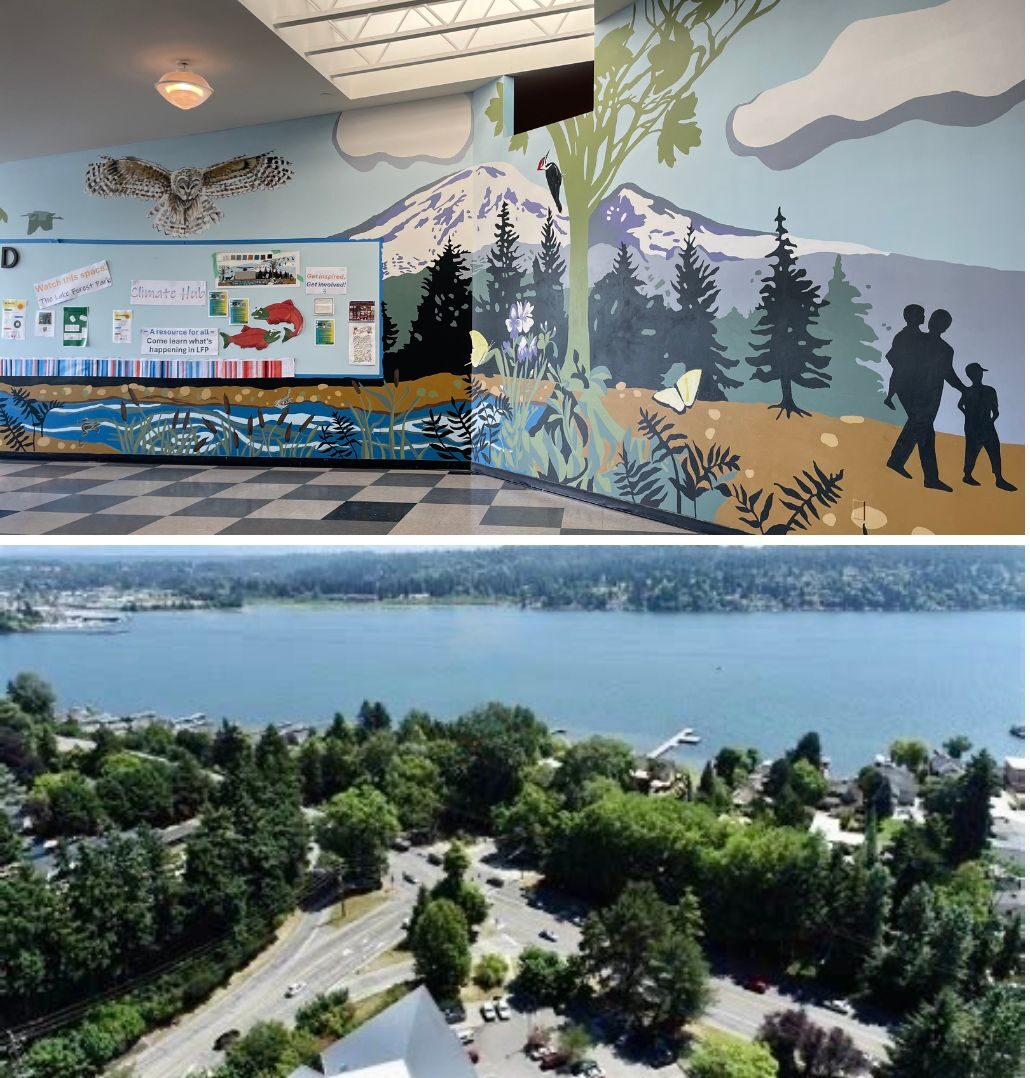
Community leaders in Lake Forest Park, Washington, have set up a Climate Hub in one of the city’s central gathering spaces. In collaboration with Thriving Earth Exchange, the community seeks to design and develop an interactive website and GIS map featuring local climate information. A touchscreen display will be installed in the Climate Hub, where residents can interact with the website, and public events can be held to share climate information featured on the website. Residents will be able to access local climate data, learn more about climate action in the community, and find public resources that enable climate resiliency and support climate goals. The website, and the touchscreen access to it at the Climate Hub, will serve as a vital community resource, providing support, education, and opportunities to become more involved as the city faces increasing impacts from climate change.
Description
About the Community
Lake Forest Park is a civically active community with a population of about 13,000 residents, located north of Seattle, Washington. The city is situated along the shore of Lake Washington and is renowned for its lush, wooded environment and beautiful lakeside scenery. Lake Forest Park was established in 1910 as a planned community, designed to balance city life and natural surroundings. The City was incorporated in 1961 and offers numerous parks, opportunities for outdoor recreation, and paths for biking and walking.
The values of sustainable living and environmental protection are the foundation upon which Lake Forest Park was built. These principles continue to be at the forefront of civic engagement as outlined in the City of Lake Forest Park Comprehensive Plan (ratified in 2024) and the Legacy 100-year Vision Statement (ratified in 2016). The commitment to “promote, enhance, and preserve the City’s long-term environmental quality and green character” serves as a powerful central goal in these initiatives.
At the heart of the city lies the Town Center, a vibrant gathering spot with a community space called Third Place Commons. A Climate Hub is being set up here and will serve as an important resource for the community.
About the Project
This Thriving Earth Exchange project aims to develop an interactive website that will connect residents with local climate resources, helping to build a city more resilient to a changing climate. The website will share a wealth of digital data and information, including decades of environmental data gathered by community members. Residents will have access to citizen science projects, climate data, resources for fostering climate resiliency, and community involvement activities in climate action. Additionally, a GIS map will organize locations of climate and community projects, data, and resources.
The interactive website will be an important feature of the community’s Climate Hub. The creation of a physical space for the Climate Hub is already underway. The goals of the Climate Hub are to bring community members together, increase climate awareness, build resilience, and inspire action. To support these goals, a touchscreen display will be installed in the hub where community members can interact with the information on the website and map. Since the Climate Hub serves as a community gathering space, public events on climate topics can be held there, and the touchscreen display will enable broader engagement with the website’s climate information.
Informed citizens are essential for driving the change needed to address climate change. Valuable resources on preparing for and responding to climate-related disasters will be more accessible. Data from ongoing citizen science and environmental monitoring programs will be publicly available. Opportunities for residents to become more involved in climate action and make a difference in their community will be emphasized. The entire community will benefit from increased community involvement in climate action initiatives.
After completing this project with Thriving Earth Exchange, the Lake Forest Park community leaders hope to enhance the Climate Hub by introducing more educational opportunities, including “Live! Climate Kiosk” events and curriculum opportunities for local teachers. These events will feature docents and student guides who will utilize the touchscreen display and website to present interactive exhibits and activities. The community aims to further develop the website to be a means to gather community input that can be used to drive policy change in the city. The community leaders are also committed to encouraging the development of similar hubs in neighboring cities.
Timeline and Milestones
- 12-month overall timeline
- July 2025 to August 2025: Community Leaders research and fundraise for touchscreen display equipment
- August 2025 to April 2026 (flexible): Collaboration with scientists to design and develop the website and GIS map
- May 2026 (flexible) – Website Launch: Community event at the Climate Hub with demonstrations of content and navigation
- June 2026 and ongoing: Community leaders continue to update and add new information to the website and GIS map
- Fall 2026 and beyond: Community leaders expand educational programming at the hub and encourage similar hubs to be developed in neighboring cities
Project Team
Community Leaders

Miriam Bertram is a scientist, climate educator, resident of Lake Forest Park, and a member of the Lake Forest Park Climate Action Committee. As the Assistant Director of the University of Washington Program on Climate Change, has a 20+ year history working alongside high school and university educators, scientists, students, and community members, to develop and support climate science understanding, communication, and action. Miriam is passionate about connecting people, opportunities, and knowledge to achieve progress on mitigating climate change and building resilience.
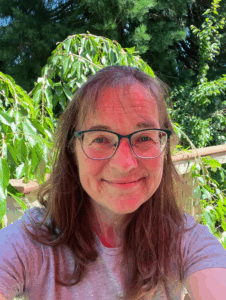
Dana Campbell is a scientist and climate educator. As a faculty member in the Biological Sciences department at the University of Washington Bothell campus she works with hundreds of undergraduate students each year. An involved resident of Lake Forest Park, Dana serves as a member of the Lake Forest Park Climate Action Committee and a member of the Advisory Committee for the LFP Water District. Additionally, she monitors stream quality in Lake Forest Park as a Streamkeeper, and mentors 12 interns/year in the Streamkeeper USE-IT internship program. She is a 2024 graduate of MidSound Fisheries’ summer Community Action Training School (CATS).

Sarah Philips is a long-time Lake Forest Park resident and worked as a Legislative Aide for a county councilmember (1994-1998) and for Lake Forest Park city government as the Community and Governmental Affairs Manager (1999-2011). Sarah chairs the Lake Forest Park Climate Action Committee with deep knowledge of and strong connections to people and organizations within the city. She has served on local boards, including the Community College Board and Third Place Commons Board. She is a volunteer with the Miyawaki Forest at the Shoreline Historical Museum, a volunteer Environmental Rotary Club of Puget Sound member.
Community Scientists
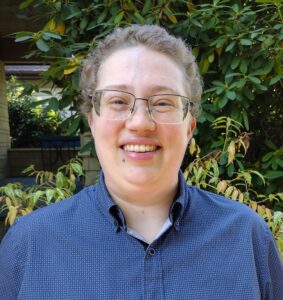
Ken Feathers (he/they) is a geospatial scientist interested in tackling spatial questions related to environmental science and wildlife conservation. He has a Bachelor of Science in environmental science and resource management and a certificate in Geographic Information Systems (GIS), both from the University of Washington Seattle campus. He has worked on projects studying how carbon storage has changed over time in the Olympic Peninsula with The Nature Conservancy and creating forest asset management tools with Tacoma Public Utilities. He lives in Seattle, not far from Lake Forest Park.
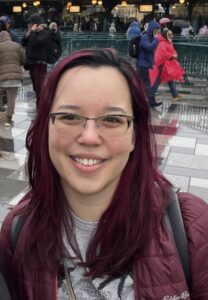
Erica Sampaga is a scientist and data analyst based in Seattle. She is currently working as a Commercial Coordinator for the Geo-Survey unit at Oceaneering. Erica completed her BS in Oceanography and Geology at University of Washington and her MS in Environmental Science and Policy with a Graduate Certificate in GIS from Johns Hopkins University. She volunteers for a variety of STEM programs in King County with interests in improving accessibility and retention of STEM opportunities for students.
Community Science Fellow

Megan Hubbard (she/her) lives in Hilo, Hawaiʻi, and is a Mineral Resources Specialist for the State of Hawaiʻi’s Department of Land and Natural Resources. She is completing a master’s degree in Applied Geosciences through the University of Pennsylvania. Megan grew up in California’s San Francisco Bay Area and earned her undergraduate degree in Geology-Physics/Mathematics from Brown University. Megan previously spent 18 years as a science educator, working with K-12 students in both classroom and outdoor education settings. Her career is driven by a deep interest in how people connect with nature and a commitment to finding sustainable and equitable solutions for utilizing Earth’s natural resources.
Collaborating Organizations

Lake Forest Park Climate Action Committee – The Climate Action Committee is established by the City Council. The original purpose of the Climate Action Committee was to gather and analyze climate information and draft a climate action plan.

Third Place Commons (aka “the Commons”) is a community-supported nonprofit organization dedicated to fostering real community in real space by hosting hundreds of free events each year.
Status:
In-Progress,
Location:
Lake Forest Park,
Managing Organizations:
No organizations
Project Categories:
Climate Change,
Climate Resilience,
Community Engagement,
Project Tags:
No tags