
Analyzing Air Pollution Data to Understand Community Risk and Inform Local Action
Saint Paul, Minnesota, United States
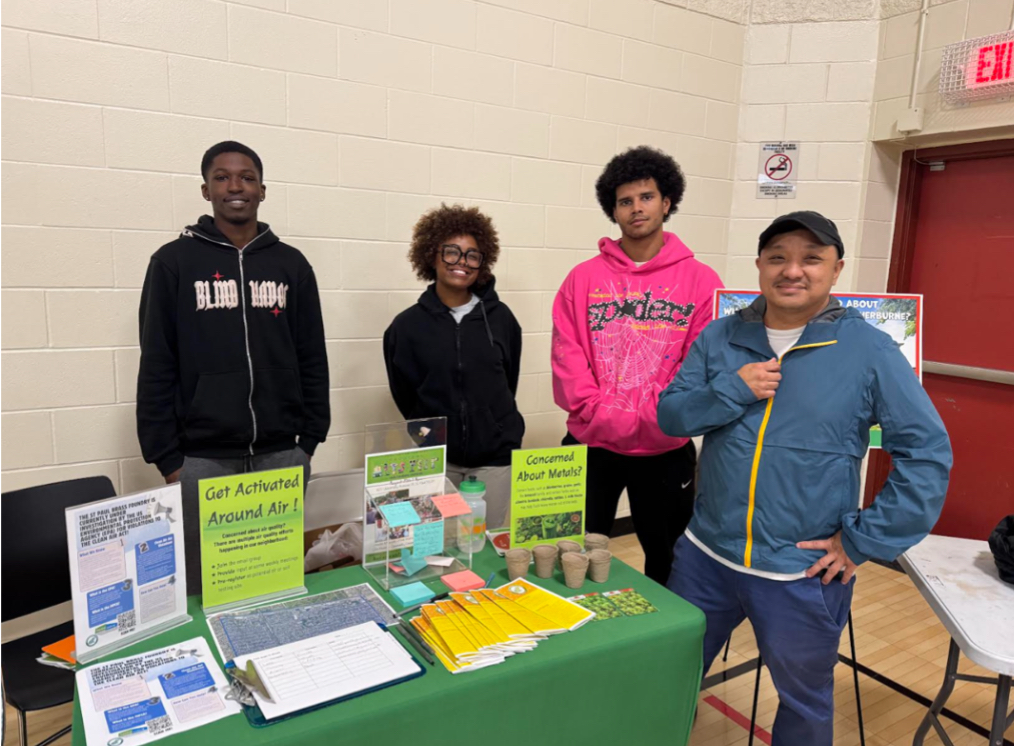
The Frogtown neighborhood in St. Paul, Minnesota faces growing concerns over ongoing air pollution from a local foundry located within the neighborhood. While the foundry is under investigation for Clean Air Act violations, residents have received limited information about the pollutants being emitted, their quantities, or what exposure levels mean for community health and safety. This project will analyze and synthesize existing air quality data to better understand and communicate these impacts to the community. The findings will help residents identify immediate and acute public health threats and further empower advocacy for healthier air quality.
Description
About the Community
Frogtown is among the most diverse neighborhoods in the Twin Cities (75% BIPOC) and is home to a vibrant community of immigrants including those from Asia, East Africa, and Central and South America. A former marshland and historic dumping ground, Frogtown continues to face pollution and environmental justice challenges today. Recently, St. Paul Brass and Aluminum, a foundry situated in a residential part of Frogtown on the same block as a daycare, a park, an urban farm, and a mosque, was found in violation of the Clean Air Act. Due to unaddressed malfunctions in air scrubbers and failure to register under updated code for hazardous air pollutants, an unannounced EPA inspection in 2022 resulted in two Clean Air Act violations issued in March and June 2023. As a result, the EPA deployed a mobile air monitoring station from June 2024 to January 2025.
After being made aware of the violations, residents of Frogtown and the adjacent Hamline-Midway neighborhood – led by the Frogtown Neighborhood Association, Hamline-Midway Coalition, and other community groups – began organizing in 2024 to better understand the health risks posed by foundry emissions. They have, crucially, obtained air quality data collected by the EPA and MPCA (MN Pollution Control Agency); however, because the data are raw and difficult to interpret, there is a lack of clarity around which pollutants of concern are present, in what quantities, and with what associated public health consequences. This project aims to analyze the data and share the findings widely to help residents understand current air pollution risks and help support informed, collective action.
About the Project
The goal of this project is to analyze and summarize existing air quality data and make the findings accessible to the community. A central focus is to present the findings in a way that is both informative and actionable that includes comparing pollutant levels to known safety thresholds, understanding how they may disperse or persist across the neighborhood, and identifying their potential health risks. The community plans to share the outcomes of this work at public meetings and distribute information to residents using infographics and short outreach documents translated into multiple languages. By raising awareness of health risks posed by the foundry’s emissions, the project further aims to facilitate collective action toward improved air quality. In particular, the findings are expected to help increase pressure on legislators, regulatory agencies, and the foundry to take meaningful corrective steps to significantly reduce or eliminate hazardous emissions. This process may also inform future community air quality monitoring efforts by identifying pollutants of concern, highlighting gaps in existing data, and guiding decisions about monitoring strategies, such as site selection, equipment needs, and data management approaches. Work is already ongoing to expand monitoring at key locations, including the nearby daycare, where the results of this project can help refine those efforts by identifying specific data needs and informing targeted actions.
Timeline and Milestones
The project is expected to span 12 months, up to a maximum of 18. Although the timeline is dynamic, the project team proposes:
- July – September: Recruitment of scientist(s)/expert(s)
- September – March: Data analysis
- February – April: Visualizing and summarizing findings
- April – June: Organizing community meeting/outreach to share findings
- June – July: Finalize reports, outreach, and plan for next phases
Project Team
Community Leads

Danielle Swift is a community organizer with a specific focus on community centered development, housing and environmental justice. Although Danielle was led to organizing through social justice activism her professional background in banking, mortgage lending and real estate sales has helped tremendously along the way. Danielle has worked with several organizations in neighborhoods like the Eastside of Saint Paul, Frogtown and North Minneapolis with a very boots on the ground approach. Danielle served on the Board of Zoning Appeals for the City of Saint Paul from 2018-2023. She is currently a board member and co-treasurer at Indigenous Roots. Danielle is a mother of 4, a science nerd and strives to build authentic relationships with her neighbors.

Stephanie Hankerson, a resident of the Hamline Midway neighborhood, is an independent garden and environmental education facilitator whose work lies at the intersection of urban community and sustainability. Her recent projects include supporting community and youth gardens, organizing neighborhood gatherings, creating garden-based learning spaces, and fostering strong local connections. She is deeply committed to advancing environmental equity, nurturing cross-cultural relationships, and promoting urban canopy and native plant sanctuaries within the built environment.

Amare Sokuu is an intern for the Frogtown Neighborhood neighborhood Association. He has an interest in sports, music, history, culture and activism in community. He attended Gordon Parks high School. He is a Frogtown resident in tune with a broad network of people in community. He attends the circle of Peace restorative justice spaces in the Rondo neighborhood.

Tou SaiK Lee is rhyme-writer, Spoken Word poet, a coded street poet appointed by elders of community organizing in St. Paul. Lee was the Multicultural Movement Builder for the Frogtown Neighborhood Association connecting underrepresented communities to resources and leadership opportunities. Lee is a graduate of Southeast Asian Studies M.A. at University of Wisconsin, Madison. His research is focused on “indigeneity” of Hmong coalition building with the Indigenous Peoples’ movement in Thailand. Tou SaiK enjoys being in the mountains with waterfalls and goes on long distance road bicycle group rides with the community.

Anita McGraw is currently a student at Metro State University. She’s a long term Frogtown resident and has been involved with Frogtown Neighbour Association as an intern. Her interests include journaling, poem writing, involvement with community building events, gardening, painting and activism towards all human and environmental rights.

Mateo lives in St. Paul and is a graduate student at the University of Minnesota. He is passionate about using data to advance community-driven policy changes. Broadly, his work focuses on urban planning and health with a special interest in urban environmental justice movements. He spends most of his free time biking and swimming around the city lakes.

Julia Brokaw lives in St. Paul has been supporting the efforts to hold the St Paul Brass foundry accountable and support community efforts to raise awareness in the community. Her PhD research specialized in pollinator ecology and conservation and she is always interested in the ways that air pollutants impact people in her community, but also the insects and plants that sustain us. She also has a background in data management. She loves supporting mutual aid efforts, growing plants, and dogsitting for her neighbors.

Forrest Dalbec recently moved to the Twin Cities after completing his PhD in Electroanalytical Chemistry. His graduate research focused on electrochemical sensor development for biologically and environmentally important analytes, including heavy metal contaminants such as lead. He has a passion for dealing with complex environmental problems and seeks to make chemical expertise accessible to the wider community.

Cece is a senior at Hamline University studying Biology and Environmental Studies. A resident of Hamline-Midway, she has been working for the Hamline Midway Coalition for the last year as an intern and environmental organizer. Cece has a continued interest in bridging the gap between science and implementation and science communication.
Community Scientists
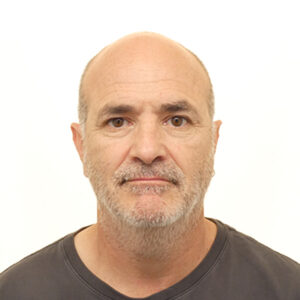
Andres Gonzalez is a Passionate Environmental Engineer with a PhD in Environmental Engineering from the University of Minnesota, a Master’s in Environmental Engineering from IQS in Spain, and a Master’s in Environmental Management from Yale University. Bringing 20+ years of research and professional experience focused on air pollution analysis and measurements. Skilled in performing cost-benefit analysis of emission control strategies and policies for both stationary and mobile sources. Strong verbal, written, and presentation skills, with the proven ability to communicate complex information clearly to diverse audiences. Quick to grasp new ideas and concepts, consistently developing innovative and practical solutions to environmental challenges.
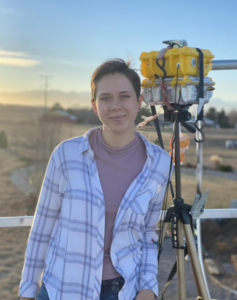
Caroline Frischmon is an air quality researcher with expertise in low-cost air quality sensing and community-based participatory research. She earned her PhD from the University of Colorado Boulder in 2025, where her community-engaged research aimed to document industrial air pollution impacts in Mississippi and California communities. Originally from Minnesota, Caroline is excited to support the Frogtown community in its efforts to increase transparency and accountability regarding the foundry.
Community Science Fellow

Garett Pignotti is a researcher broadly interested in water resources and environmental protection, originally from Orlando, Florida. His work generally looks at the effects of climate and land use change on water quantity and quality at the watershed scale and the consequent inequitable human exposure to these effects. Motivated to translate science into action, Garett has participated in several projects at the local scale, from improving water security of a rural community in Tanzania, to developing a museum demo about urban heat in Portland, Oregon.
Collaborating Organizations

Frogtown Neighborhood Association works through accountable collaboration, strategic partnerships, neighbor relationships and shared values to ensure the balance and harmony of our neighborhood by focusing on health, the physical environment, arts centered organizing and community wealth building.

The district council system in St. Paul, MN includes 17 community-based volunteer organizations that work to represent the interests of local residents and businesses. Hamline Midway Coalition (HMC) — District Council 11 — is an action-oriented, neighborhood-based organization that develops and supports initiatives in community building, transportation, local foods, placemaking and public space improvement, economic vitality, sustainability, and neighborhood identity.
Status:
In-Progress,
Location:
Minnesota,
Saint Paul,
Managing Organizations:
No organizations
Project Categories:
Air quality,
Contamination/pollution,
Data Analysis,
Project Tags:
No tags