
Mitigating illegal trash dumping and implementing environmental education at Scott Church
Detroit, Michigan, United States
The primary concern of the community is that Scott Memorial United Methodist Church experiences high levels of illegal trash dumping. The first project priority is to mitigate illegal trash dumping at the church by investigating cost-effective and sustainable ways for the community to dispose of waste. A secondary priority is to begin educating the congregation and community on this and other environmental justice issues and empower them to take action on keeping the community clean and safe.
Results
Scott Memorial United Methodist Church serves a predominantly Black congregation on Detroit’s Westside. A key concern is that Scott Church experiences high levels of illegal trash dumping, with trash polluting the neighborhood and the area behind the church. The community’s goals are to reduce this illegal dumping and begin to educate the congregation on environmental justice issues and the solutions they can be a part of. The community leads are both members of Scott Church, and the project team recruited a PhD student at University of Michigan as a volunteer scientist to help research and implement trash mitigation solutions. The team also recruited a communications and design specialist to help design the project’s mural as well as create advertisements and powerpoints for environmental education events.
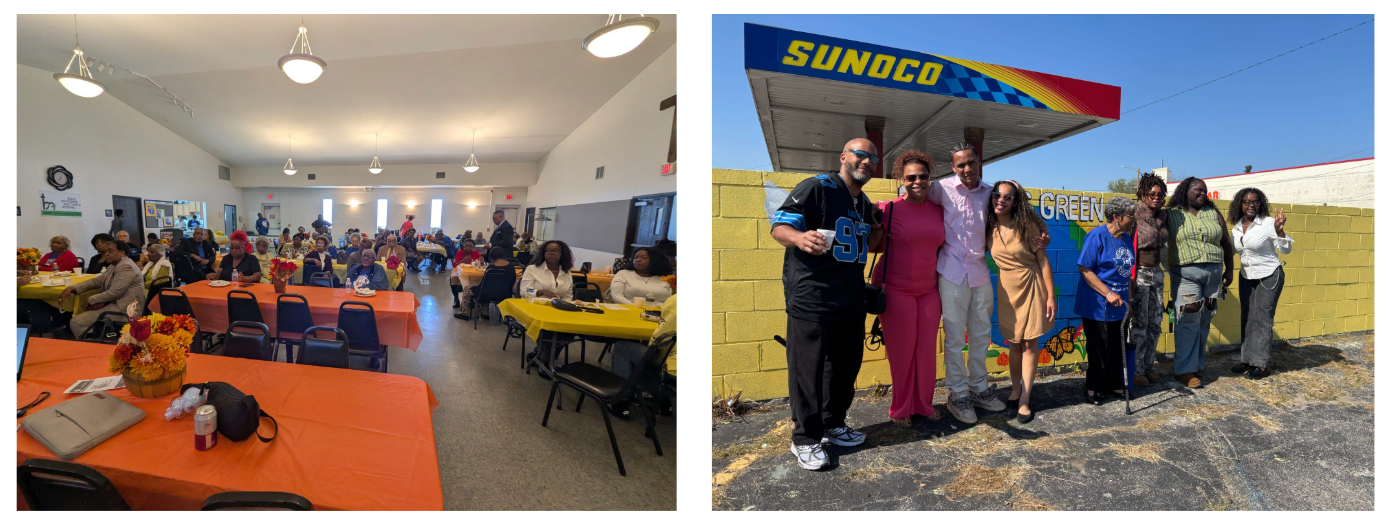
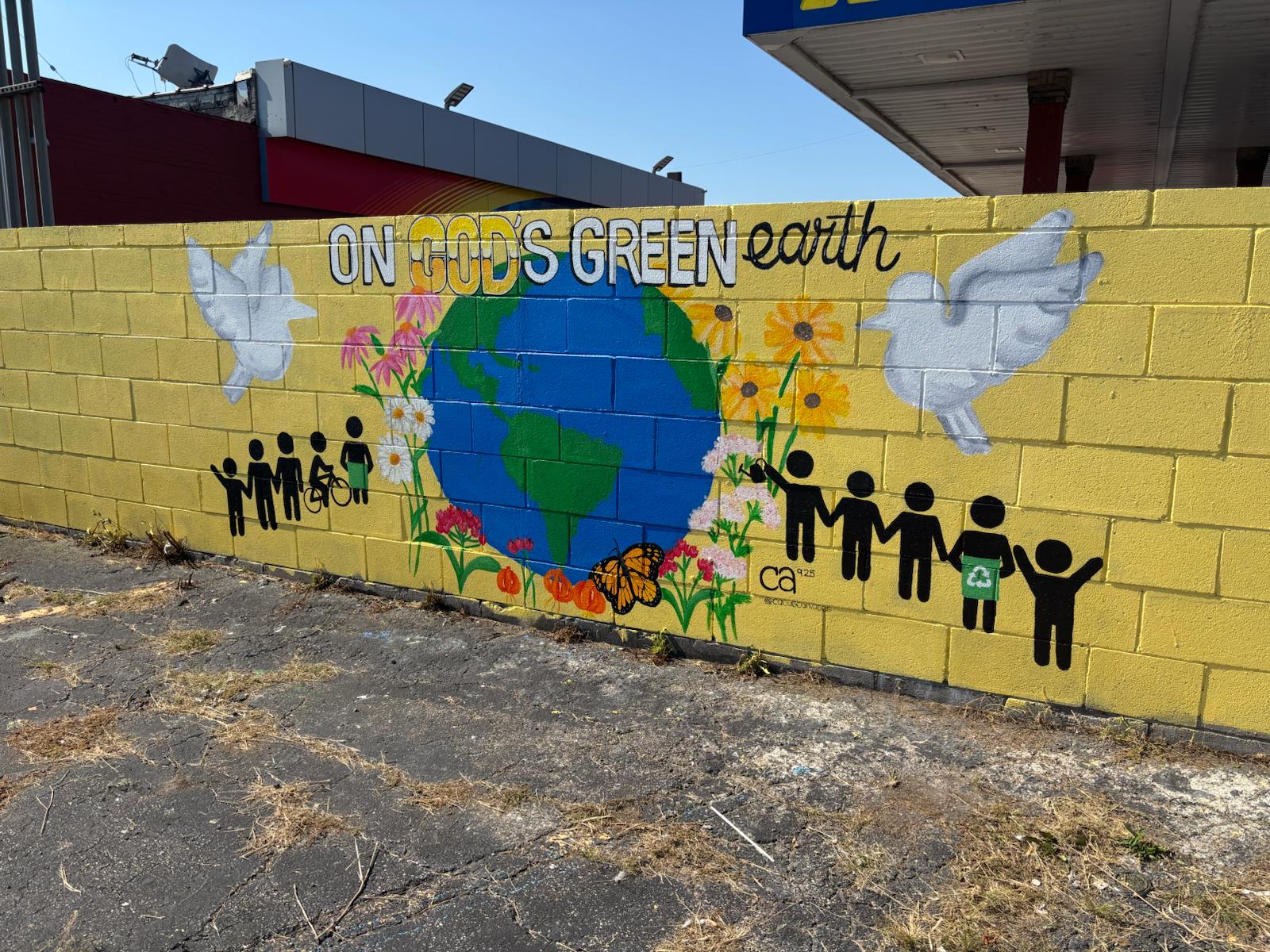
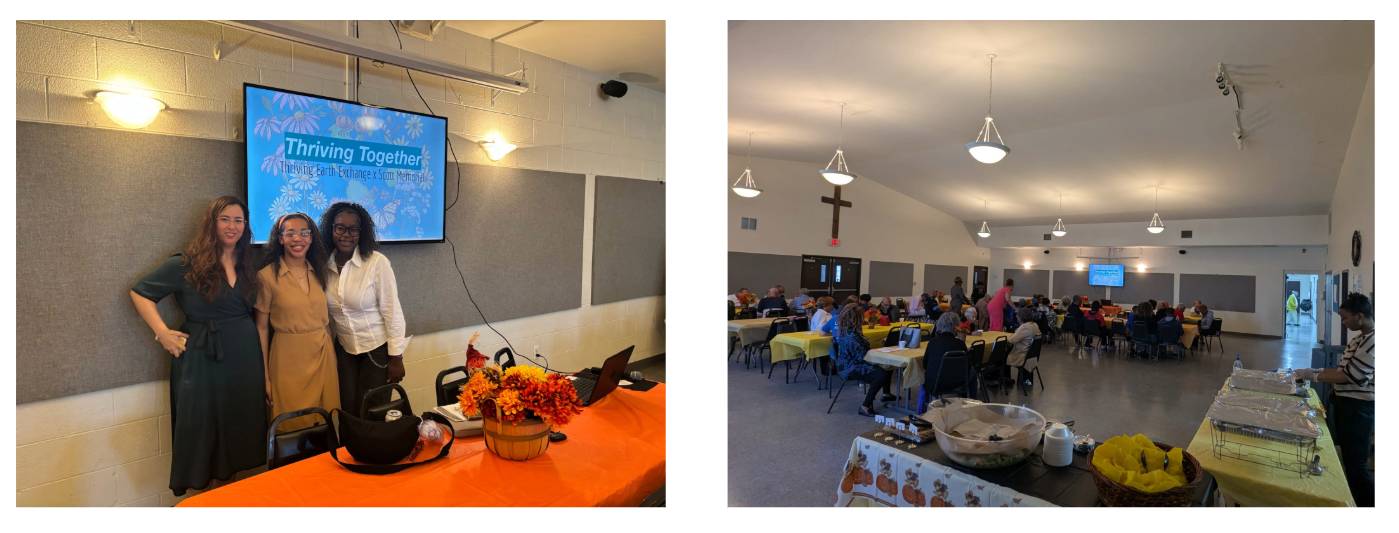
During the project, the project team researched potential solutions to illegal dumping and ideas for environmental education. The team surveyed the congregation and consulted with the Board of Trustees to decide which solutions to implement. They also requested and received project funding and community lead funding from TEX to support the project. To address illegal dumping, the team installed no-littering signs and solar-powered lights in the alleyway behind the church. The project team also commissioned a mural in the church’s parking lot, painted by a local artist, to brighten the space and deter illegal dumping. To support environmental education priorities, the team organized a Recycling Workshop and lunch for the congregation as well as a final lunch-and-learn to share the project results and discuss environmental and health impacts of illegal trash dumping. These trash mitigation solutions have reduced the illegal dumping activity at the church, and the team successfully engaged 40-50 members of the congregation at each environmental education activity. The project team has also received very positive feedback on the mural installation, which depicts members of the community working together to support a healthy environment.
Project Outputs
- Art-based products: The project team commissioned a mural in the church’s parking lot to deter illegal dumping.
- Community events: The project team organized a Recycling Workshop in spring 2025 and a final lunch-and-learn in fall 2025 on the environmental and health impacts of trash dumping and the project’s results.
- Remediation strategies plan: The project team researched and proposed several solutions to the community, and surveyed the church as well as consulting with the Board of Trustees to finalize a remediation plan.
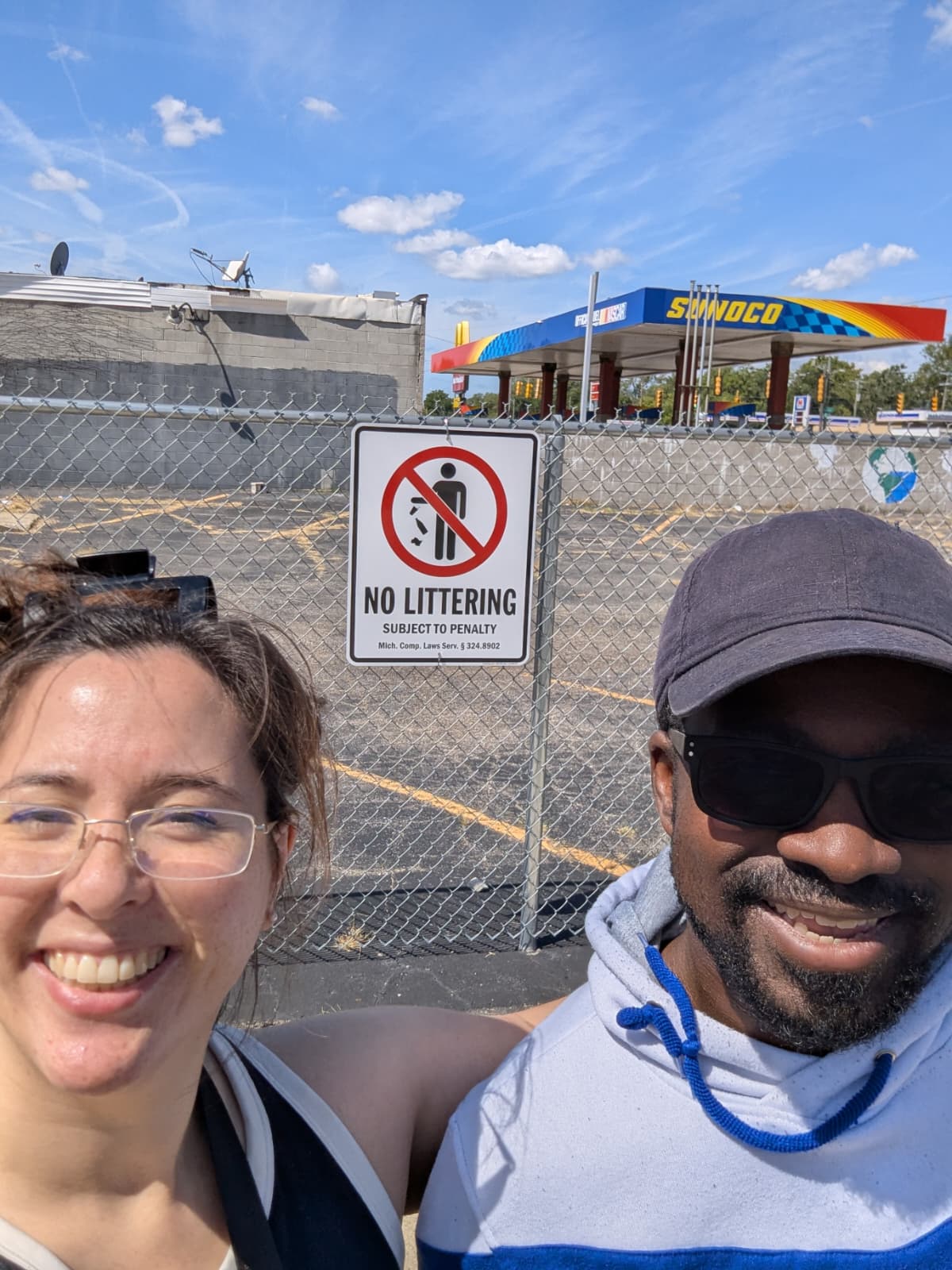
- Other: trash mitigation solutions: The project team purchased and installed no-littering signs and solar-powered lights to deter illegal trash dumping at the church.

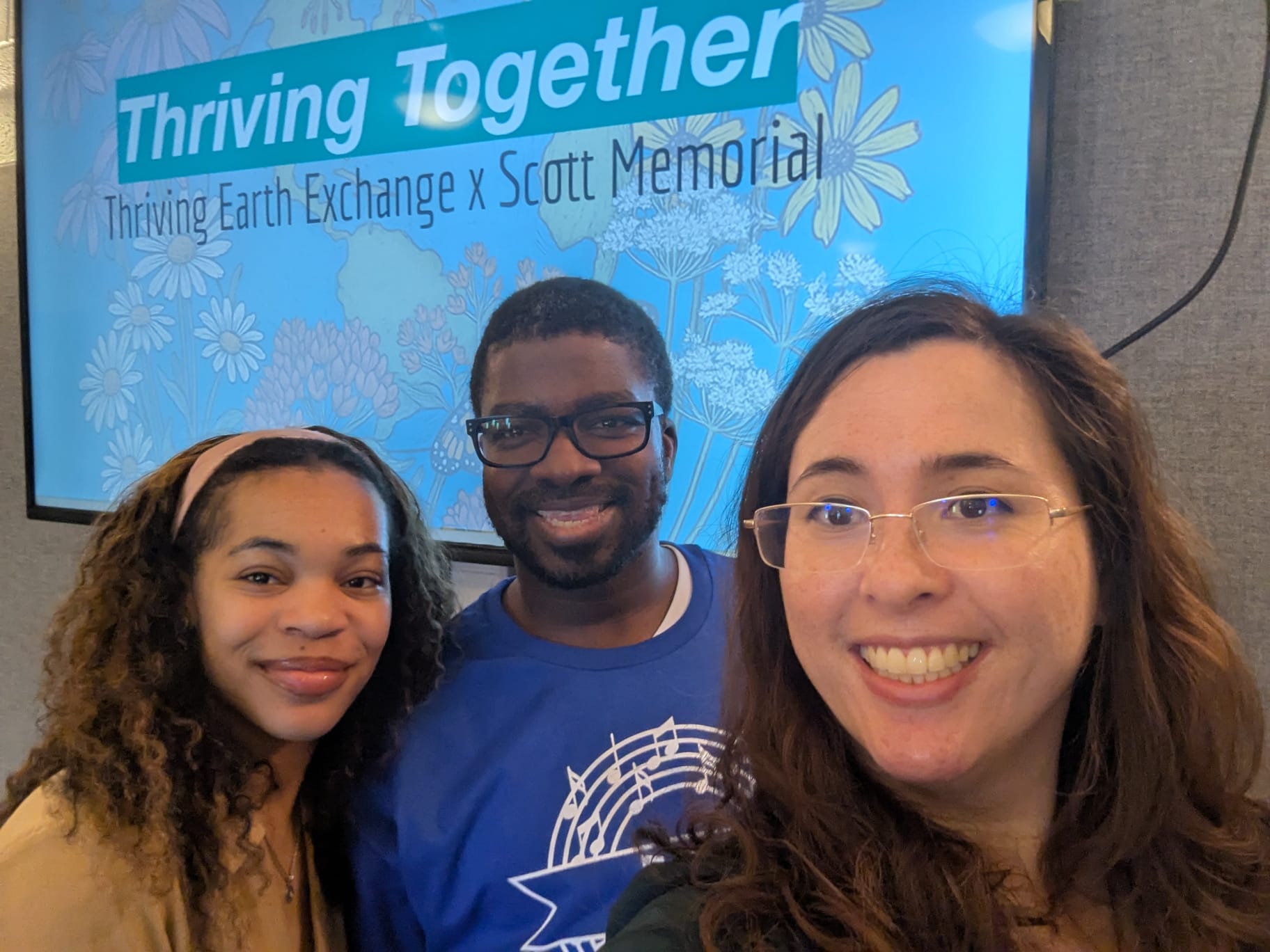
- Media coverage: Several team members participated in interviews for a film by the Thriving Earth Exchange that will highlight the project.
Community Impact
The project’s trash mitigation solutions have reduced the illegal dumping at the church, and the project team successfully engaged 40-50 members of the congregation at each environmental education activity. The project team have also received very positive feedback on the mural installation, which depicts members of the community working together to support a healthy environment. In the long term, the project team hopes the project will inspire future conversations and actions to support the church’s environmental priorities.
Acknowledgements
The project team acknowledges project funding and community lead funding from the Thriving Earth Exchange.
Future Plans
The church is considering expanding the mural we commissioned, which currently covers only a portion of a wall near the parking lot. There is a small amount of remaining project funding from the Thriving Earth Exchange that we have earmarked in the church’s account for future priorities such as this mural expansion.
Description
About the Community
Scott Memorial United Methodist Church serves a predominantly Black congregation on Detroit’s Westside. Scott is a home for many. Members have fostered a loving church environment focused on uplifting the church’s youth. Most of the congression are elders, so they do not have modern information about clean energy and environmental justice. A key concern is that Scott Church experiences high levels of illegal trash dumping, with trash polluting the neighborhood and the area behind the church. The community’s goals are to reduce this illegal dumping and begin to educate the congregation on environmental justice issues and the solutions they can be a part of.
About the Project
The community would like to research barriers and solutions to cost-effective and sustainable waste disposal for community members, including potential waste-to-energy solutions. This will include researching existing waste management facilities and potential resources from the city of Detroit such as signage to support proper waste disposal. The community would then like to create infographics to share information with the congregation and surrounding community about the negative effects of trash dumping and alternative solutions. They would like to coordinate other ways to raise awareness and mitigate this issue, such as a community clean up event. This project will result in environmental education that empowers the congregation to keep the community clean and safe.
Key stakeholders include the Trustee Board of Scott Church and the Community Block Club, who are interested in addressing this issue and are already in contact with local residents and the City of Detroit. The City of Detroit is also implementing a citywide beautification project, and may be a helpful partner for the community’s goals.
The team envisions sharing environmental education with the community surrounding the church, and sharing the results of the project with the broader network of United Methodist churches in Greater Detroit as well as local media outlets.
Timeline and Milestones
The intended duration of the project is 12 months. The team will develop a project timeline with the volunteer scientist(s).
Project Team
Community Leaders

Cydnee Harris is a rising senior at the #1 HBCU in the country, Spelman College. She is pursuing a Bachelor of Arts with a major in Philosophy and a minor in Environmental Science. In middle school, she discovered her passion for environmental justice, vowing to educate Black communities on climate change’s effects and advocate for clean energy, sustainability, and related topics. Cydnee aims to reduce global warming and climate change’s impacts on underrepresented communities and, ultimately, the world.

Joshua K. Matthews has been a member of Scott Memorial United Methodist Church since the age of 3 months old and has affectionately adopted the name of “Scott’s Baby.” Taking on numerous roles in the church; serving on the Administrative Council as Secretary since 2015, a member of the Trustee Board since 2009 and Co-Chair of the Trustees since 2016, Director of the Choirs since 2011 and also serving on the Culinary, Worship and Youth Ministries, he has earned the title of “Mr. Scott”.
Community Scientists

Lisa Nguyen is an Applied Physics PhD student at the University of Michigan, focusing on the impacts of global warming on drought and precipitation extremes, with a particular interest in how these changes affect crops and vulnerable communities. In addition to their research, Lisa is passionate about educational outreach, having taught students through Math Corps (a program started in Detroit’s Wayne State University) and mentored youth through the FATE Give Merit program. They are eager to contribute to the AGU TEX project and engage with the broader community.

Delanie Lowe is a visual communications designer with experience in marketing and development in-house for non-profit, scientific, and environmental institutions. She is currently the Communications Manager at Save The Bay, an organization protecting and restoring San Francisco Bay through nature-based climate solutions. She specializes in graphic design, video production, infographics, and branding, and is committed to telling stories of environmental justice and hope around climate change.
Community Science Fellow

Lily Hahn is a NOAA Climate and Global Change Postdoctoral Fellow at the Scripps Institution of Oceanography, where she studies the impact of ocean circulation on global warming. Lily joined AGU TEX as a volunteer scientist during her PhD, which inspired her to start a similar community science program at the University of Washington as a PhD student and to become a TEX Community Science Fellow during her postdoc.
Collaborating Organizations
Scott Memorial United Methodist Church

Creation Justice Ministries

Partnering with faith communities to address sustainability and environmental health concerns.
Status:
Complete,
Location:
Detroit,
Managing Organizations:
Creation Justice Ministries,
Thriving Earth Exchange,
Project Categories:
Education,
Science Communication,
Waste Disposal,
Project Tags:
No tags