
Investigating Aquifer and Groundwater Interactions in the Thompson Chain of Lakes, Montana
Libby, Montana, United States
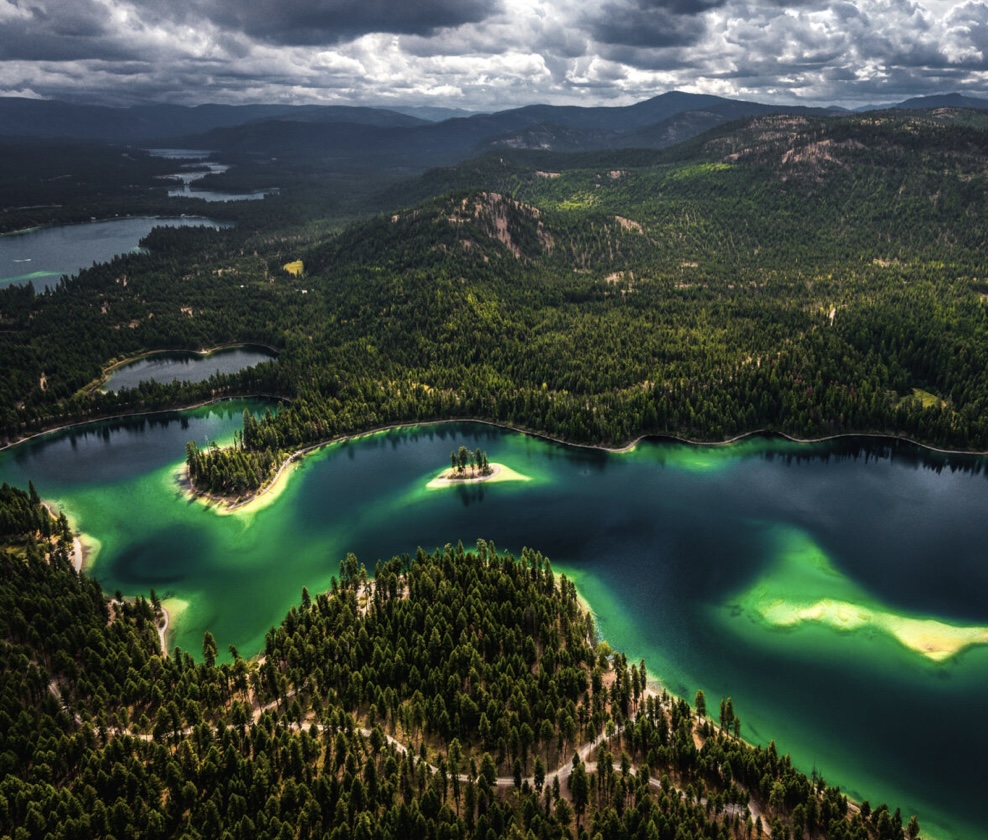
This project aims to study the aquifer-groundwater-lake interactions affecting a spring-fed lake system in northwestern Montana. To do so, the research team will first compile a comprehensive literature and data review and subsequently conduct an aquifer study, maybe collecting samples from the lake system and nearby wells to understand key drivers of aquifer recharge and flow. This analysis can provide a scientific basis for understanding fluctuating water levels in the lake system. The goal of this work is informing future development decisions in the region amid prolonged drought conditions. The project team is looking to add a scientist with expertise in hydrogeology, groundwater and aquifer depletion and recharge, and groundwater-lake interactions.
Description
About the Community
The Thompson Chain of Lakes community is in the northwestern corner of Montana, specifically in Lincoln County. This community is an unincorporated and rural area home to around 350 members. It is situated in a region that has long been known for its rich natural resources. In the past, the county was a hub for fur trading, logging, and mining. Today, increased development across the county to support population growth and tourism puts pressure on its rich lake ecosystems.
Many of the community’s members rely on the lakes or wells for their drinking water. Prolonged severe drought conditions have led to some wells running dry. A recent internal survey indicated that water quantity is the primary concern among residents, prompting strong support for an aquifer study from community members, county officials, and various water resource organizations across Montana.
The Thompson Chain of Lakes Stewardship Coalition (TCLSC) is a 501c3 nonprofit neighborhood organization based in the town of Libby in Lincoln County, Montana. The Coalition was founded in 2022 and boasts over 140 members today. The Coalition’s members have longstanding, sometimes multigenerational ties to the Thompson Chain of Lakes region. They share a commitment to ensuring that the future uses are consistent with community values around environmental stewardship to benefit current and future generations.
About the Project
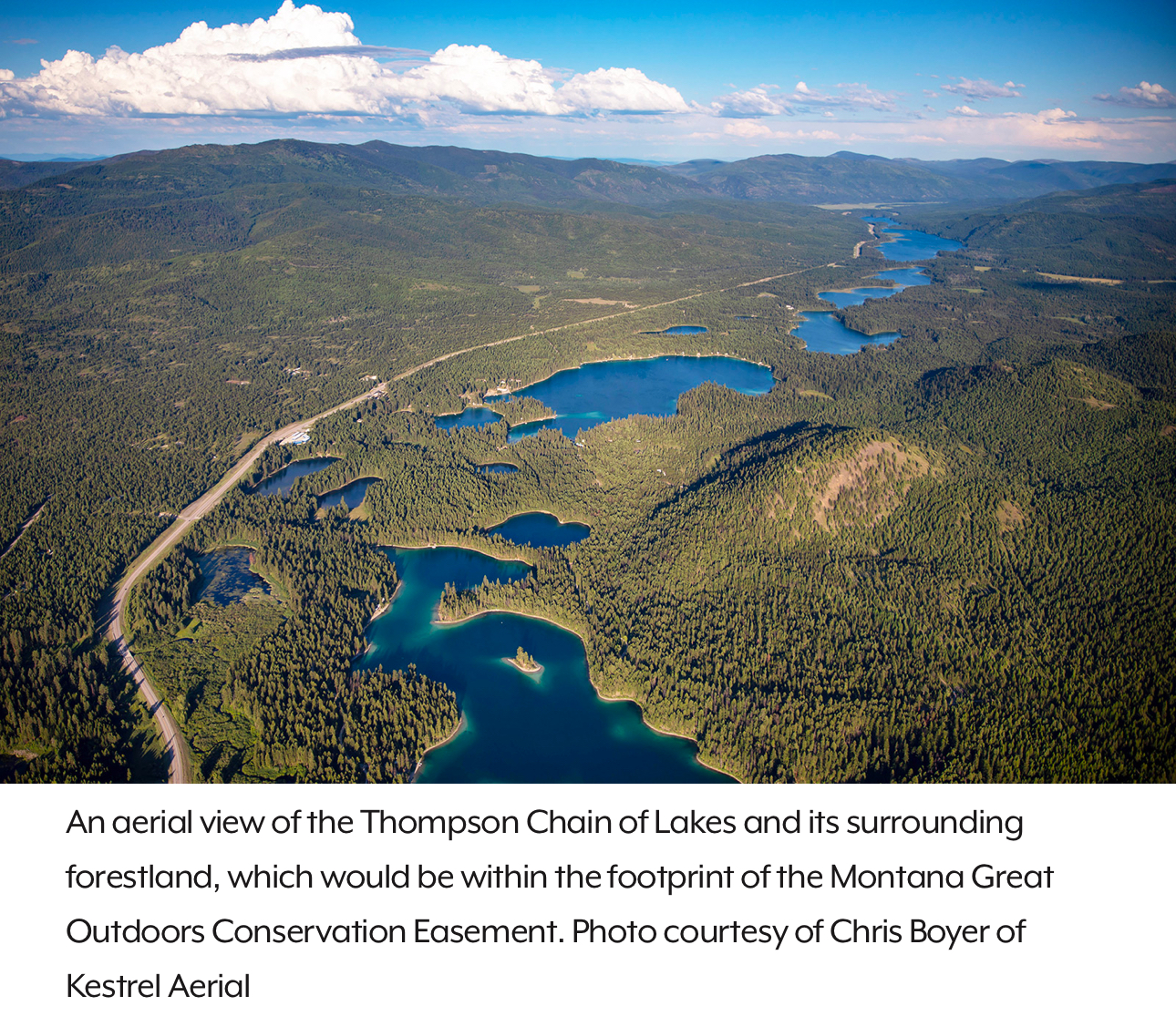
The Thompson Chain of Lakes Stewardship Coalition (TCLSC) community group is concerned about the effects of prolonged drought and increased development on lake water quantity and quality in the Thompson Chain of Lakes (TCL) area in Lincoln County, Montana.
The Thompson Chain of Lakes is a 20-mile-long chain of 18 lakes, of which seven are spring-fed with no known surface water inlet or outlet. In addition to ongoing drought conditions and other climate change-related vulnerabilities, an increase in local development in Lincoln County may further stress local water resources.
The goal of this study is to understand the sustainability of water resource development for expanded human activity in the region and its impacts to spring-fed lakes. This project aims to contribute two key outputs. First, the research team will produce a synthesis of existing data and literature related to groundwater and aquifer resources in the TCL area. Second, the team will conduct a sampling study of Crystal Lake, one of the seven spring-fed lakes in the Thompson Chain, to better understand the interactions between the TCL’s spring-fed lakes, groundwater resources, and aquifers. For the sampling study, the project proposes to use the analysis of major ions, trace metals, and stable isotopes (hydrogen, oxygen, and tritium) from water samples taken from Crystal Lake and nearby wells to identify the source of water feeding the lake. This data could be used to investigate whether fluctuations in the lake level are related to annual fluctuations in precipitation or main aquifer development. Further investigation can assess if expanded human development activities could negatively impact lake levels and water availability. Sampling will be conducted by citizen scientists, likely to be volunteers from the TCLSC but open to any members of the public who undergo required data collection training.
This project fills a critical knowledge gap of lake-groundwater-aquifer interactions affecting the TCL and builds a scientific foundation for sustainable management of water resources.
Timeline and Milestones
The following timeline will be iterated upon as the Community Scientist co-develops project plans with the team.
- December 2025-February 2026: Scoping of literature and dataset review. Completion of literature and dataset review.
- Key Milestone #1: Webinar for the TCLSC members and interested members of the public summarizing literature review takeaways. Provide slides publicly with preliminary output.
- March-May 2026: Development of data collection protocol and training of citizen scientist volunteers and local government on data collection tools.
- Key Milestone #2: Publication of data collection handbook on project website.
- Key Milestone #3: Hosting one training session for citizen scientists with Community Scientist.
- April-October 2026: Data collection at Crystal Lake and groundwater wells. Preliminary data analysis and refinements to protocol as needed.
- August-November 2026: Data analysis
- November-December 2026: Development of geospatial dataset with sampling data
- November-December 2026: Summary report of findings (general audience)
- Key Milestone #4: Townhall for summary report launch + GIS story map
- Key Milestone #5: Press release with project results
- January 2027-onwards: Preparation of scholarly report for publication (academic audience, OPTIONAL)
- Key Milestone #6: Submit scholarly paper to peer-reviewed journal, press release
Project Team
Community Leaders

Karen Wickersham heads the Thompson Chain of Lakes Stewardship Coalition. Wickersham is among the many long-term residents of the Chain of Lakes advocating for responsible development of the area. She brings a wealth of experience from her 32-year career with the U.S. Forest Service. Her professional journey has taken her to various locations, including the Kootenai National Forest in Northwest Montana, the Chugach National Forest in South Central Alaska, and the Lolo National Forest in Western Montana, as well as the U.S. Forest Headquarters in Washington, D.C. Throughout her career, she has held significant positions such as National Forest Budget Officer and Financial Management Director, where she managed a federal budget exceeding $40 million annually and oversaw all federal appropriations and expenditures. Notably, she was invited by the Chief of the U.S. Forest Service to collaborate with a national team in Washington, D.C., to reform the entire USFS federal fund management system. In addition to her professional accomplishments, Wickersham is a certified Federal Financial Management Officer.

Jennifer Nelson, a Montana native, has worked in Natural Resource Management across the western United States most of her career. Her travels to several states and countries have allowed her to visit different ecosystems and see different land and water uses by humans, both ancient and modern, which fascinates and concerns her in equal measure. Travel and water are my two of her favorite things, so she tries to combine them whenever she can.
Community Science Fellow

Malini Nambiar is a PhD candidate at Princeton University in Science, Technology, & Environmental Policy. Her research explores strategies for transitioning to net-zero emissions power systems using macro-energy systems models, particularly related to integrating grid-scale renewables and deploying associated transmission infrastructure. Malini contributes to developing open-source datasets and modeling tools for electricity systems research pertaining to India. She holds a master’s degree in public affairs from Princeton University and a B.S. in environmental engineering from Columbia University. In her free time, she enjoys sewing a sustainable wardrobe, reading fiction, and hiking. Malini is passionate about interdisciplinary research and translating science for policy impact.
Scientist Wanted
Scientist Role
The project is seeking a volunteer scientist with expertise in hydrogeology, groundwater and aquifer depletion and recharge, and groundwater-lake interactions. This scientist will be responsible for synthesizing prior literature to characterize the hydrogeological conditions of the study area and how climate change-related hazards or development pressures could affect the Thompson Chain of Lakes area. The scientist will also lead a data collection effort to understand recharge patterns for one of the spring-fed lakes of interest, with scoping and training of citizen scientists expected in Spring 2026 and sampling expected in Summer 2026. Lastly, the scientist will evaluate the potential impact of development on area water availability and develop technical conclusions and recommendations for decision support. This is a remote engagement, although site visits can be arranged based on interest.
Desired Skills and Qualifications:
- Hydrogeologist with background in groundwater and aquifer depletion and recharge
- Preferred experience in hydrological sampling related to aquifer studies and groundwater-lake interactions.
- Experience and/or desire to participate in community education, outreach, and engagement
- Strong listening and collaboration skills
- Willingness to connect science to local concerns
- Remote engagement
Thriving Earth Exchange asks all scientific partners to work with the community to help define a project with concrete local impact to which they can contribute as pro-bono volunteers and collaborators. This work can also position the scientists and communities to seek additional funding, together, for the next stage. Unsure if you’re the right fit for this project? Reach out to us via email at [email protected] to learn more.
Collaborating Organizations
Thompson Chain of Lakes Stewardship Coalition (TCLSC) is a non-profit devoted to protecting the natural beauty of the 18 lakes that make up the Thompson Chain of Lakes in Northwest Montana. The coalition is made up of individuals who share a deep appreciation for this special place and are committed to preserving it for future generations. TCLSC promotes conservation, sustainability, and meaningful community engagement.
Scientist Role
The project is seeking a volunteer scientist with expertise in hydrogeology, groundwater and aquifer depletion and recharge, and groundwater-lake interactions. This scientist will be responsible for synthesizing prior literature to characterize the hydrogeological conditions of the study area and how climate change-related hazards or development pressures could affect the Thompson Chain of Lakes area. The scientist will also lead a data collection effort to understand recharge patterns for one of the spring-fed lakes of interest, with scoping and training of citizen scientists expected in Spring 2026 and sampling expected in Summer 2026. Lastly, the scientist will evaluate the potential impact of development on area water availability and develop technical conclusions and recommendations for decision support. This is a remote engagement, although site visits can be arranged based on interest.
Desired Skills and Qualifications:
- Hydrogeologist with background in groundwater and aquifer depletion and recharge
- Preferred experience in hydrological sampling related to aquifer studies and groundwater-lake interactions.
- Experience and/or desire to participate in community education, outreach, and engagement
- Strong listening and collaboration skills
- Willingness to connect science to local concerns
- Remote engagement
Thriving Earth Exchange asks all scientific partners to work with the community to help define a project with concrete local impact to which they can contribute as pro-bono volunteers and collaborators. This work can also position the scientists and communities to seek additional funding, together, for the next stage. Unsure if you’re the right fit for this project? Reach out to us via email at [email protected] to learn more.
Thompson Chain of Lakes Stewardship Coalition (TCLSC) is a non-profit devoted to protecting the natural beauty of the 18 lakes that make up the Thompson Chain of Lakes in Northwest Montana. The coalition is made up of individuals who share a deep appreciation for this special place and are committed to preserving it for future generations. TCLSC promotes conservation, sustainability, and meaningful community engagement.
Status:
Scientist Wanted,
Location:
Libby,
Managing Organizations:
Anthropocene Alliance,
Thriving Earth Exchange,
Project Categories:
Climate Change,
Water Management,
Project Tags:
No tags