
How to Save a Stream: Water Restoration Mapping of Clover Creek
Parkland, Washington, United States
Brief Description
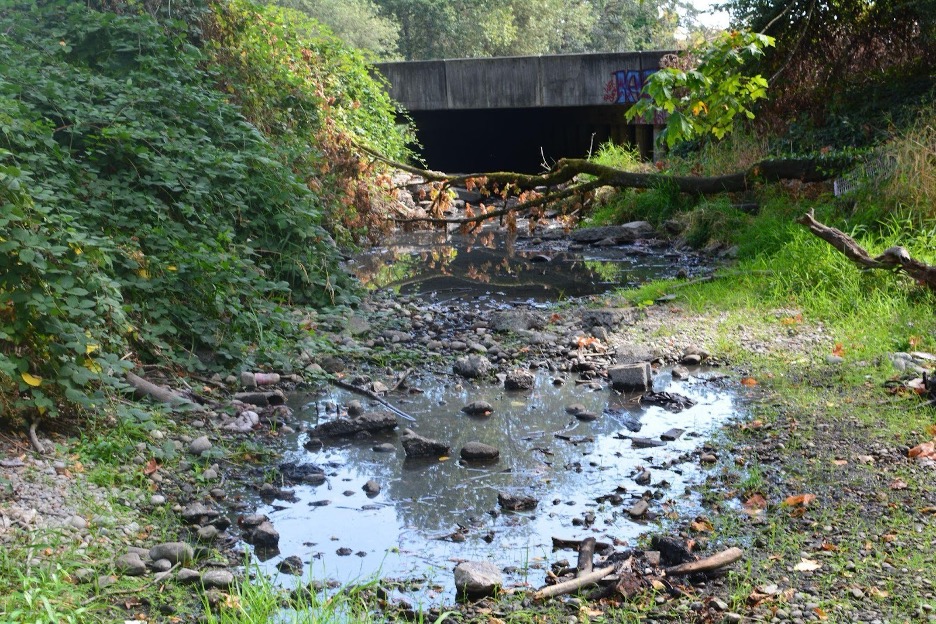
Clover Creek is a non-glacially fed creek in Pierce County, Washington, which has been extensively modified and continues to be a site of development. The main channel of the Clover-Chambers watershed system and the former drinking water source for the city of Tacoma, it now runs dry for nine months of the year. The project seeks a hydrogeologist to help understand why flow in Clover Creek has declined so drastically over the past 15 years.
Description
About the Community
This project is being led by a community group in middle Pierce County in Washington State. The communities of Lakewood, Parkland, Spanaway, and Fredrickson are in the immediate vicinity of Clover Creek. The watershed at large includes the communities of University Place, Dupont, Steilacoom, Fircrest, and parts of Graham, JBLM, South Hill and Tacoma as well.
The Clover Creek Restoration Alliance is a 501c3 non-profit representing concerned citizens of the Clover-Chambers Watershed. The community is primarily urban, suburban, and military with a few rural pockets. Colonization of the Washington territory began in this watershed in present-day Dupont at Fort Nisqually, and many white settlers still trace their ancestries to these times. There have been many more waves of immigrants from the military, stationed at Joint-Base Lewis-McChord, and the area has become a bedroom community for the greater Puget Sound region, with residents commuting to Seattle, Tacoma, and Olympia. The area also hosts a number of retirees.
The community’s priority is to lay out a roadmap for the restoration of the local watershed, and continue to develop a sense of stewardship and belonging in a community that is quickly growing but still has several transient characteristics. While Washington state is known for its natural beauty, much of the natural splendor of the Clover-Chambers watershed has been buried.
Prior to American settlement, Indigenous communities lived along Clover and Sequalitchew Creeks, and on the banks of American Lake. After settlement, there has always been a small layer of resistance to the unfettered exploitation of this watershed. For many years, this took the form of the Clover Creek Council, and it continues through the County Commission of the Clover-Chambers Watershed Council and through us, the Clover Creek Restoration Alliance.
About the Project
The state of the Clover Creek watershed was last reviewed fourteen years ago by Johnson et. al. Since the publication of this study, there has been extensive development in the region, and Clover Creek now runs dry for 9+ months of the year. Residents are unsure of the current state of the groundwater, and unsure of how groundwater is being used. As a result, it is difficult to inform action regarding new development, and difficult to understand the future of residents’ access to water.
This project seeks to use well log data and stream monitoring data to understand how the watershed of Clover Creek, both including surface and groundwater, has changed since Johnson et. al’s model was built. The project team aims to expand monitoring of the watershed with new small-scale monitoring infrastructure to help residents continue to monitor groundwater and surface flow beyond the duration of this project. The community aims to learn more about how climate change, development, and changes to the stream course have impacted the watershed. This project will use existing data to provide residents with new explanations for why their home is changing, and provide an independent assessment of the impact of development on the watershed. The results of this work will help provide data to the “small layer of resistance” aiming to defend the creek, and provide a roadmap to future, showing scientific cause and effect modeling that can be prescriptively used to rally the community around key demands.
Timeline and Milestones
- February – March 2026; recruit and onboard project scientists
- March – April 2026; identify potential local experts and collaborators, particularly those knowledgeable of Washington State and Pierce County water policy
- April 2026; finalization of project plan and scientific aims in conjunction with project scientists
- May 2026; scientist meets with Clover Creek Restoration Alliance
- May – June 2026; identify locations for new stream monitoring stations and assessment/implementation with community partners
- May – September 2026; Assess suitability of Johnson et. al’s (2011) model for our use
- May – November 2026; Exploration of well log data/stream flow data, likely including automation of aggregating data
- December 2026 – March 2027; Develop conclusions regarding the role of climate change and development. Make recommendations for policymakers
- April 2027; present results to community members and policymakers
- April 2027; share results via a local news outlet and/or Eos or an open source journal article
- May 2027; wrap up project
Project Team
Community Leads
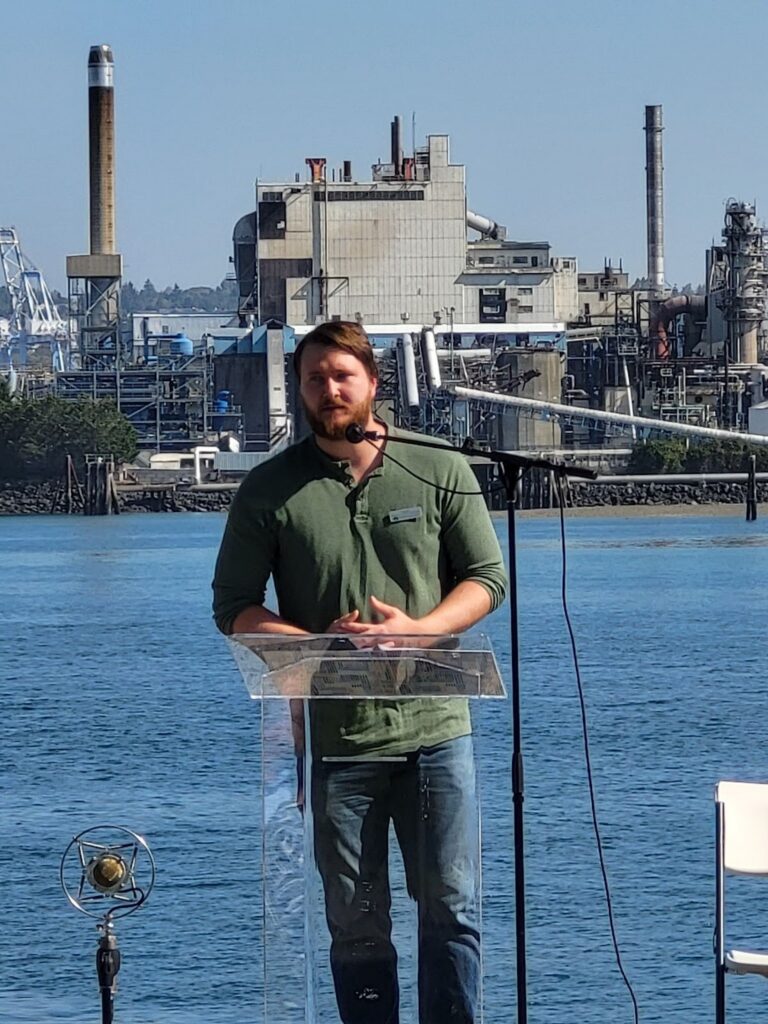
Sean Arent is a lifelong community organizer and president of the Clover Creek Restoration Alliance, a 501c3 dedicated to restoring the Clover-Chambers watershed in Pierce County, Washington. He works on nuclear disarmament issues for the Washington Physicians for Social Responsibility and lives in Tacoma.
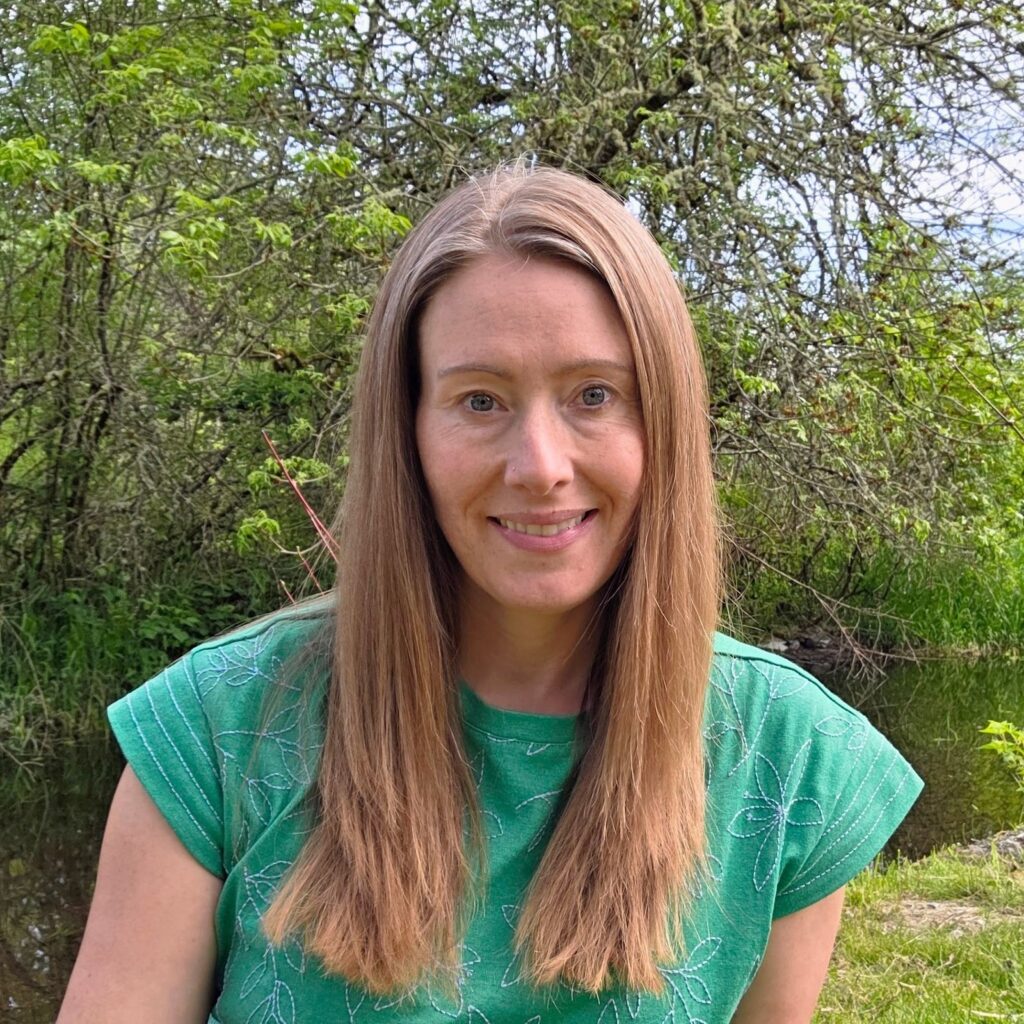
Diedre Conant is Vice-president of the Clover Creek Restoration Alliance and a lifelong resident of Tacoma, Washington. She grew up with a healthy, year round flowing Clover Creek in her backyard. Upon moving back to the area along this stream, as an adult, the creek now dries for eight out of twelve months of the year. Her aim is to help restore riparian habitat along the stream and partners with community members concerned about conservation and protection of vital ground water that all species require.
Community Science Fellow

Samuel Marcus is a graduate student at the University of Wisconsin-Madison, studying fault mechanics with Dr. Hiroki Sone. Samuel graduated from Wesleyan University in 2023, and previously spent multiple years in campaign organizing. In his free time, he enjoys meditation, vintage stores, watching the New York Mets, and any activity outdoors, in particular skiing and mountaineering!
Scientist Wanted
Scientist Role
The project is seeking a hydrologist or hydrogeologist to use existing well records to interpret change over the past 15 years, potentially conduct modeling work, and assist in the implementation of monitoring stations. The project team is looking for somebody who is flexible in terms of the direction the project may take, and in particular, understands the needs of the community will drive the direction of the science. Strong science communication skills, both with community members and public officials, are critical to this project. Experience teaching community members to use and maintain streamflow gauges or similar equipment is a plus. It is likely GIS/geospatial data skills will be necessary to present results to a community. While we do not require the scientist to be local to the PNW, travel to the site may be beneficial, and an understanding of the landscape of ground and surface water policy in Washington State is a plus.
Desired Skills and Qualifications:
- Expertise in hydrology or hydrogeology
- Experience with well data
- Knowledge of/willingness to learn Washington State groundwater and surface water policy
- GIS skills
- Ability to interpret a hydrologic model (experience modeling is not necessary, but may be beneficial)
- Knowledge and respect for diverse cultures and worldviews
- Experience and/or desire to participate in community education, outreach, and engagement
- Experience translating scientific results into policy recommendations
- Public speaking skills
- Strong listening and collaboration skills
- Willingness to connect science to local concerns
Thriving Earth Exchange asks all scientific partners to work with the community to help define a project with concrete local impact to which they can contribute as pro-bono volunteers and collaborators. This work can also position the scientists and communities to seek additional funding, together, for the next stage. Unsure if you’re the right fit for this project? Reach out to us via email at [email protected] to learn more.
Interested in volunteering as a scientist? Apply now!
Collaborating Organizations
Clover Creek Restoration Alliance
The Clover Creek Restoration Alliance (CCRA), formerly known as the Clover Creek Council, is a 501(c)(3) non-profit charitable corporation licensed in the State of Washington. We are a volunteer- and member-run organization working to educate and organize our community to protect the greater Clover–Chambers Creek watershed. Our work includes political advocacy as well as hands-on projects such as planting trees and removing invasive species.
The mission of CCRA is to advocate, identify, and make efforts to reverse damage, to protect the integrity of the creek, to restore the habitat for all aquatic life, and ensure protection of vital groundwater.
Status:
Scientist Wanted,
Location:
Parkland,
Managing Organizations:
Thriving Earth Exchange,
Project Categories:
Water Management,
Wetlands,
Project Tags:
No tags