
Reimagining a Community Hub: Transforming a Cleared Gymnasium Site into a Sustainable Garden for Portland Borough
Portland, Pennsylvania, United States

This project addresses Portland Borough’s challenges of limited access to healthy food and the lack of community gathering spaces. By converting a vacant site where a now demolished gymnasium once stood into a sustainable community garden, the project aims to provide local families with fresh, affordable produce while fostering a space for social engagement, education, and wellness.
The garden will support food security and strengthen the borough communities’ sense of unity and resilience. Through collaboration between local residents and volunteers, the project will create a thriving garden that benefits all generations in the community.
Results
Project Summary
The Portland Community Garden was created to provide a sustainable, accessible space where residents can grow fresh produce, learn gardening skills, and strengthen community connections. The project’s goals were to establish a centralized garden protected from wildlife, equipped with the tools needed for long-term success, and designed with sustainable features including solar-powered security cameras, a rainwater collection system, and future automated irrigation.
One of the most important aspects of the project was selecting the right location. The original site raised concerns because it was adjacent to the municipal building, which could one day require relocation due to the age of the historic structure. The area also contained the former school gym site, creating uncertainty about demolition materials. After researching alternatives, the project team selected a location along the community ball field. The site provides full sun, excellent public access, room for future expansion, and space for a storage shed that will protect the tools and solar irrigation system during the winter.
The initial planning, budgeting, vendor research, and project coordination were completed by Community Leader Heather Fischer with support from Thriving Earth Exchange Community Fellow, Monika Giri, through virtual meetings, email, and text. Although a scientist was eventually identified, he was were located in another country, and the connection occurred during winter, preventing real collaboration before construction began.
In the spring, Heather connected with local residents Lærke Skjoldlykke and Kelly Thornton, whose organic gardening and homesteading experience greatly strengthened the project. They helped with planting and led a hands-on gardening workshop attended by approximately 15 community members, including adults and children. Participants received educational handouts and access to an instructional video for future reference. These materials will also be made available to anyone who did not attend.
Today, volunteers continue maintaining the garden while the solar-powered rainwater collection system is completed. Community interest has continued to grow, with plans to expand participation to neighboring Upper Mount Bethel next season. Families involved in the project will share the harvest, and surplus produce will be donated to the Portland Food Pantry, creating a lasting community resource that promotes education, sustainability, and food security.
Project Outputs
- Art-based products
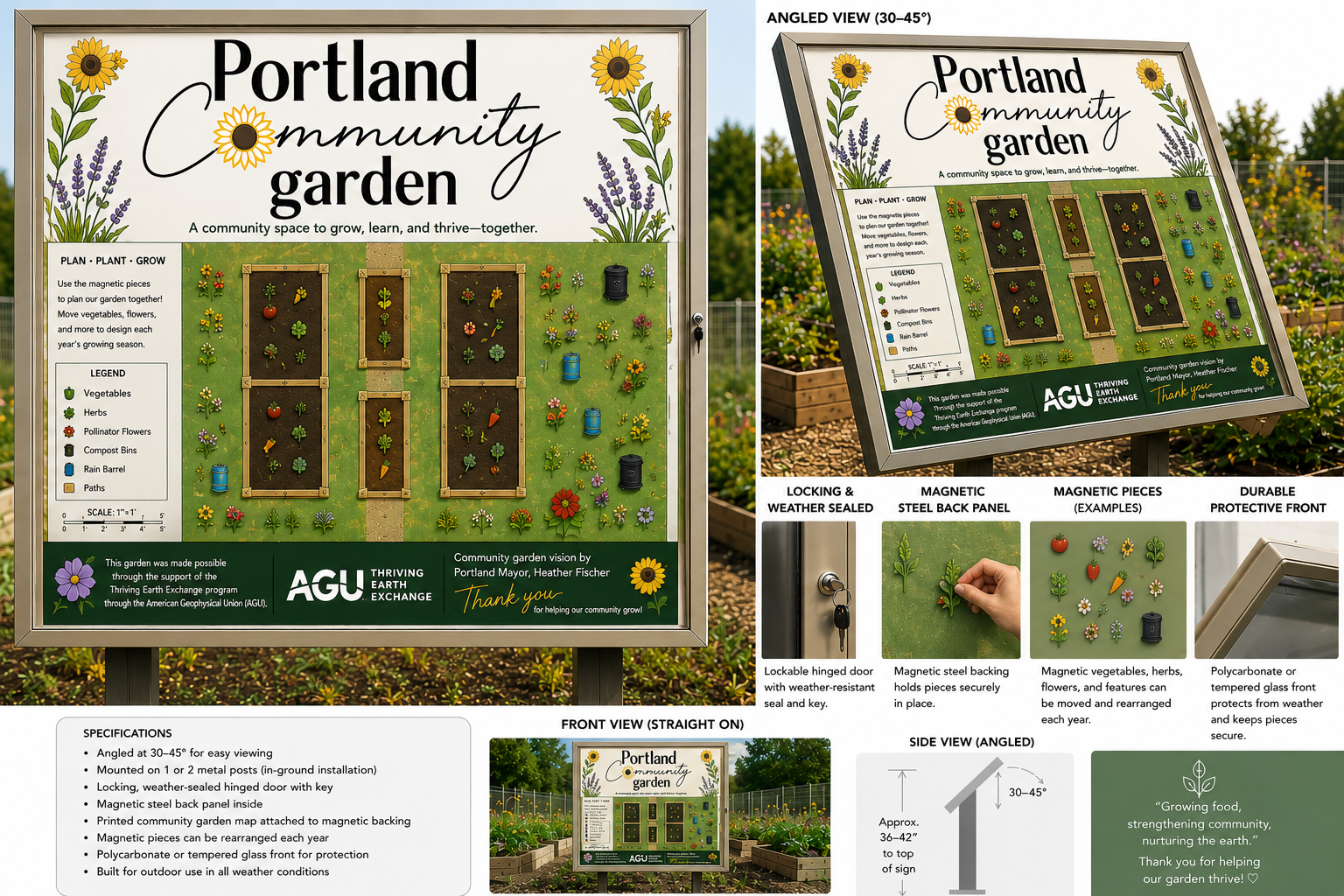
Heather is completing the design of a permanent interactive display for installation at the community garden. The exhibit will take the form of a weatherproof, lockable wayside display mounted on a pedestal and positioned at an angle. Inside will be a magnetic steel backing with a printed map of the community garden protected by a clear polycarbonate or tempered glass front.
The display will feature movable magnetic pieces representing vegetables, flowers, herbs, compost bins, rain barrels, and a yearly crop-rotation legend. The exhibit is intended to serve as both an educational tool and a visual planning resource, allowing residents to better understand crop rotation, companion planting, pollinator habitats, and the overall design of the community garden.
- Movable magnetic components include (see screenshot for visual aid):
- Vegetables (tomatoes, beans, carrots, peppers, lettuce, and others)
- Flowers
- Herbs
- Compost bins
- Rainwater barrels
- Annual crop rotation indicators
Artwork would recognize the support that made the project possible by featuring an acknowledgment of funding from the Thriving Earth Exchange program through the American Geophysical Union (AGU), along with the appropriate program logos.
Dropbox Link: Mock up interactive display image

- Community event (workshop, presentation, panel, tour, etc.)
A hands-on community gardening workshop was held during the June planting day and led by experienced organic gardeners Lærke Skjoldlykke and Kelly Thornton. Approximately 12-15 community members, including adults and children, participated. The workshop covered planting techniques, garden maintenance, and sustainable growing practices while allowing participants to actively plant the raised beds. Another workshop will be conducted to go over harvesting when the time comes and materials and a video were included. Lærke and Kelly did a large portion of the planting while they guided and will continue to grow the community garden, adding in opportunities for residents to learn how to compost, etc.
Dropbox Link: Organic_Gardening_Beginners_Guide Hand Out
Dropbox Link: One of several videos from Lærke and Kelly to guide garden participants
Facebook Post Link: Announcement of Planting Workshop
Facebook Post Link: Planting Day/Workshop Success
- Decision Support Tools / Action Plan
A comprehensive project plan was developed to guide the implementation and long-term sustainability of the community garden. This included:
-
- Site selection analysis and evaluation of multiple locations
- Budget development and procurement planning
- Wildlife protection strategy (deer fencing)
- Solar-powered irrigation plan using rainwater collection
- Produce distribution plan for participating families and donations to outside sources
- Monitoring Systems
The project includes a solar-powered security monitoring system using trail cameras capable of capturing both photos and video. Access to the cameras will be shared with multiple community members, allowing volunteers to remotely monitor the garden, improve security, discourage vandalism, and observe wildlife activity without requiring constant site visits.
Product Link: Tactacam REVEAL X 3.0 Cellular Trail Camera two-pack
- Public Awareness Materials (pamphlets, flyers, social media campaign)
Numerous outreach materials were created throughout the project, including:
-
- Community workshop flyers
- Social media announcements recruiting volunteers
- Educational handouts distributed during the workshop
- Ongoing social media updates documenting project progress, construction, and community participation
- Promotional materials encouraging residents to participate and volunteer
Dropbox Link: Organic_Gardening_Beginners_Guide Hand Out
Dropbox Link: One of several videos from Lærke and Kelly to guide garden participants Facebook Post Link: Announcement of Planting Workshop
Facebook Post Link: Planting Day/Workshop Success
- Toolkit / Written Report
The project will generate a practical toolkit that can be reused by other communities interested in establishing similar gardens. I manage everything in a ClickUp dashboard now and can export upon completion. Resources will include:
-
- Budget and purchasing lists Vendor recommendations
- Raised bed layout and site design
- Irrigation and rainwater collection plans
- Educational materials for gardeners
- Other: Permanent Community Garden Infrastructure
A permanent community garden was established consisting of:
-
- Multiple raised garden beds
- Deer-resistant fencing
- Community gardening tools
- Planned storage shed

Community Impact
The Portland Community Garden has already created meaningful benefits for residents while laying the foundation for long-term community impact. In the short term, the project brought neighbors together through planning, construction, planting, and educational activities. Residents who had never gardened before worked alongside experienced volunteers, creating opportunities to build relationships, share knowledge, and develop practical gardening skills. The hands-on workshop introduced sustainable growing practices to both adults and children and sparked continued interest in volunteering and future expansion. The community has already received additional interest from residents and capturing their details for outreach as they come in.
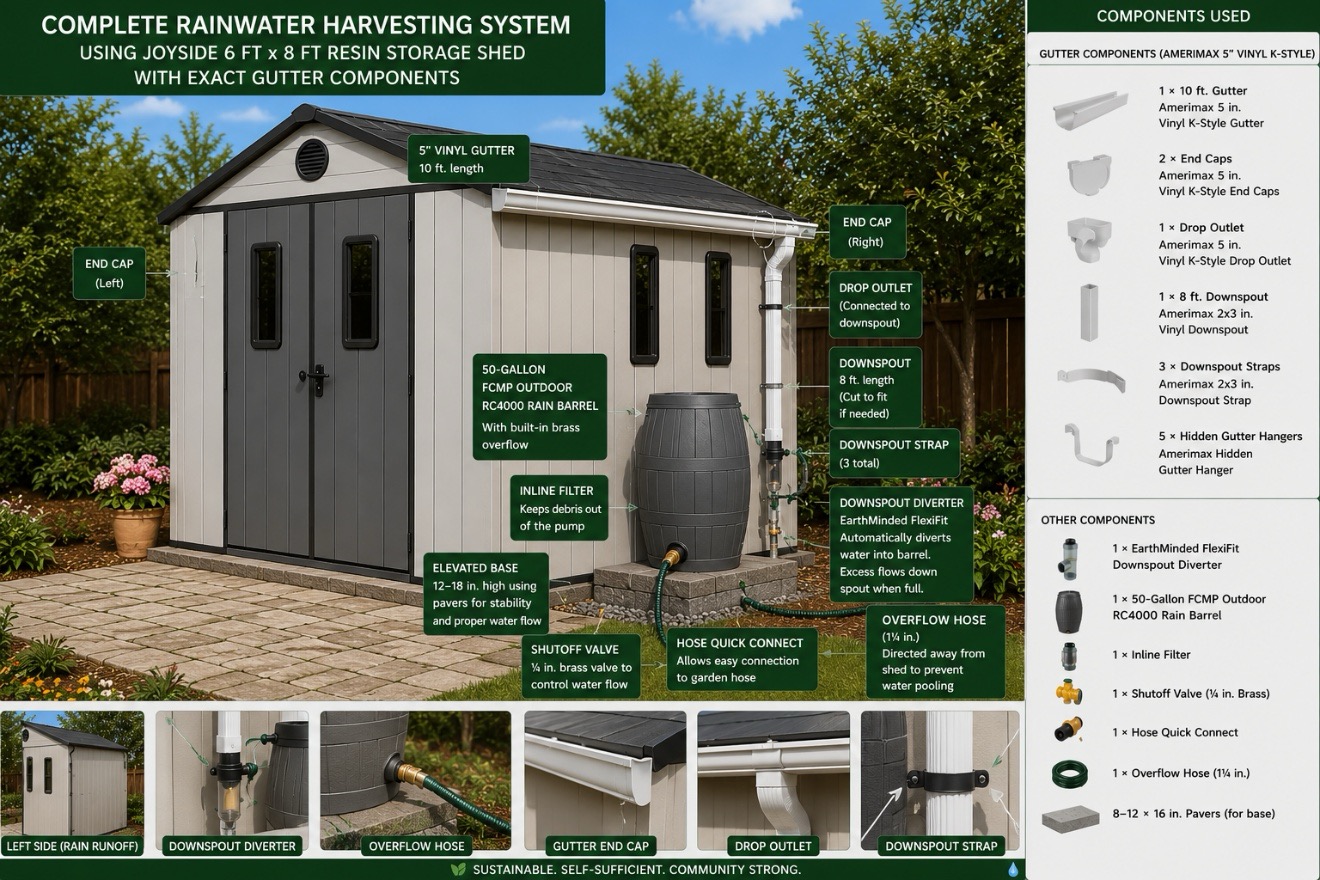
The project also transformed an underutilized public space into a safe, welcoming community asset. By selecting a centralized location with full sun, installing deer-resistant fencing, planning for solar-powered security cameras, and incorporating a solar-powered rainwater collection and irrigation system, the garden was intentionally designed to minimize long-term operating costs while maximizing accessibility and sustainability. The addition of a storage shed will protect tools and irrigation equipment, helping ensure the garden remains operational for many years.
Beyond providing fresh produce, the garden promotes healthy living, environmental stewardship, and community resilience. Participating families will be able to harvest vegetables throughout the growing season, and the community is researching opportunities to donate surplus produce to places like the Portland Food Pantry, which will increase access to fresh, locally grown food for residents in need.
The project has also strengthened community partnerships. New volunteers with expertise in organic gardening and homesteading have become actively involved in maintaining the garden and mentoring others. Interest has continued to grow since planting day, with plans to expand participation to neighboring Upper Mount Bethel Township residents during the next growing season.
Looking ahead, the community will continue to benefit through educational opportunities and ongoing engagement. An interactive interpretive display is currently being designed that will allow volunteers to update the garden layout each year using movable magnetic pieces representing crops, pollinator plants, compost areas, and rain barrels. Together, these improvements will help ensure the Portland Community Garden remains a lasting resource that encourages volunteerism, healthy lifestyles, environmental education, and stronger community connections for years to come.
Acknowledgements
This project was made possible through the generosity, expertise, and dedication of many individuals and organizations, and I am deeply grateful for each of their contributions.
First and foremost, Community Leader Heather would like to thank the Thriving Earth Exchange program of the American Geophysical Union (AGU) for believing in this project and providing the funding that transformed an idea into a lasting community resource. Their investment has enabled the creation of a sustainable community garden that will provide fresh food, educational opportunities, and a place for neighbors to connect for years to come.
Heather would also like to recognize my Thriving Earth Exchange Community Fellow, Monika Giri, whose guidance during the planning and development stages was instrumental in moving this project from concept to reality. Heather and Monika worked closely throughout the planning process to develop the project’s vision, budget, and implementation strategy. While communication naturally became more limited once the project entered the construction phase, as much of the remaining work involved local coordination and hands-on execution, Monika’s early support and encouragement helped establish a strong foundation for the project.
As construction began, the project benefited tremendously from the knowledge and generosity of local residents Lærke Skjoldlykke and Kelly Thornton. Their experience in organic gardening and homesteading proved invaluable as they helped organize and lead the community planting workshop, volunteered hours planting and maintaining the garden, and committed to helping care for it well into the future. Their passion for gardening has already inspired the next generation, with their young children joining in the planting and ongoing maintenance.
Heather is also grateful to Portland Council for approving my request for the dedicated space on the ball field, Thomas Greenhouse in Mount Bethel for providing a discount on the vegetable plants used throughout the garden, and to Kaiser’s Mulch in Bangor for generously reducing the delivery cost of the soil and mulch while accommodating our tight planting schedule once favorable weather arrived.
Finally, Heather wants to recognize her family. They have long understood that serving their community is simply part of who they are, yet they continue to show up whenever help is needed. Heather’s husband and their children volunteered countless hours constructing raised beds, installing fencing, planting, and solving unexpected challenges. One of the greatest obstacles they encountered was the rocky subsurface beneath much of the ball field, which prevented many fence posts from being driven into the ground using conventional equipment. Rather than allowing the project to fail, Heather’s husband and sons brought additional equipment, including a generator and a rock-breaking tool, and worked tirelessly until every section of fencing was installed. They ensured the deer-resistant fence could be completed, protecting the garden and preserving the investment made by their volunteers and funders.
This community garden is the result of many people contributing their time, knowledge, resources, and encouragement toward a shared vision. It stands as a testament to what can be accomplished when organizations, volunteers, local businesses, and neighbors work together to create something that will benefit their community for generations to come.
Future Plans
The Portland Community Garden was intentionally designed to be a long-term community resource and will continue to grow well beyond the completion of this project.
Due to the timing of final site approval and the late arrival of favorable planting conditions after the spring frost, construction and planting occurred within a condensed timeframe. As a result, several planned improvements are still being completed. Currently, volunteers rotate responsibility for manually watering and maintaining the garden while the permanent solar-powered rainwater collection and irrigation system is finalized. The remaining work includes constructing the storage shed, installing gutters with a rainwater diverter, connecting the storage barrel(s), and completing the solar-powered pump and automated watering system. Once operational, the system will significantly reduce maintenance requirements while creating a more sustainable and environmentally responsible source of irrigation.
An interactive interpretive display is also being designed for installation at the garden. The weather-resistant display will feature a magnetic garden map that can be updated each growing season to reflect crop rotation, companion planting, pollinator areas, compost locations, and rainwater infrastructure. In addition to serving as an educational and planning tool, the display will permanently recognize the support of the Thriving Earth Exchange program through the American Geophysical Union (AGU) and the partners whose generosity helped make the project possible.
The long-term success of the garden will be sustained through a dedicated group of community volunteers, including experienced gardeners who have committed to maintaining the space and mentoring new participants. Interest from residents continues to grow, and the community hopes to expand participation to neighboring Upper Mount Bethel Township in future seasons. Local businesses and community partners have already demonstrated their willingness to support the project, providing a strong foundation for future improvements and ensuring the garden remains a valuable community asset for years to come.
Description
About the Community
Portland Borough is a small, rural community in Northeastern Pennsylvania, with a population of over 500 residents. Nestled along the Delaware River in the Pocono Mountains, the borough boasts natural beauty, outdoor recreation opportunities, and a close-knit sense of community. However, the area faces food insecurity and lacks central spaces for community interaction. The proposed community garden will address these challenges, transforming a cleared gymnasium site into a vibrant, sustainable hub for food production and education. This effort will mobilize community members, local businesses, and volunteers to bring this vision to life.
Although the town doesn’t qualify for routine funding for this project, this work aligns with the community’s priority of improving access to healthy food and creating sustainable, low-cost resources. The objective of working with the Thriving Earth Exchange is to help bring this vision to life through expert guidance and support. The idea has been discussed and considered by the community previously, but a lack of resources prevented progress. Now, with the guidance and support of Thriving Earth Exchange, this collaboration could help advance the project.
About the Project
The community would like to transform a vacant gymnasium site into a vibrant community garden and engage Portland Borough residents, including families, seniors, and youth, so that they can learn sustainable gardening practices, grow their own food, and build stronger social connections, which will result in improved food security, community resilience, and environmental stewardship.
To achieve this, the project will begin by clearing and preparing the site through soil testing and amendment to ensure optimal growing conditions. Community members will collaborate on the design of the garden layout, establishment of plots, and selection of crops. Workshops at the beginning of each season will teach skills such as sustainable gardening practices, soil health management, eco-friendly pest control, and water conservation techniques. Volunteers will actively participate in planting, maintaining, and harvesting crops, fostering shared ownership of the garden’s success.
Portland Borough residents, including enthusiastic families, seniors, and youth, will play a central role in the project. Local businesses and organizations will provide support through donations, sponsorships, and event participation, ensuring broad community investment in the garden’s development.
The project will deliver a fully functional community garden that supplies fresh, nutritious produce to participating families. Residents will gain practical knowledge through workshops and educational materials, while the progress of the garden will be documented to highlight its impact on local food security and community cohesion. The garden will serve as a hub for learning, collaboration, and community events.
As a result, the community garden will enhance access to nutritious, affordable food, particularly benefiting lower-income families. It will create an inclusive space for social interaction and collaboration, strengthening community bonds. Additionally, the project will promote sustainable practices, equipping residents with skills to sustain the garden and inspire future initiatives. The garden’s success will demonstrate how local collaboration can drive transformative change and serve as a model for other rural communities.

Timeline and Milestones
- Month 1: Project Preparation / Scientist Recruitment & Onboarding
- Month 3: Project kickoff and community input sessions.
- Month 6: Site preparation completed, and initial planting begins early to mid-May. A workshop providing volunteers with tips and knowledge will be conducted this month. The garden will start with transplanting vegetables to ensure harvest can occur within a 30–90-day timeline.
- Month 9: First harvest and community celebration.
- Month 12: Community survey and feedback collection.
- Month 18: Final evaluation and sustainability planning.
Project Team
Community Leaders

Mayor Heather Fischer has been a resident of Portland since 2006, when she purchased a house on a quiet street with her husband and her then 6-month-old son. She has since expanded her family to 3 children and has always tried to teach them by example. This has included volunteering countless hours on the events committee, her role as Mayor, overseeing the police department, revamping the borough website, and using her advanced technical skills to bring the inner workings of borough and its social media presence into this century. Her sincere goal has always been to leave the borough better than she found it, along with a legacy of helping families to have access to the resources they need. This project is one more step towards focusing on the advantages that a small community provides.
Community Scientist

Dr. Ferdinand Guendehou is an agricutural and environmental management expert from Benin, West Africa, with a Master’s degree in Natural Resources Management and Biodiversity and Ph.D. in Environmental Management from the University of Abomey-Calavi. His work centers on community-based environmental research, education, and advocacy. He has coordinated science outreach initiatives, engaging communities through agricultural workshops, citizen science, and awareness campaigns on sustainability, biodiversity, and climate change. He has collaborated with schools, NGOs, and government bodies to foster environmental stewardship, particularly in marginalized communities. His expertise includes GIS mapping, environmental health research, soil testing, crop selection, and policy-oriented communication. As a researcher at the Applied Ecology Laboratory, his studies focus on marine plastic pollution, climate change impacts, land conservation, and environmental justice. He has presented internationally and published on ecological of Zanthoxylum zanthoxyloides wich is today an endangered plant species. Dr. GUENDEHOU is also an active peer reviewer and advocate for inclusive STEM education in West Africa, blending scientific rigor with community empowerment to drive sustainable change.
Community Science Fellow

Monika Giri is a graduate research assistant and Ph.D. student in the Integrative Conservation and Anthropology program at the University of Georgia. Her research combines her passion for climate change adaptation and disaster risk management with anthropological insights. She holds an M.S. in Environment Management and a B.S. in Forestry Science. Professionally, Monika has served as a researcher in several interdisciplinary research projects on climate resilience, environmental justice, and resource governance. Her academic and professional journey is marked by a commitment to addressing complex environmental challenges through a blend of scientific research, community engagement, and policy advocacy.
Collaborating Organizations

Borough of Portland
Portland is a hidden gem along the Delaware River, where small-town charm thrives in a close-knit community. Though often overlooked, this quaint borough offers a welcoming atmosphere, locally owned businesses, and a deep sense of pride among residents. Its scenic riverside setting offers peaceful escapes for fishing, kayaking, and picnicking, making it a haven for nature lovers. In a world that moves fast, Portland’s quiet beauty and strong community spirit remind us of the joys of simple living and the warmth of a town where everyone feels at home.
The dedication of the volunteer elected officials and residents, along with their strong sense of community, is what will drive this project to success. They are eager to roll up their sleeves and help with the planning, planting, and upkeep of a community garden that will be a valuable resource for everyone in the area.
Status:
Complete,
Location:
Portland,
Managing Organizations:
Nurture Nature Center,
Thriving Earth Exchange,
Project Categories:
Community Engagement,
Community Garden,
Health Impacts,
Sustainability,
Project Tags:
No tags