Community of Soacha, Colombia
The article below is in both English and Spanish
Colombian students learn to care for a threatened wetland
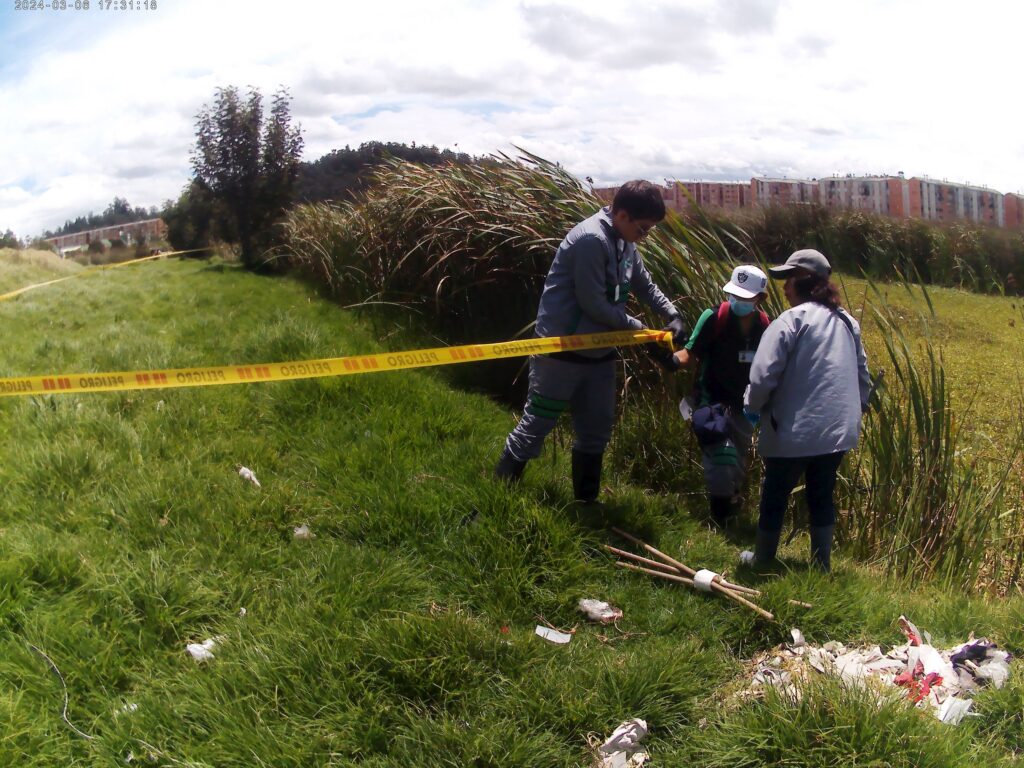
Tierra Blanca is an urban wetland in Soacha, Cundinamarca, Colombia, a densely populated, rapidly growing city just south of Bogotá. Although it has long served as a vital source of fresh water for people and natural ecosystems, the wetland now faces severe threats from industrial pollution, urban growth and limited community stewardship.
“The wetland is a great source of richness for all the residents, not only those who live near the wetland, but for the entire surrounding area,” said Eva Guzmán Alfaro, the principal of Colegio Nueva Andalucía, a school located close to the wetland in Soacha. “However, they have become accustomed to the wetland being there and don’t realize that it could dry up and disappear, as is happening now.”
In recent years, Tierra Blanca has transformed from a beautiful body of water with visible wildlife to a wetland choked with invasive aquatic plants and trash. Local residents have long relied on the wetland to help protect their homes from flooding during heavy rains, and until around 2020, families could use the water for washing laundry and other household purposes. Contamination has now made that impossible.
Estudiantes colombianos aprenden a cuidar un humedal amenazado
El humedal Tierra Blanca está ubicado en Soacha, Cundinamarca, Colombia, una ciudad densamente poblada al sur de Bogotá que continúa creciendo rápidamente. Aunque durante mucho tiempo ha sido una fuente vital de agua dulce para la población y los ecosistemas naturales, hoy el humedal enfrenta graves amenazas debido a la contaminación industrial, el crecimiento urbano y la falta de iniciativas comunitarias para conservarlo.
“El humedal es una gran fuente de riqueza para todos los habitantes, no solo para quienes viven cerca, sino para toda la zona que lo rodea”, señaló Eva Guzmán Alfaro, directora del Colegio Nueva Andalucía, una institución educativa cercana al humedal en Soacha. “Sin embargo, la gente se ha acostumbrado a su presencia y no se da cuenta de que podría secarse y desaparecer, como está sucediendo ahora”.
En los últimos años, Tierra Blanca ha dejado de ser un hermoso humedal donde se podía observar fauna silvestre y hoy está cubierto de plantas acuáticas invasoras y basura. Durante años, el humedal ha contribuido a proteger las viviendas de la zona frente a las inundaciones provocadas por las lluvias intensas. Hasta aproximadamente 2020, las familias utilizaban el agua del humedal para lavar la ropa y otros usos domésticos, algo que hoy ya no es posible debido a la contaminación.
Combining research and education
“We felt that it was necessary to recover such an important resource for the community,” said Guzmán Alfaro. That goal became the focus of Colegio Nueva Andalucía’s School Environmental Program (PRAE). Schools in Colombia are required to have a PRAE, which provides a framework for students to investigate environmental challenges and develop solutions in their communities.
A teacher who lives near the wetland saw a Thriving Earth Exchange call for project applications and recognized that the school’s work was a good fit. The school applied and received support for a community science project focused on incorporating the wetland work into its PRAE. As part of the effort, the school established a laboratory where students could apply what they learned in the classroom to an environmental issue in their own community.
The Thriving Earth Exchange also connected the school with Marta Reyes, who served as the project’s scientist, and Elvira Lafuente, who served as the Community Science Fellow. Reyes helped the team identify laboratory equipment they could purchase within their budget
“I helped them turn their ambitious ideas and complicated problems into something more tangible so that they could plan what exactly they were going to do with the students and what types of data they could gather from the wetland,” said Lafuente. “The project made it possible for students to learn how to do good science, even with limited resources, while addressing a problem that matters to them.”
The students found that the wetland was in worse condition than expected. In fact, some of the planned research couldn’t be completed because the species they hoped to study were no longer present. They presented their findings to the urbaSEN organization, which gave them an opportunity to explain their work and build momentum to continue.
Integrar la investigación y la educación
“Sentíamos que era necesario recuperar un recurso tan importante para la comunidad”, comentó Guzmán Alfaro. Esta necesidad se convirtió en el objetivo principal del Proyecto Ambiental Escolar (PRAE) del Colegio Nueva Andalucía. En Colombia, todas las instituciones educativas deben contar con un Proyecto Ambiental Escolar (PRAE), un programa que permite a los estudiantes investigar los desafíos ambientales de sus comunidades y proponer soluciones.
Una profesora que vive cerca del humedal se enteró de una convocatoria de AGU Thriving Earth Exchange para presentar proyectos y consideró que podría ser una buena oportunidad para el trabajo que la escuela ya estaba realizando. El Colegio Nueva Andalucía presentó su solicitud y recibió apoyo para desarrollar un proyecto de ciencia comunitaria que integrara el estudio del humedal en su Proyecto Ambiental Escolar (PRAE). A través del proyecto, la escuela creó un laboratorio donde los estudiantes podían aplicar lo aprendido en el aula al estudio de una problemática ambiental de su propia comunidad.
Thriving Earth Exchange también puso en contacto a la escuela con Marta Reyes, científica del proyecto, y Elvira Lafuente, quien participó como gerente de proyecto. Reyes ayudó al equipo a identificar el equipo de laboratorio que podían adquirir dentro del presupuesto disponible.
“Les ayudé a convertir sus ideas y los problemas complejos que querían abordar en algo más concreto, para que pudieran definir exactamente qué iban a hacer con los estudiantes y qué tipo de datos podían recopilar del humedal”, explicó Lafuente. “El proyecto permitió que los estudiantes aprendieran a realizar una investigación científica rigurosa, incluso con recursos limitados, mientras trabajaban en un problema que les afecta directamente”.
Los estudiantes descubrieron que el humedal estaba en peores condiciones de lo que esperaban. De hecho, no pudieron realizar algunas de las investigaciones previstas porque las especies que esperaban estudiar ya no se encontraban en el humedal. Presentaron sus resultados a la organización URBASER, lo que les dio la oportunidad de compartir su trabajo y sentar las bases para continuar con el proyecto.
Building a lasting effort
“Without the Thriving Earth Exchange support, we would not have been able to develop the project,” said Guzmán Alfaro. “The support provided more than funding—it gave students the motivation and a laboratory from which to begin their work to study and protect the wetland.”
She notes that the students continue to be excited about the work and want to keep gathering data to study the wetland. She’s also seen a growing understanding of the wetland’s importance within the surrounding community.
“Nobody else seemed to be interested in characterizing the status of this wetland,” said Lafuente. “If it were not for this team collecting this data and characterizing the level of damage, it probably would not have been done.”
Moving forward, the school hopes to share their PRAE plans with nearby schools and involve more of the community in the wetland’s recovery.
Un compromiso a largo plazo
“Sin el apoyo de Thriving Earth Exchange, no habríamos podido desarrollar el proyecto”, comentó Guzmán Alfaro. “El apoyo fue mucho más allá del financiamiento: les dio a los estudiantes la motivación y un laboratorio donde comenzar a investigar y trabajar por la protección del humedal”.
Guzmán Alfaro señala que los estudiantes siguen entusiasmados con el proyecto y quieren continuar recopilando datos para comprender mejor el estado del humedal. También ha observado que la comunidad comprende cada vez más la importancia de este ecosistema.
“Nadie más parecía estar interesado en evaluar el estado de este humedal”, señaló Lafuente. “Si no fuera por este equipo, probablemente nadie estaría recopilando estos datos ni documentando los daños que ha sufrido el humedal”.
Mirando hacia el futuro, la escuela espera compartir el trabajo desarrollado a través del Proyecto Ambiental Escolar (PRAE) con otras instituciones educativas cercanas e involucrar a más miembros de la comunidad en la recuperación del humedal.
Entrevistas:
Translation and edits: Marina Cox

Traducción y redacción: Marina Cox