The garden that grew a movement

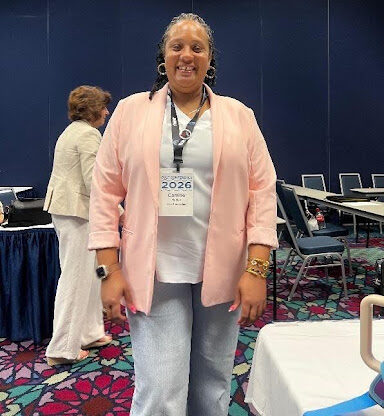
When Camille Hadley moved to Melbourne, Florida, she immediately saw that her community needed better access to fresh, healthy food.
“My husband and I had just moved to the area and were finding it challenging to get access to fresh, healthy foods for our kids,” said Hadley. “We started growing food in pots in our front yard, and the kids in the neighborhood became interested. Then we planted our first community garden at the Eddie Lee Taylor Community Center’s Lipscomb Street Park and began teaching children in a local afterschool program how to grow food.”
Those early efforts led the couple to co-found Little Growers Inc., which has since blossomed into a community-led organization that empowers people of all ages to tackle the challenges facing the area.
From disaster to opportunity
After Hurricane Irma flooded the area in 2017, waterlogged crops in the community garden were lost, and residents were trapped for three weeks. Even FEMA couldn’t reach many of the homes. The experience led Hadley to think more deeply about how to grow food while addressing both food insecurity and recurring flooding.
Through Little Growers, she partnered with the American Geophysical Union’s Thriving Earth Exchange to investigate the causes of the flooding. Working with a hydrologist and residents, the project found that aging infrastructure, poor maintenance, and coordination challenges between Melbourne and neighboring Palm Bay all contributed to the problem.
“We also learned that our community wasn’t just dealing with flooding,” said Hadley. “I knew that the work Little Growers was doing — growing food and thinking about permaculture design as a solution to flooding and addressing food insecurity — could also address other challenges our community was facing, including corporate pollution.”
Because the area is surrounded by multiple potential sources of pollution, including industrial facilities, waste sites, contaminated land, and leaking fuel infrastructure, community members were concerned about toxins in the air, water, and soil. This led to a second Thriving Earth Exchange project focused on soil contamination and the health risks posed by floodwaters carrying pollutants through the community.
As part of this project, Little Growers organized its first Urban Sustainability Meeting during the COVID-19 pandemic. The virtual event drew an impressive 68 residents and stakeholders who came together to discuss how environmental conditions were affecting their health, ask questions, and explore potential solutions. That meeting paved the way for the first in-person Make a Green Noise event, which attracted more than 100 residents, community leaders, and stakeholders.
Hadley attributes the organization’s strong community engagement to its approach of working alongside residents and addressing challenges that matter most to them. “I never have trouble getting people to show up because people are hungry for information and they want to be involved in solutions,” she said. “We’re not doing things for the community — we’re doing things with the community.”
Inspiring youth to take an active role
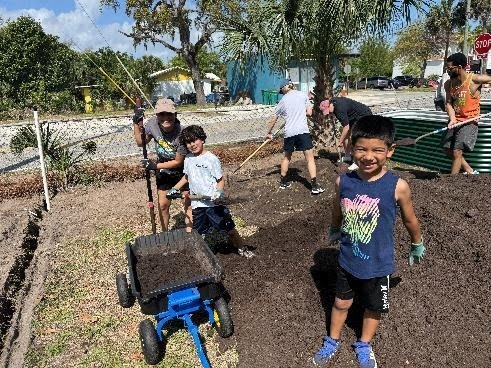
Hadley said the Thriving Earth Exchange project inspired her to create Summer Earn and Learn, a youth program that has expanded from five students to 16 and combines life skills with hands-on STEM training.
Through the program, students conduct energy assessments, explore marine science and climate solutions, and connect with professionals in environmental careers—building skills they can use to improve their own communities.
“We try to have programming that is culturally relevant and allows the students to see themselves in these roles as community leaders who are helping their community, who are giving back to their community, but also see themselves learning skills that pay well,” said Hadley.
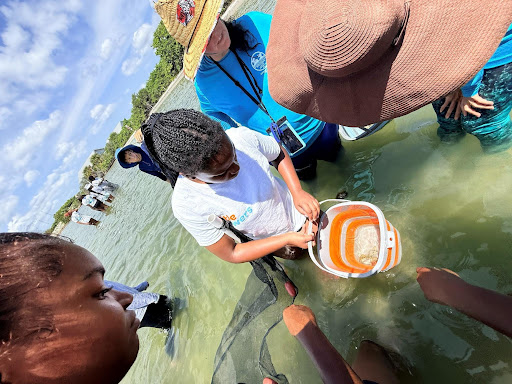
The students are paid for participating in this experience and have opportunities to advance into mentorship and eventually staff roles. Hadley said that these stipends are important because the students are doing meaningful work and because earning money reinforces lessons about budgeting, taxes, and money management.
“This is not just about teaching them workforce skills,” said Hadley. “This is about teaching them skills that they can give back to the communities that they live in, so that they can care for their neighbors, friends, family, and all the people who live in the community.”
The students are also engaged year-round in the Thriving Earth Exchange project with paid opportunities to participate in community events, planting and maintenance days, and other activities connected to the project.
Building lasting community resilience
Hadley credits the Thriving Earth Exchange projects with helping Little Growers achieve significant growth, including raising about $1 million in funding in a single year. For example, the second project led to a valuable partnership with meteorologist Steven Lazarus of Florida Institute of Technology.
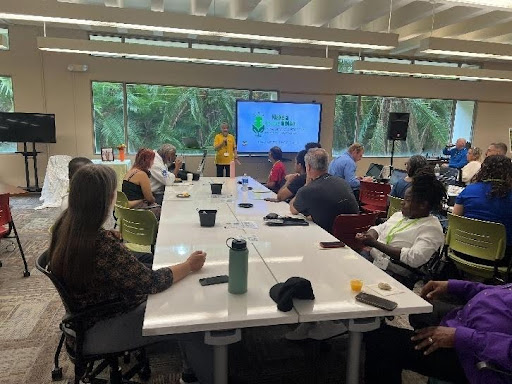
After speaking at a Make a Green Noise event about Hurricane Irma’s flooding and its impacts on local communities, Lazarus was inspired to support the neighborhood by securing a U.S. Department of Energy grant to install 11 weather stations.
These stations are now allowing residents to participate in citizen science by collecting and reporting weather data. This transformed the area from a weather desert with little local data into a community with real-time information to understand flooding impacts and help design solutions.
Looking ahead, Little Growers is expanding its focus to include a community food forest and aquaculture projects that demonstrate sustainable ways to produce fresh food. Hadley envisions these projects as living classrooms where residents can learn practical skills while improving access to healthy food.
She notes that the work has grown far beyond the organization’s original focus on food access. “We are not just addressing food insecurity, flooding, or climate issues,” she said. “This work is changing the socioeconomic outcomes of the people who live and work in this community. This is possible only because we put the community first, making sure they have ownership of the solutions, and making sure the benefits stay in the community.”