Community-Driven Waste Solutions in Leimert Park: A Model for Sustainable Urban Infrastructure
Combining community leadership, technical data, and cross-sector partnerships to advance sustainable waste solutions

A popular cultural hub, Leimert Park in South Los Angeles is known for its authentic culture, community gatherings, music, and bringing people together. As one of Los Angeles’ key cultural and economic corridors, the park also presents an opportunity to pilot scalable sustainability solutions for high-traffic public spaces. But when community events end, another scene often remains: overflowing trash cans, scattered waste, and debris left behind.
Limited garbage bins, inconsistent management, and a lack of recycling or composting options leave waste piling up after each gathering. This haphazard approach creates environmental concerns and affects environmental health and well-being for nearby residents, businesses, schools, and churches, as leftover trash attracts rodents that can make their way into their homes and establishments. This need highlighted gaps in urban waste infrastructure, public health risks, and the need for coordinated systems-level solutions.
With support from Thriving Earth Exchange, Ezrach Brain Trust Association, competitively selected for its leadership and expertise, led a community-driven, data-informed initiative to design sustainable waste management solutions. Their scalable model culminated in a recent day of action to engage residents in collecting real time insights—and plenty of trash—to provide a baseline for advocacy and action.
Getting perspective on the problem
“Our work initially started with community air monitoring research that identified elevated pollution levels in Leimert Park,” said Dr. Edidiong (Didi) Mendie, Executive Director of Ezrach, a nonprofit advancing economic opportunity, environmental sustainability, and educational equity in South Los Angeles. “Building on this research, we pursued a solution-oriented approach focused on improving waste management infrastructure, including exploring the introduction of recycling and composting systems in the park. To inform this work, we engaged community members, elders, businesses, and elected officials to better understand root causes and community needs, including how improper waste management contributes to environmental harm.”
These conversations helped them identify shared challenges, deepen understanding of the issue, and identify opportunities for policy alignment, resource coordination, and long-term infrastructure investment. For example, they learned from speaking with elected officials that cleaning up after large events is costly and logistically challenging for the city, and officials agreed that better solutions were needed. Consistent with research, gaps in waste management infrastructure contribute to environmental pollution, as most waste is diverted to landfills rather than being recycled or composted.
Data to drive action
A recent clean-up event organized by the project team (which includes Ezrach, the Moore Institute for Plastic Pollution, and Thriving Earth Exchange) served a triple purpose: removing trash, gathering data, and convening the community. On a sunny spring afternoon, volunteers fanned out across the park armed with grabbers, gloves, and bags to pick up waste and sort recyclables. They also documented what they found, providing a baseline to inform solutions, track progress, and help to establish a data-driven framework to guide future capital investments and programmatic interventions.
The event actively engaged community members, giving them a chance to learn about the project, ask questions, and provide feedback on how their lived experiences tie into the effort. Mr. Shaahid Ali El, co-founder of the Ezrach Brain Trust Association, said the enthusiasm they received from community elders was a highlight of the event for him. “They saw that the younger generation had picked up the torch and was carrying on the work they had started,” he said.
‘All trash has a story’
Data collection was led by the community scientist for the project, Dr. Win Cowger, Executive Director at the Moore Institute for Plastic Pollution Research. He used an app called Rubbish to photograph and categorize each piece of trash collected. By using this data collection method, the impacts of the cleanup can extend far beyond a single day’s effort to help support informed decision-making and sustainable solutions.
“From the community science perspective, the initial results showed that tobacco-related waste and food-related waste were among the most prevalent types,” said Dr. Cowger. “This is typical for most urban areas.”
The specific components of trash can also reveal the circumstances that led to its accumulation at a particular place and time. For example, the team documented a large number of plastic ties and utensils, which they attributed to a cultural celebration that had recently taken place in the park, highlighting how cultural activity patterns can influence environmental outcomes.
“All trash has a story,” said Mr. Ali El. “If you see the type of trash that’s in your community, you can learn something about the history and what is going on in the community. It’s almost like archaeology.”
Fueling a broader effort for sustained impact
Although the Thriving Earth project has now wrapped up, the team said their initial progress helps lay the groundwork to advocate for a self-sustaining, community-informed waste infrastructure model that can be replicated across Los Angeles.
“During this project, we learned that sustainability efforts are most effective when they are visible and actionable; people want to be a part of something that they relate to and that affects them,” said Dr. Mendie. “This creates ongoing opportunities for local involvement.”
The initiative also creates opportunities to attract public, private, and philanthropic investment to scale community-driven environmental solutions across high-impact corridors like Leimert Park.
The team plans to continue to strengthen their partnerships with local officials, organizations, and residents to support a waste management system that also creates pathways for local economic opportunity, workforce development, green jobs, and small business engagement. They suggested that future clean-up days could be held to build a more complete picture of the problem and see changes over time as advocacy efforts yield actions to support a healthier environment.
“Ideally, in the future someday, we will go there and look for trash, and we can’t find any,” said Dr. Cowger. “Wouldn’t that be great?”
Overall, this work positions Ezrach Brain Trust Association as a community and technical partner for future citywide sustainability efforts, including large-scale events such as the Los Angeles 2028 Olympics, where equitable, efficient waste management systems will be critical, Dr. Mendie noted.
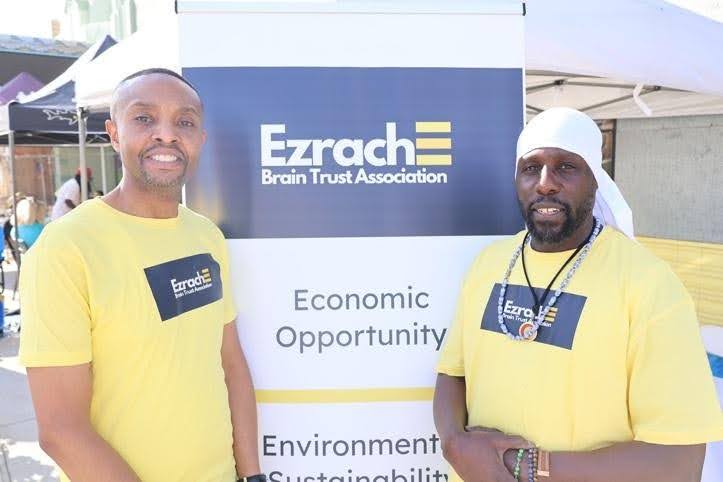 Mr. Daniel Ferguson (left) and Mr. Shaahid Ali El, co-founders of the Ezrach Brain Trust Association.
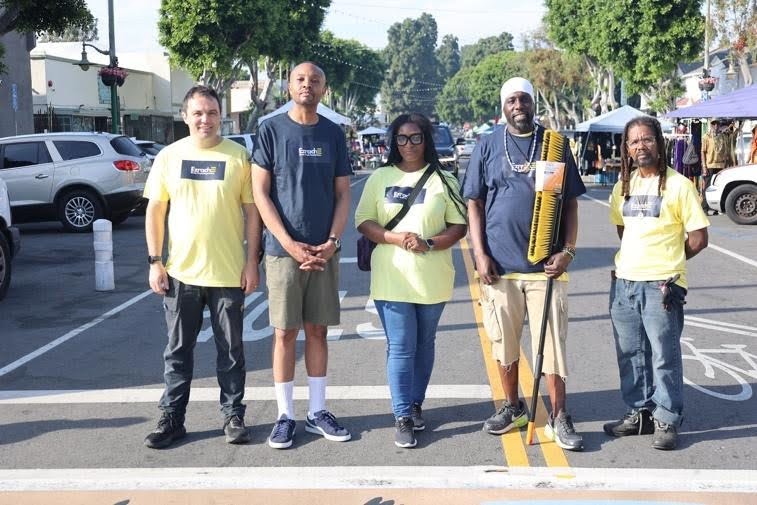 (from left) Dr. Win Cowger, Moore Institute for Plastic Pollution Research; Mr. Daniel Ferguson, Dr. Edidiong (Didi) Mendie, Mr. Shaahid Ali El (Ezrach Brain Trust Association Team); Mr. Ronald Jones Bey, Moorish Science Temple of America.
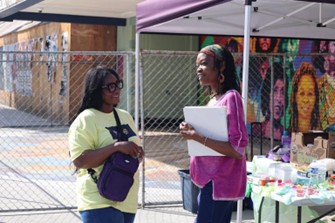 Ezrach Executive Director Dr. Edidiong (Didi) Mendie (left) discusses the project with Mrs. Dara Caldwell-Ross, a local resident and daughter of Elder Ben Caldwell, known as the Father of Leimert Park.
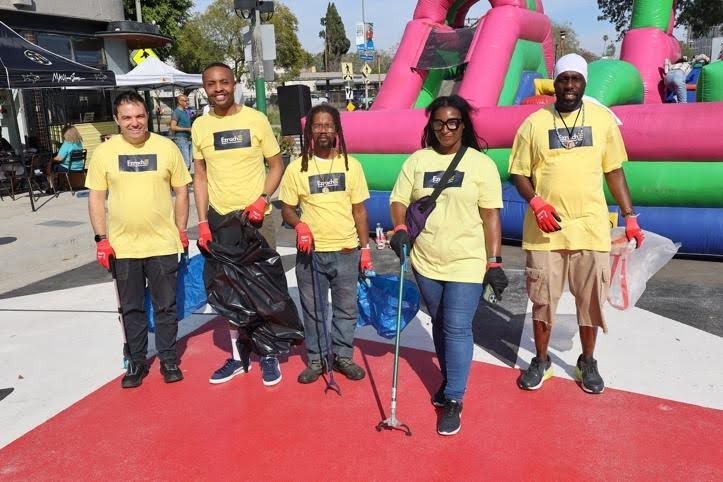 (from left) Dr. Win Cowger; Mr. Daniel Ferguson; Mr. Ronald Jones Bey; Dr. Edidiong (Didi) Mendie; Mr. Shaahid Ali El.
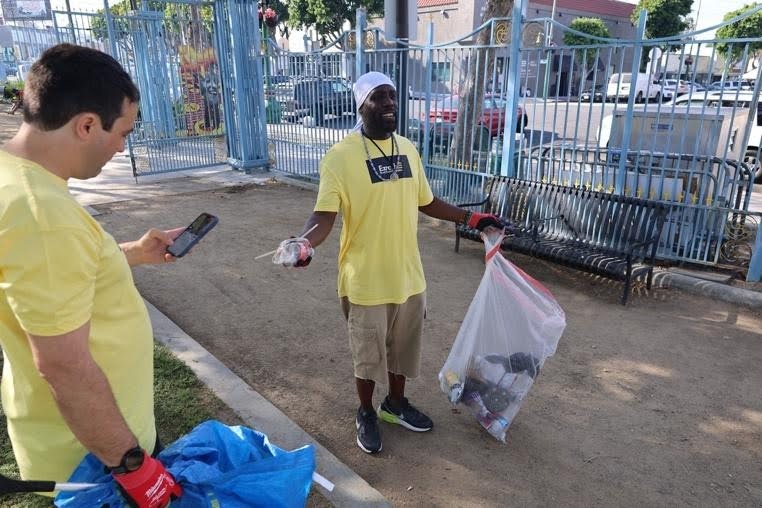 Dr. Win Cowger, the project’s scientific partner, uses an app to categorize trash collected by Ezrach Co-founder Mr. Shaahid Ali El.
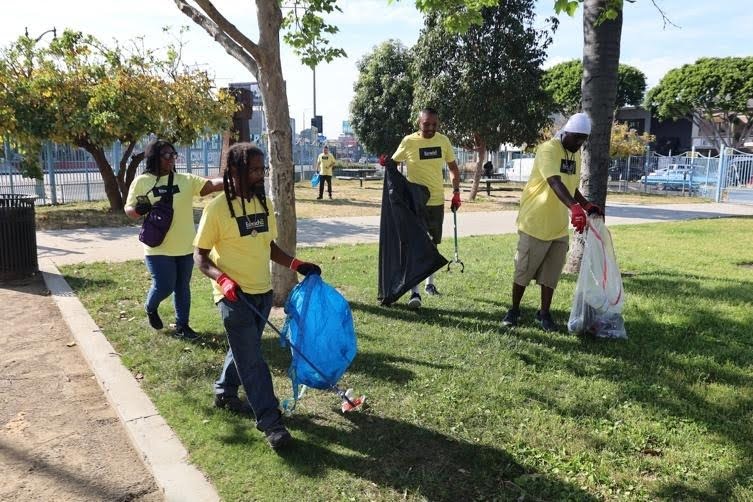 Team members gather trash during the community clean-up event.