
Identifying Contaminants in Drinking Water
Cambridge, Ohio, United States
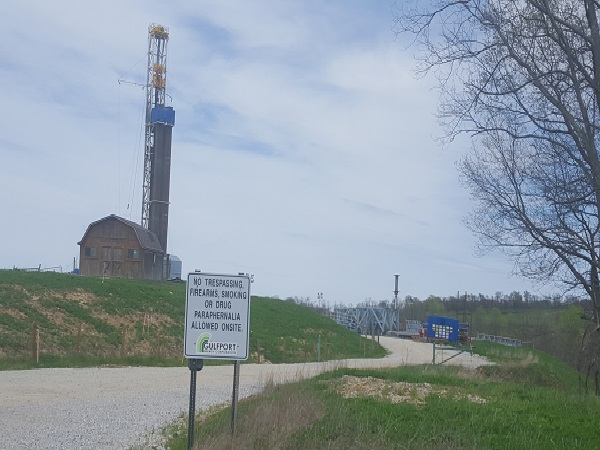
Photo Courtesy of Leatra Harper
Results
The Team
- Leatra Harper, Fresh Water Accountability Project, [email protected]
- Christopher Spiese, Ohio Northern University, [email protected], 419.772.2365
The Initial Challenge
The Wills Creek area in Guernsey County, Ohio, has been a hotbed for hydraulic fracturing (fracking) and unconventional gas development. With the growth of the industry comes growing concerns about water quality and quantity. Contamination in surface waters is an ever-present risk and the associated withdrawal of water from rivers and streams could exacerbate water quality issues. This project aimed to examine streams, rivers, and lakes in the area to determine what contaminants, if any, are present and to communicate this information to local stakeholders. A secondary focus is to quantify the amount of water removed from the watershed and determine if this has a negative effect on flow.
The Methods
The team used multiple methods to identify potential contaminants in surface waters around Cambridge, Ohio. Spiese developed a version of a passive sampler to extract hydrophobic contaminants. The contents of the sampler were then concentrated and analyzed by GC-FID and GC-MS to identify aromatic compounds (benzene, toluene, ethyl benzene, and xylenes). Data from FracTracker and USGS were used to assess risks of excessive water withdrawals due to fracking. Harper held public meetings to educate local stakeholders about fracking-related issues.
The team relied on Harper’s non-profit to fund the development and deployment of the passive samplers. Water quantity data are publicly available. Harper also funded the public meetings. Additional external funding would have accelerated progress.
The team met as needed via phone and in person, with four sampling days planned in the two summers the project was active. Time commitment varied over the course of the project, with some months requiring heavy investment and some requiring little to no investment on the scientific side.
The Results
Through this project the team built and delivered the following:
• Three grant proposals
• Passive sampler designed and tested
• Water quantity data acquired and analyzed
• Public meetings
The development of the passive sampler, if propagated, will enable low-cost long-term monitoring of surface waters by entities with the needed skills and instrumentation. Work on water quantity, while on-going, is pointing to a new potential harm and focus for research.
Reflections
Some things that contributed to this team’s success include:
• Having a funded partner
• Existing connections with other researchers
• Spiese being at a primarily undergraduate institution (PUI) – this enabled Spiese to be able to bring in many undergraduate researchers to support this work without needing to have funding specifically for this project.
If they were to do this project again, the team would:
• Set more realistic timelines & goals
• Have a concrete funding stream
For those pursuing a community science partnership, the team recommends acknowledging up front that the pace of the work may be much slower than anticipated. Find an energetic partner and be ready for a lower yield of results in the time allotted.
Description
The Wills Creek region of Guernsey County is located in the rolling hills of the Appalachian region in Southeast Ohio. The county is sparsely populated with approximately 40,000 residents. The medium-sized city of Cambridge, Ohio is the area’s largest population center with approximately 10,000 residents. Employment is diverse. The most common industries in 2015 were: Production occupations (17%), Transportation occupations (11%), Sales and related occupation (11%), Management occupations (8%), Construction and extraction occupations (8%), Material moving occupations (6%), and Food preparation and serving related occupations (6%).
Additionally, Guernsey County has a history of fossil fuel development hosts important industries of agriculture and tourism in the region. The Wills Creek region of Guernsey county has been significantly impacted by Unconventional Oil and Gas Development (UCOG), including not only the wells drilled to fracture for oil, wet gases and unconventional natural gas, but numerous injection wells and frack waste processing facilities.
The water supply for Cambridge and most of Guernsey County comes from Wills Creek Reservoir. Seneca Lake, also created by Wills Creek by a dam under the jurisdiction of the US Army Corps of Engineers, is a secondary source of drinking water for the reservoir. Seneca Lake also provides significant tourism, recreation and ecological benefits at the regional, state and local level.
A study is needed to determine if contaminant exceedances in local drinking water are associated with the growth of the hydrological fracturing industry and its associated waste processing and disposal facilities in the region. This includes chemical analyses of in-stream water near drinking water intakes, as well as upstream from these intakes and processing facilities, to understand the impact of surrounding oil and gas operations on drinking water sources.
Chris Spiese will primarily conduct a watershed study in the field, identify contaminants of concern entering and exiting the public water works, and to then sample upstream of drinking water intakes (and upstream and downstream of suspected sources of those contaminants) to identify potentially contaminating source facilities.
Contact
Leatra Harper, Managing Director of FreshWater Accountability Project, will serve as the Community Lead for this project. Lea was a property owner for ten years in Guernsey County, and began a small non-profit in 2011 to provide information and resources to protect freshwater in the region due to the water-intensive needs of the UCOG industry.
Project Team
Community Lead
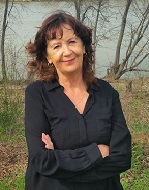
Leatra Harper is a lifelong resident of Ohio and long-term environmental advocate. She holds a BS degree in Human Resources from the University of Toledo and a graduate degree in Organization Development from Bowling Green State University. She began the FreshWater Accountability Project in 2012 to advocate for water protections and community empowerment when horizontal hydraulic fracturing first came to Southeast Ohio.
Leatra and her husband, Steve, are grandparents, another important reason they advocate for clean air and water and sustainable energy solutions for the future.
Scientific Lead

Chris Spiese is Associate Professor at Ohio Northern University. His interests lie in the field of environmental chemistry. During graduate school, he studied volatile sulfur compound production by marine phytoplankton. In addition to that work, he is currently studying phosphorus dynamics in the Lake Erie watershed, both in the water and in the soil. Current efforts are examining the role of glyphosate in dissolved phosphorus loading in the Maumee River and monitoring water quality in various subwatersheds of the Blanchard River.
Collaborating Organizations
This project is part of one of Thriving Earth Exchange’s new cohorts. Thriving Earth Exchange has partnered with AGU’s GeoPolicy Connect in 2017 to bring community leaders from eastern Ohio and western Pennsylvania affected by ongoing hydraulic fracturing together with scientists and policymakers. Thriving Earth Exchange is working with three local community groups to connect them with scientists who can help them better understand and cope with the effects of hydraulic fracturing.
Status:
Complete,
Location:
Cambridge,
Ohio,
Managing Organizations:
Thriving Earth Exchange,
Project Categories:
Natural Resources,
Project Tags:
No tags