
Community-led effort in Superior, Wisconsin brings local air quality into focus
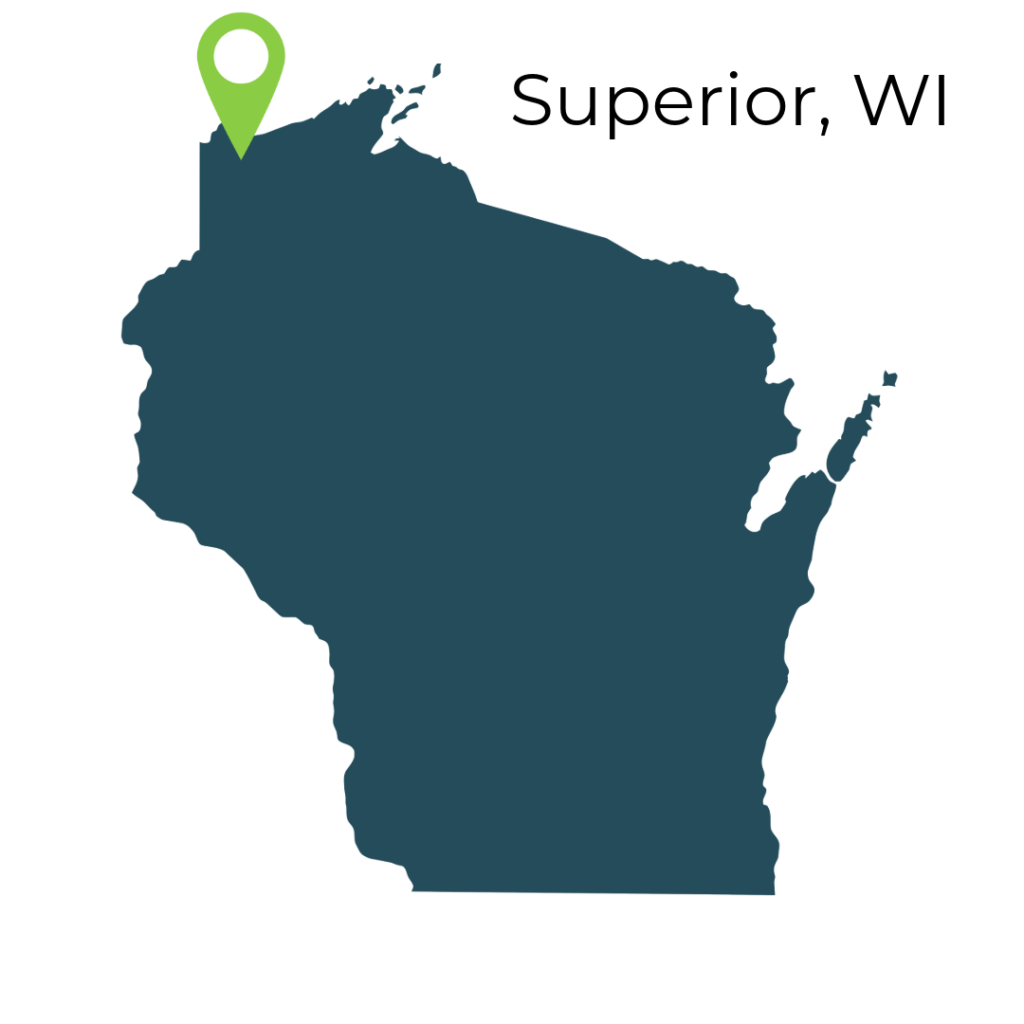
At the western tip of Lake Superior, the city of Superior, Wisconsin, has weather patterns that can change dramatically over just a few miles. The lake causes shifting winds, temperature differences, and fog that can affect how pollutants disperse and where they go.
That matters in a community with an oil refinery, limestone processing plant, and taconite processing facility—all within city limits. Although residents have raised concerns about air quality, odors, and potential short- and long-term health effects, Superior only has a handful of community air-quality monitors that measure fine-particle pollution (PM2.5) but not pollutants such as volatile organic compounds (VOCs).
Regulatory air-quality decisions have typically relied on monitors across the state line in Duluth, Minnesota. However, because those monitors are located upwind and at a higher elevation, they may not accurately capture air-quality conditions in Superior.
After hearing about a successful Thriving Earth Exchange project in Beloit, Wisconsin, Superior community members applied for funding to establish their own local air-monitoring project.
Making progress and tracking data
Britt Forsberg, Thriving Earth’s fellows engagement coordinator, recently visited Superior to get an update from community leads Pam Savoy, Patty Meysman-Lier, Tom Markee, and Pete Paine.
The team reported that the project has come further in its first year than they expected, with momentum building around both the monitoring effort and the community partnerships behind it.
In June 2025, they established a formal community-odor reporting network that allows easy anonymous reporting. Over 240 odor reports were submitted by community members in the network’s first year.
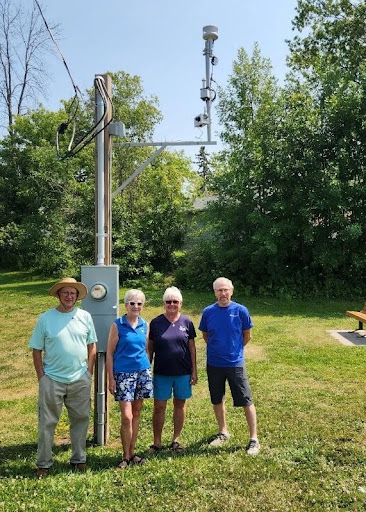
In the summer of 2026, the project’s first two air monitors were installed in public parks. For 12 months, these monitors will continuously measure nitrogen dioxide (NO₂), PM2.5, and PM10, along with wind speed, wind direction, air temperature, relative humidity, and atmospheric pressure. Current readings as well as historical trends will be available through a public online dashboard, with QR codes posted alongside the monitors linking passers-by to a wealth of data.
Building connections for change
For a community trying to understand and address a local environmental concern, building relationships with the people and agencies that can act on that information can be just as important as collecting data.
“It was great to see firsthand how much the team has accomplished in a year,” said Forsberg. “They’ve built strong connections across the community and with local and state officials, and it’s exciting to see those relationships turning into real support for the project. I’m looking forward to seeing where they take it next.”
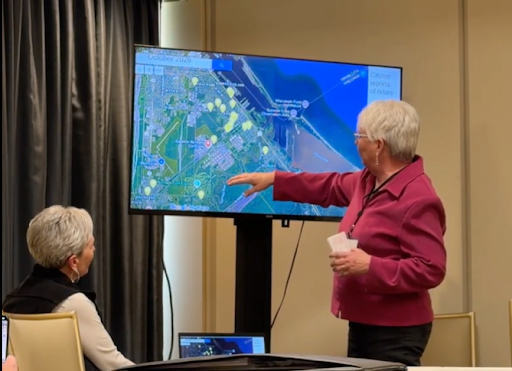
The team noted that a major turning point came when they presented their concerns in a slide presentation at Superior Days, a longstanding grassroots event that brings voices from Northwest Wisconsin directly to the State Capitol.
The City of Superior paid the year-long lease for two air-quality sensors, providing the project with a concrete investment from the city. Superior’s mayor also supports the project and is already considering ways to expand it, while the city’s State Assembly representative is exploring potential state funding.
The community leads have also built relationships with most members of the Superior City Council, creating a pathway for the project’s findings to inform local decisions about potential future industrial development or expansion. The team plans to use the data to develop recommendations for how air quality could be considered when evaluating proposals and permit applications.
The team has also formed connections with staff at the Wisconsin Department of Natural Resources, which maintains a field office in the city. The project helped open the door to additional air-quality monitoring, with the U.S. EPA Region 5 office sending a mobile monitoring trailer to Superior to collect air samples for laboratory analysis last spring.
Getting the community involved
After the one-year monitoring period, the data from the new monitors and potential addition of VOC monitors will be analyzed together with the odor reports to identify patterns in when and where air quality concerns occur and to assess potential impacts on the community.
The project team is also planning to develop educational materials and opportunities for public discussion that help address some of the community’s concerns associated with air quality, provide location-specific information where possible, and help residents understand what they can do to reduce their exposure. They also plan to hold more public engagement events to introduce community members to the online monitoring dashboard and help them explore the data for themselves.
The Thriving Earth project has also led the team to another question: whether public-health data might reveal patterns related to air quality or proximity to industrial sites. They plan to meet with the Wisconsin Department of Health Services to better understand the available data and explore some health disparities they have observed—representing a new step in the community’s effort to build a clearer picture of how environmental conditions may be affecting the people who live there.