Community Science Fellow Highlight: Camila García-Echeverri
This article is in both English and Spanish.
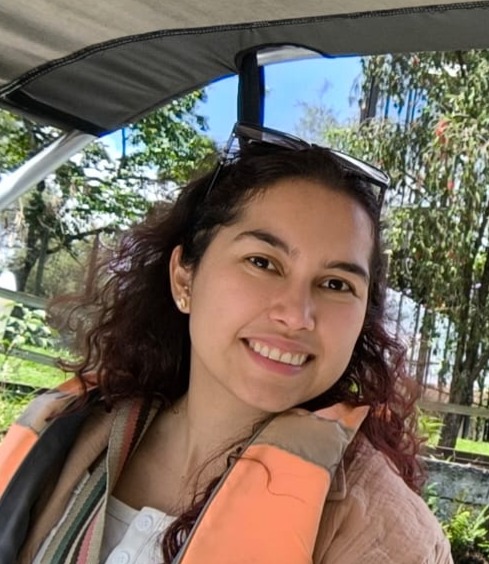
Camila García-Echeverri is a Colombian civil engineer with a Master’s in Hydraulic Resources from the Universidad Nacional de Colombia. Currently, she also holds a diploma in Project Management for International Cooperation Projects. As a researcher at the Stockholm Environment Institute (SEI) Latin America, Camila works with the Water Group, focusing on community-based monitoring of environmental variables to integrate local data into water management and planning. Her expertise includes water modeling, climate change analysis, and the dissemination of hydroclimatological information to empower local communities. She has experience in university-level teaching and has worked with Colombia’s National Natural Parks, contributing to conservation initiatives and environmental planning in protected areas.
Camila García-Echeverri es ingeniera civil colombiana con una maestría en Recursos Hidráulicos de la Universidad Nacional de Colombia, cuenta también con un diploma de especialización en Gestión de Proyectos de Cooperación Internacional. Como investigadora del Instituto de Medio Ambiente de Estocolmo (SEI) para América Latina, Camila trabaja en el equipo de Agua, enfocándose en el monitoreo comunitario de variables ambientales para integrar datos locales en la gestión y planificación del agua. Su experiencia incluye modelación hídrica, análisis del cambio climático y difusión de información hidroclimatológica para fortalecer las capacidades de las comunidades locales. Además, tiene experiencia en docencia universitaria y ha trabajado con Parques Nacionales Naturales de Colombia, contribuyendo a iniciativas de conservación y planificación ambiental en áreas protegidas.
Tell us about the Thriving Earth Exchange project you are a part of.
The project I collaborate on aims to disseminate interdisciplinary scientific information about the karst systems of Mexico’s Yucatán Peninsula, which are increasingly visited due to their strong tourist appeal. The initiative focuses on working closely with local stakeholders, such as cave owners, cenote managers, and students, through the development of outreach content that encourages the responsible use of the region’s aquifer and strengthens community reappropriation. In addition, the project includes a series of free training sessions open to the public on various topics related to the dynamics of these ecosystems.
El proyecto en el que colaboro tiene como objetivo difundir información científica interdisciplinaria sobre los sistemas kársticos de la península de Yucatán, en México, los cuales reciben cada vez más visitantes debido a su gran atractivo turístico. La iniciativa se centra en trabajar de manera conjunta con actores locales, como propietarios de cuevas, administradores de cenotes turísticos y estudiantes, mediante la creación de contenidos de divulgación que promueva el uso responsable del acuífero de la región y fortalezca la reapropiación comunitaria. Además, el proyecto contempla una serie de capacitaciones gratuitas y abiertas al público sobre diversos temas relacionados con la dinámica de estos ecosistemas.
What inspired you to get involved in community science? ¿Qué le inspiró a involucrarse en la ciencia comunitaria?
When I first started working, all my projects were highly technical, focused on climate data analysis, and carried out mostly from an office. Over time, I began doing more fieldwork and engaging directly with communities. That experience made me realize the strong interest among “non-scientific” audiences in finding solutions through scientific applications, and I understood that academic production can be enriched through a more collaborative approach. In this way, science can reach territories and people with limited access to it. I had the opportunity to coordinate a participatory community monitoring project, which marked a turning point in my professional interests. Now I want to focus on incorporating information gathered through nontraditional means into my hydrological studies and analyses, while also learning from communities and receiving their feedback.
Cuando comencé a trabajar, todos mis proyectos eran muy técnicos, centrados en el análisis de datos climáticos y del agua, desarrollados principalmente desde una oficina. Con el tiempo, empecé a realizar más trabajo de campo y a tener contacto directo con comunidades. Fue entonces cuando noté el gran interés de personas “no científicas” en encontrar soluciones a través de aplicaciones de la ciencia, y descubrí que la producción académica puede enriquecerse con un enfoque más colaborativo. De esta forma, la ciencia puede llegar a territorios y personas con acceso limitado a ella. Tuve la oportunidad de coordinar un monitoreo comunitario participativo, lo que marcó un antes y un después en mis intereses profesionales. Ahora quiero trabajar en la inclusión de información obtenida por medios no tradicionales en mis estudios y análisis hidrológicos, así como aprender de las comunidades y recibir su retroalimentación.
Could you share a memorable experience from your work as a Community Science Fellow with Thriving Earth Exchange? ¿Podría compartir una experiencia memorable de su trabajo como Community Science Fellow con Thriving Earth Exchange?
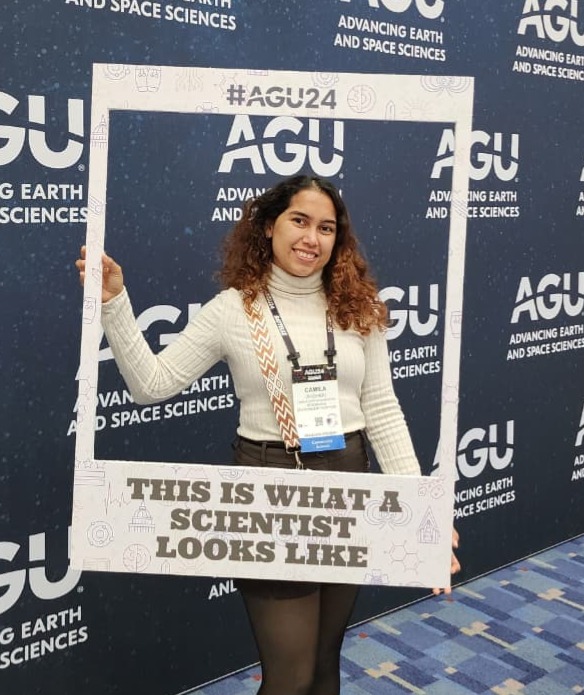
More than a single memory, I want to highlight the entire process we have gone through during the five months we have been working together. I recall that during our first meeting, we had numerous questions about the program: its scope, how to organize the meetings, and, in general, how to move forward, since none of us had prior experience with this type of activity. It has been a deeply collaborative process, grounded in dialogue, that has allowed us to build mutual trust. Although my role in the project is that of a manager, I have felt heard by the community leaders, and I also believe that my ideas are valued and have contributed to the construction of their community science project.
Más que un único recuerdo, quiero resaltar todo el proceso que hemos vivido durante los cinco meses que llevamos trabajando juntas. Recuerdo que, en nuestro primer encuentro, teníamos muchas preguntas sobre el programa: su alcance, la manera de organizar las reuniones y, en general, cómo debíamos avanzar, ya que ninguna de nosotras tenía experiencia previa en este tipo de actividades. Ha sido un proceso colaborativo, centrado en el diálogo, que nos ha permitido construir confianza mutua. Aunque mi rol en el proyecto es el de gestora, me he sentido escuchada por las líderes comunitarias y también percibo que mis ideas son valoradas y han aportado a la construcción de su proyecto de ciencia comunitaria.
How do you think community science can make a positive impact in our society? ¿Cómo cree que la ciencia comunitaria puede tener un impacto positivo en nuestra sociedad?
I believe community science can have a positive impact on our society because it brings scientific knowledge closer to everyone, regardless of their academic background or where they live. We all can enjoy what nature and the environment offer us; our surroundings are full of opportunities to spark and nurture curiosity. Reconnecting with that curiosity, which often fades as we grow older, not only enriches our individual learning but also strengthens community bonds and encourages active participation in building collective solutions to social and environmental challenges.
Sin duda la ciencia comunitaria puede tener un impacto positivo en nuestra sociedad porque permite acercar el conocimiento científico a todas las personas, sin importar su formación académica o el lugar donde se encuentren. Todos tenemos la capacidad de disfrutar de lo que la naturaleza y el ambiente nos ofrecen; nuestro entorno cotidiano está lleno de oportunidades para despertar y alimentar la curiosidad. Retomar esa curiosidad, que muchas veces se apaga a medida que crecemos, no solo enriquece nuestro aprendizaje individual, sino que también fortalece los lazos comunitarios y promueve una participación activa en la construcción de soluciones colectivas para los retos socioambientales.

How has this focus on language inclusion influenced your experience in the program? ¿Cómo ha influido este enfoque en la inclusión lingüística en su experiencia dentro del programa?
Being able to participate in the program using our native language, in this case Spanish, undoubtedly makes a big difference. I believe that fluent communication is essential in spaces of co-creation and collaboration. When we use our native language, we can express ourselves more naturally and be more open when sharing our ideas and thoughts, without worrying about the “right” translation or facing linguistic barriers. This not only enriches the collective process, but also ensures that more voices are heard and that the construction of knowledge is truly inclusive and diverse.
Poder participar en el programa utilizando nuestro idioma nativo, en este caso el español, marca sin duda una gran diferencia. Creo que comunicarse de manera fluida es fundamental en los espacios de co-creación y colaboración. Cuando usamos nuestro propio idioma, fluimos con mayor naturalidad y podemos ser más abiertos al compartir nuestras ideas y pensamientos, sin preocuparnos por la traducción correcta o por limitaciones lingüísticas. Esto no solo enriquece el proceso colectivo, sino que también permite que más voces sean escuchadas y que la construcción de conocimiento sea más inclusiva y diversa.