Moving Forward by Connecting with the Past
With a heritage garden, an indigenous community seeks renewal for its land and people
As you stride across the prairie, bursting with late-summer wildflowers and scented with wild sage, the overwhelming impression is of vastness. The grasslands of Concho, Oklahoma, stretch from horizon to horizon under the great blue dome of the sky, the whisper of breeze the only sound. In this remote spot—selected by Cheyenne and Arapaho elders through a process of intentional contemplation—will soon grow a garden with roots grounded not only in the soil but in the spirit of a community.
The Environmental Protection Agency and Culture Program of the Cheyenne and Arapaho Tribes of Oklahoma recently cleared the land for a garden emphasizing plants with historic and ceremonial significance to both tribes. Through this garden, designed with a circular shape known as a medicine wheel, the community aims to create a space that not only revives traditional farming and gardening techniques, but also honors and educates about modern sustainability.
The culture of the Cheyenne and Arapaho tribes is alive and well, with the languages, foods, and traditional practices sustained in everyday life and in powwows, Sundance ceremonies, and other events. But not everyone identifies with the traditions of their elders, and just like kids everywhere, the community sees a need to encourage young people to put down their phones and look around, connect with their culture, and listen to nature.
“There are some families that are disconnected from that tradition,” says Chieko Buffalo, a Community Leader for the garden project. “A reason why we chose to build this project is to educate and promote this awareness and connection to our plants and our trees and our animals and our land […] to help get our tribe, get our youth, get our elders outside to feel the Earth and see the beauty of the Earth.”
To help guide the garden’s design, the community enlisted the help of scientists with expertise in the area’s native plants, ecology, and land management practices through a community science project coordinated through AGU’s Thriving Earth Exchange and the Kansas State University Center for Hazardous Substance Research.
After many months of working together remotely, project participants recently gathered to tour the site that has been cleared for the garden, collect soil samples, and bear witness to a formal blessing of the site by Cheyenne Chief Gordon Yellowman. The team also toured the built infrastructure of the tribal lands and interacted with a bison herd managed by the tribe’s Agricultural program, offering deeper insights into how the garden fits with the broader cultural resources of the communities it will serve.
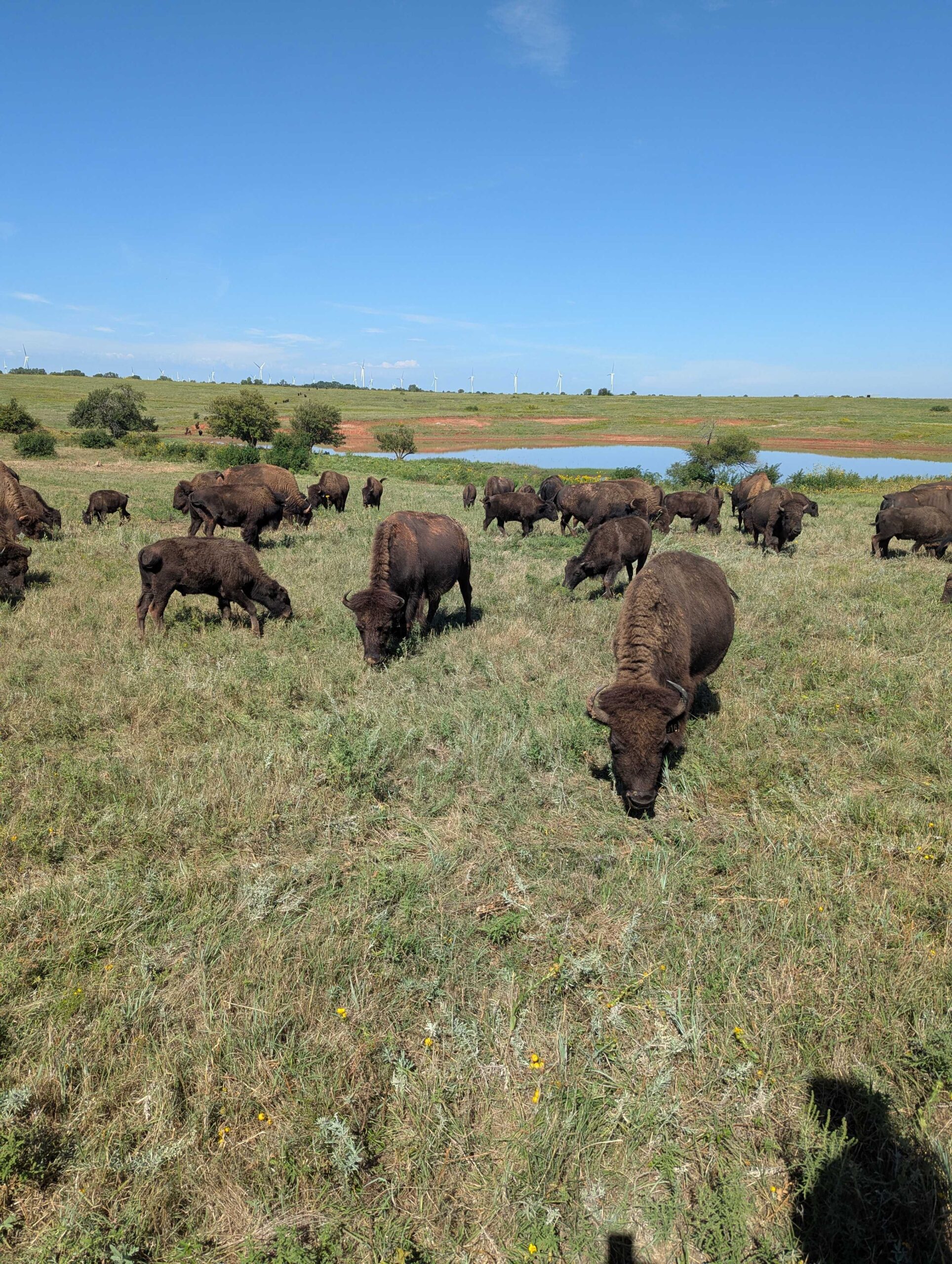 The community cares for a herd of bison, part of an effort to restore the natural balance of the prairie ecosystem.
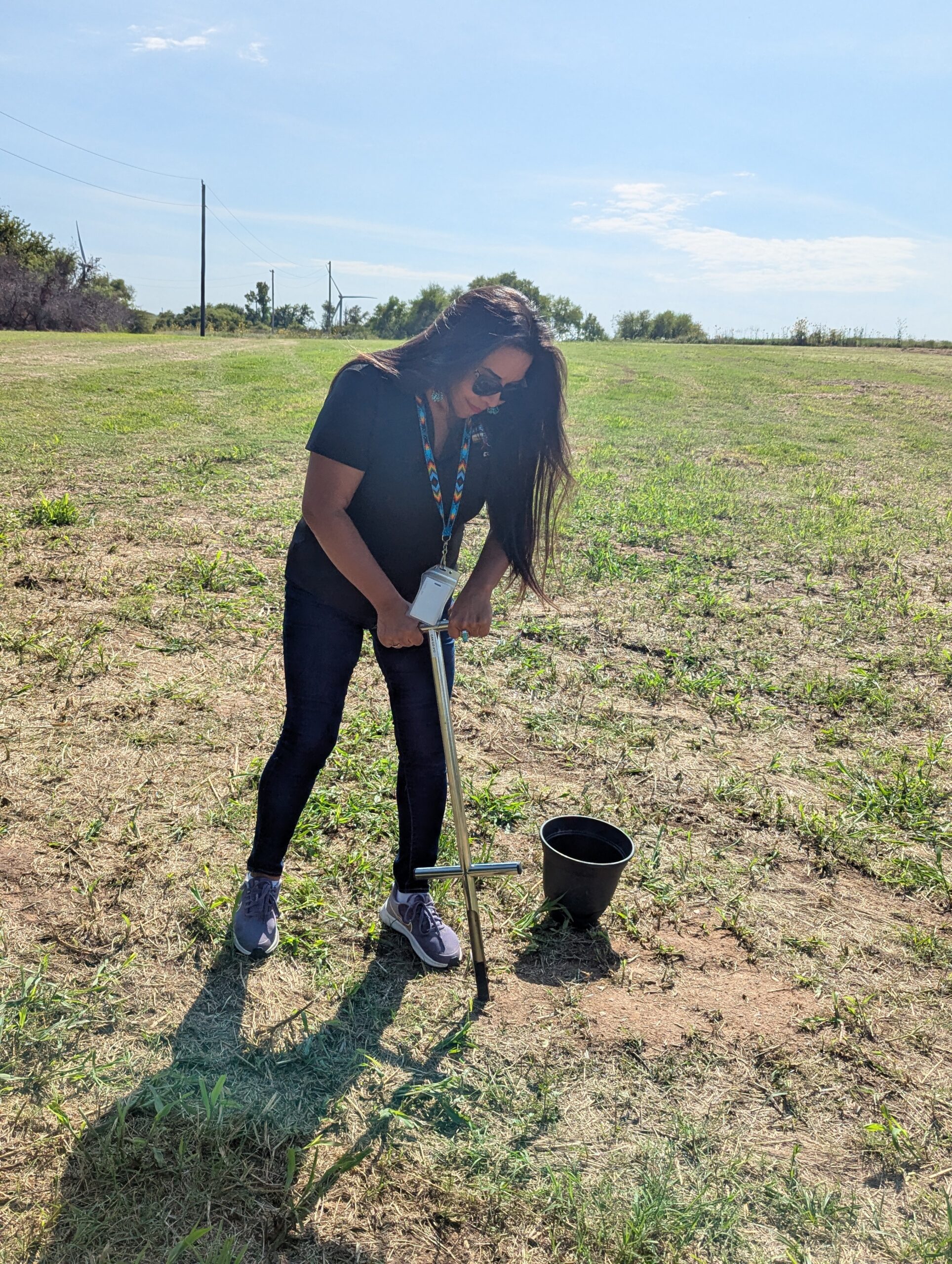 Chieko Buffalo, a Community Leader for the project, takes soil samples to guide how the garden will be planted and managed.
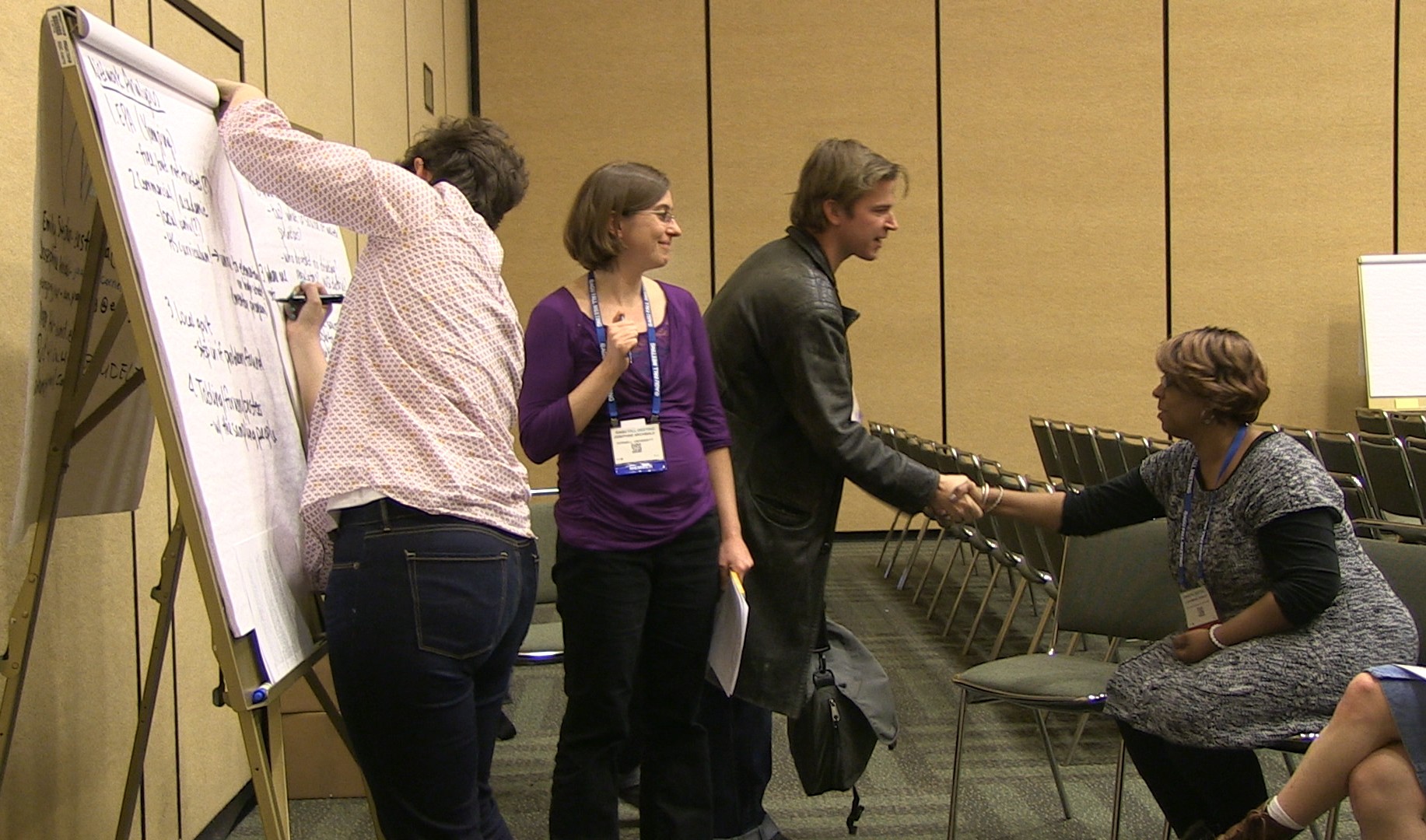
 Participants in the community science project gathered for a tour and blessing of the site where the garden will be planted. (from left to right) Marsha Smith, OSU Master Gardener; Michaela Paulette Shirley, Tribal TAB Program Manager, KSU Center for Hazardous Substances Research; Chieko I. Buffalo, Director, Cheyenne and Arapaho Tribes EPA; Shari Rose, Program Manager for Community Leader Engagement, AGU Thriving Earth Exchange; Cuauhtemoc Means Landeros, Tribal Program Manager, KSU Center for Hazardous Substance Research; Marcos Baros, Diabetes Wellness Program Director, Cheyenne and Arapaho Tribes’ Department of Health; Nathaniel Charley, Environmental Specialist, Cheyenne and Arapaho Tribes EPA; Andrew Sonnier, Water Coordinator, Cheyenne and Arapaho Tribes EPA; Gordon Yellowman, Cheyenne and Arapaho Tribal Historian for Language and Culture Resource Program and Cheyenne Chief.
 A pond near the garden site provides water and additional ecosystem services.

Community Science Hubs
This project is part of the Kansas State University Center for Hazardous Substance Research Community Science Hub and is supported in part through a generous grant from the Gordon and Betty Moore Foundation.