Community science strengthens tribal collaborations and capacity
The Kansas State Center for Hazardous Substances Research (CHSR) AGU/Thriving Earth Exchange Community Science Hub is now in its second year of helping Indigenous communities restore underused properties and sustain cultural traditions, with projects underway in seven states.
This Community Science Hub brought together a diverse range of communities, from tribal governments to nonprofits and schools, according to Oral Saulters, CHSR’s director of strategic partnerships and tribal initiatives. Despite challenges from changing governance and shifting priorities, the progress and connections made thus far have been significant.
“When we first launched the hub, funding opportunities were abundant, and it was difficult to compete for visibility against larger grant initiatives,” said Jennifer Clancey, director of outreach innovation and marketing for CHSR. “Two years later, the landscape has shifted. Many of those resources have diminished, and smaller, community-based projects have become more vital than ever.”
Saulters points out that the flexibility of the Community Science Hub program was hugely beneficial. “It encourages people to think big,” he said. “That was almost a hurdle initially because many groups are used to working within strict parameters where things are highly prescriptive. Once people embraced that openness, though, it unlocked a new level of creativity and collaboration.”
Saulters and Clancey also note that while the hub projects began with a defined goal, collaboration led many of them in new and unexpected directions. “The Community Science Hub really served as the spark to bring people together, and many of those connections will last well beyond us,” said Saulters.

“The Community Science Hub really served as the spark to bring people together, and many of those connections will last well beyond us.“
– Oral Saulters
Building lasting connections
For one project, CHSR is working with the Prairie Band Potawatomi Nation (PBPN) in rural northeast Kansas to assess its wastewater treatment and biosolid compost land application processes and better engage the tribal community in the composting process.
For years, PBPN has applied composted biosolids to the land but didn’t have current data to demonstrate how beneficial this practice was for the soils and ecosystem. That changed when CHSR helped connect the Nation with KSU scientists who ran chemical and biological tests to better understand potential nutrients, rates, and any risks.
“In addition to providing critical information, the project helped to facilitate dialogue, planning, and collaboration across the tribal government, fostering new communication among departments such as water, waste, land management, historic preservation, and intergovernmental affairs,” said Saulters. “It also strengthened the relationship between the university and PBPN, which has led to new joint initiatives, such as community engagement for redeveloping the former raceway, addressing heavy metal contamination, and exploring revitalization of the powwow grounds in the future.”
Working together in new ways
CHSR is also partnering with the Cheyenne and Arapaho tribes in Concho, Oklahoma, to create an educational garden containing ceremonial plants that are important to the tribes. Although CHSR has worked with these tribes for some time, past projects focused on Brownfields. The Community Science Hub program created an opportunity for CHSR to work with the Cheyenne and Arapaho to make progress on a project they had long hoped to pursue but had lacked the resources and support to complete.
Another Community Science Hub project is addressing waste disposal in Poplar, Montana, a rural town located within the Fort Peck Assiniboine and Sioux Indian Reservation. “We’ve also had a longstanding relationship with this community, but the Community Science Hub program allowed us to work on a project that involved resilience and health and culture, transcending what we had been doing before,” said Saulters.
The area where Poplar residents currently dispose of waste into wheeled dumpsters — to be later hauled to a landfill — sits in a floodplain along an eroding bank of the Missouri River. The community is working to establish a long-term waste disposal site that protects the water from future contamination and to turn the current site into a nature park and community gathering place.
Looking ahead
As the Community Science Hub funding winds down, CHSR plans to work with each community to identify needs and then find ways to use other existing funding sources or to work together to secure additional funds to meet those needs. The team also plans to leverage its in-house expertise and strong partnerships to help communities continue moving forward.
Clancey and Saulters say that the Community Science Hub program has also had a big impact on CHSR, helping them to expand the team and start moving toward creating a long-envisioned branch within the center that would focus entirely on Indigenous communities globally and traditional ecological knowledge (TEK), beyond the Brownfields work they currently focus on.
“The AGU and the Thriving Earth Exchange team helped us think through what it means to make this Indigenous community science program our own and inspired us to adapt their innovative and flexible framework to other kinds of projects,” said Clancey.
Saulters adds that the relationships built with AGU, the Thriving Earth Exchange and the communities they worked with were truly transformative, prompting CHSR to think more holistically and long-term about how to structure, fund and involve others in future initiatives.
“It really broadened our thinking, connecting land, environment, health, TEK, and nature-based approaches in new ways,” Saulters said. “This partnership has been pivotal and opened our organizational consciousness in ways that will continue to shape our work.”
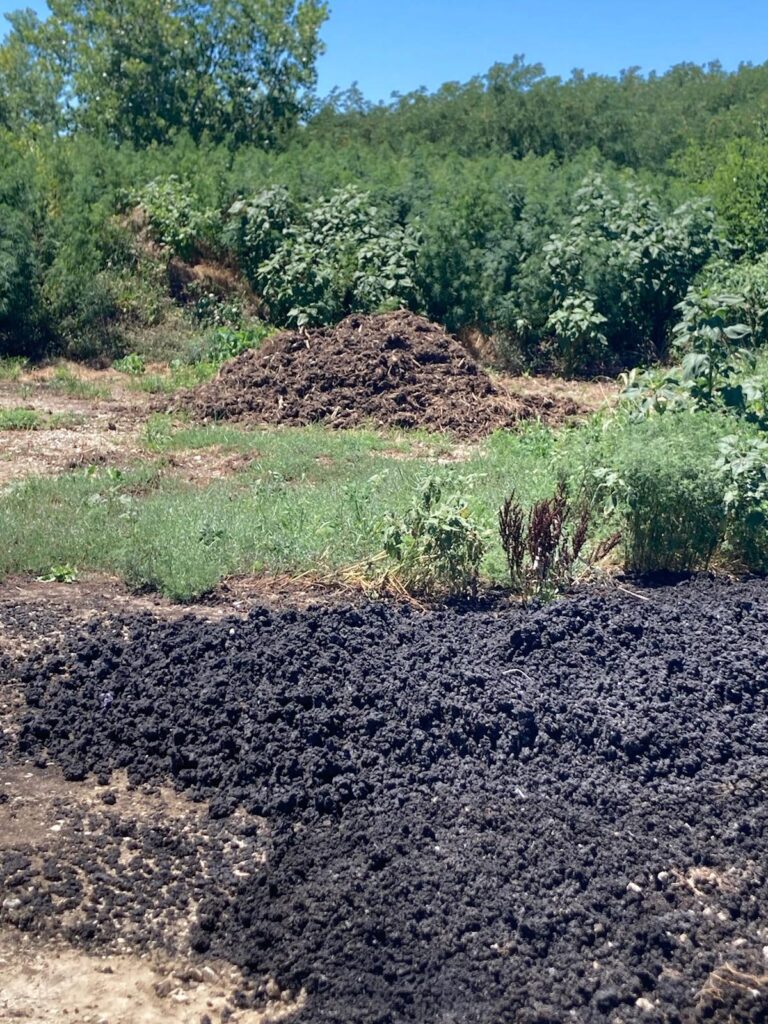 The Prairie Band Potawatomi Nation in rural northeast Kansas partnered with CHSR to enhance its biosolid compost land application processes, sparking collaborations that have since evolved into new initiatives.
 CHSR is working with the Central Consolidated School District in Shiprock, New Mexico, on a project that is connecting students with traditional Dine’ farming and food preparation practices through school gardens and collaborations with local farmers.
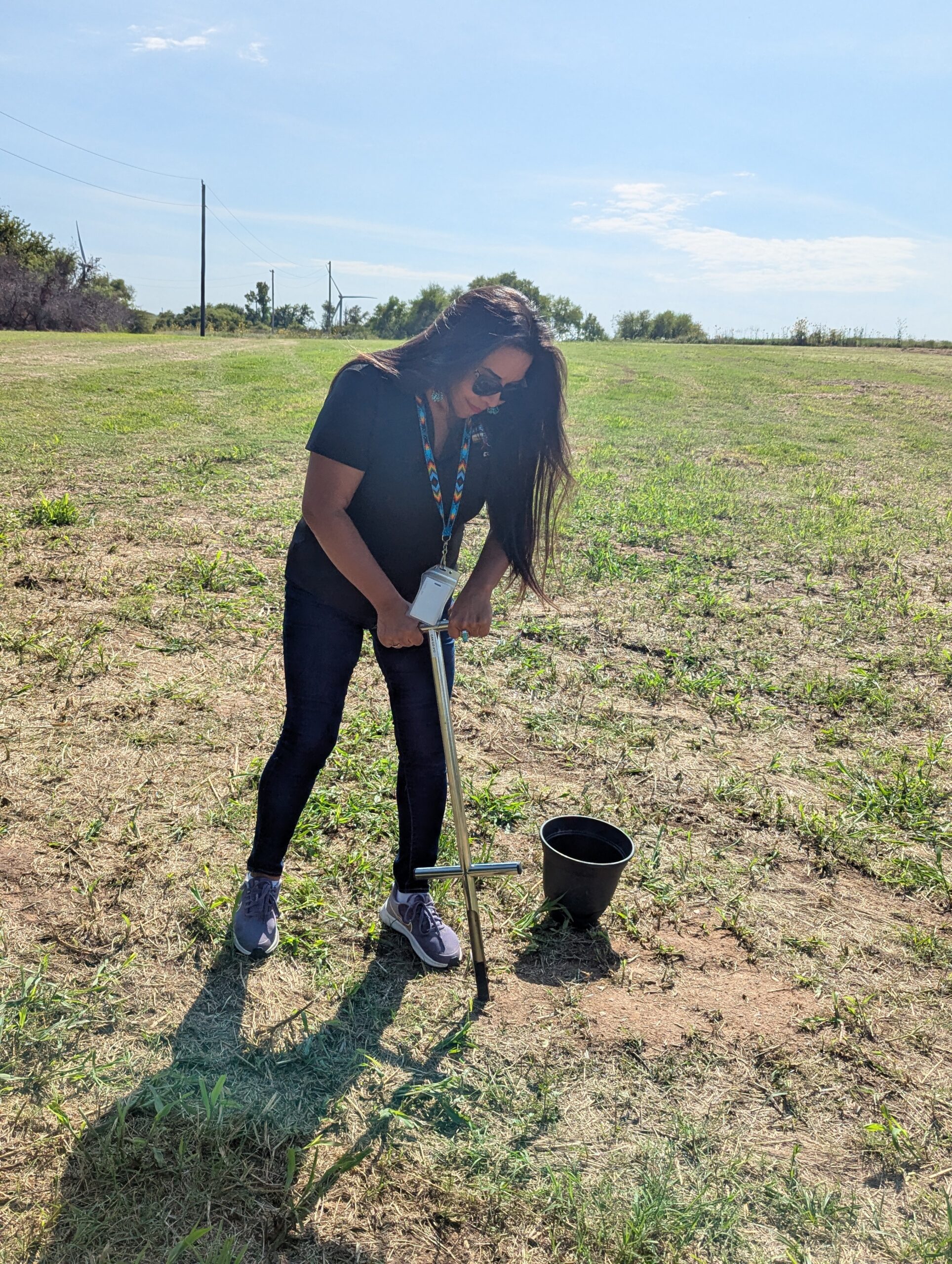
 The Cheyenne and Arapaho tribes in Concho, Oklahoma, are creating an educational garden with ceremonial plants. Pictured is Chieko Buffalo, a Community Leader for the project, taking soil samples, which will help guide how the garden will be planted and managed.

Community science helps schools cultivate food, culture and connection
Moving forward by connecting with the past: Community science strengthens tribal collaborations and capacity
Community Science Hubs
This project is part of the Kansas State University Center for Hazardous Substance Research Community Science Hub and is supported in part through a generous grant from the Gordon and Betty Moore Foundation.