Museums step up as partners in solving community challenges
Science museums and technology centers are wonderful places to learn and explore new ideas. However, many are expanding their work beyond the museum, connecting communities with scientists and other partners who can help answer questions or find solutions to local problems.
With a shared interest in community science, the Association of Science and Technology Centers (ASTC) and Thriving Earth Exchange have partnered in efforts to connect communities with the scientific expertise and resources they need to address local challenges.
One way ASTC has done this in the past was through the ASTC–TEX Fellowship Program, which supported staff at ASTC-member museums as they worked with community leaders and scientists on projects involving issues such as flooding, climate change and natural resources.
Max Cawley, the director of climate research and engagement at the Museum of Life and Science in Durham, North Carolina, was one of the ASTC–TEX fellows.
“The Museum’s work with Thriving Earth Exchange was foundational to our community science approach,” said Cawley. “Having the training, resources, and access to Thriving Earth’s vibrant community of practitioners gave us the supportive and nurturing environment to build a program founded on compassion, empathy, patience, and teamwork. Food For Thought grew from that fertile soil.”
Extending the museum’s reach
A recent paper in Citizen Science: Theory and Practice featured a project that Cawley worked on in Warrenton, a small, rural town in central North Carolina near the Virginia border. Although Warren County is an agricultural community, food insecurity is a significant present-day issue for its residents. Many older residents, however, recall a time when their families relied on home gardens and local neighbors to feed their families.
With ASTC support, the Museum of Life and Science partnered with a local nonprofit called Working Landscapes, which aims to build healthier and more sustainable lives and livelihoods in Warren County through stewardship of natural and cultural assets. Together, they developed Food for Thought, an eight-month after-school program built around a community-derived question: What is the past, present and future of agriculture in Warren County?
“Having the Museum’s technical expertise on building engaging programming for youth was crucial for Working Landscapes to be able to maximize the impact we had on the youth of our community,” said Jenni Rogan, Director of Operations at Working Landscapes.
Students explore local heritage
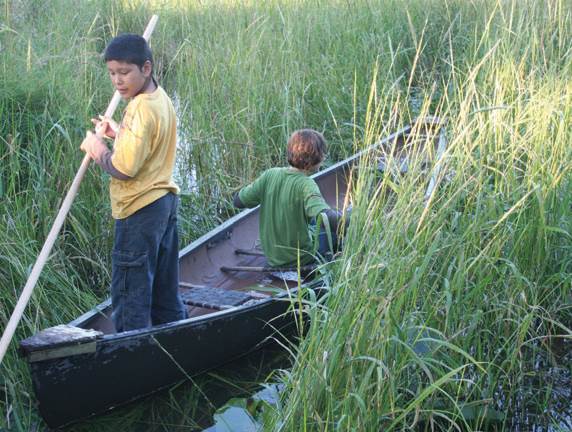
The Food for Thoughtproject held five workshops, during which high school students worked with local and regional experts to learn about soil science, water quality, climate modeling, oral history, and science communication.
At the end of the program, students created their own community projects. These included paintings of historic agricultural scenes, a digital scrapbook featuring recipes and farmers, and a taste test of foods connected to local Warren County communities. More than 50 people came to see the students’ final presentations.
Over 70% of the participants said the program made them feel more connected to their community, better able to contribute to its future, and more appreciative of the area’s agricultural history.
“Having grown up only two counties over, it was a surreal experience working with Working Landscapes in a community so familiar to me. In the future, I hope partnerships like this can continue shaping how we reimagine what meaningful impact looks like in rural communities,” said Imani Vincent, Associate Program Manager of Research at the Museum.
Broadening the community science movement
TEX and ASTC are partnering on a range of projects that help communities address local environmental challenges, from climate preparedness and environmental health to conservation and sustainable practices. These projects include:
- Berwyn Heights, Maryland – Inventorying Invasive Plant Species to Protect Tree Canopies
- Durham, North Carolina – Identifying Gaps in Urban Flooding Reporting in Durham
- Louisville, Kentucky – Developing a flood susceptibility index to amend the 2021 KIPDA Hazard Mitigation Plan
- National City, California – Activating neighborhood community leaders to increase community participation in composting efforts through a culturally relevant lens
- Richmond, Virginia- Investigating our air
- Santa Cruz, California – Improving community visualizations of existing climate actions and participation in, and access to, existing climate actions
- Waco, Texas – Wading Through Waco Waters
Explore ASTC’s Community Science website to learn more about how science centers have been engaging with communities, scientists and other partners to address local challenges. Resources include case studies and examples; a community science framework of attributes, outcomes, and approaches; a toolkit for planning dialogue and deliberation events; a library of readings and tools across participatory approaches to science, innovation, and policy.
Additionally, ASTC’s Annual Conference brings together science-engagement professionals and leaders from across North America and around the world. If you are interested in exploring the broader world of science engagement, which includes science learning and engagement across the lifespan, consider attending the 2026 conference in Phoenix, AZ (September 16-19). www.astc.org/astc-2026/