Communities Get Creative to Drive Engagement in the Deep South
Communities in the Deep South have a long history with environmental and economic challenges, and Thriving Earth Exchange has a robust record of community science collaborations aiming to alleviate some of these issues in the region. Recently, Thriving Earth staff were able to visit with some of these projects during a trip to New Orleans and during AGU25. These interactions highlight how passion, determination and creativity are drawing attention and driving progress toward a brighter future.
Sounding the Alarm for the Future of Fisheries along the Gulf Coast
Fisheries play a central role in the cuisine, culture and economies of Gulf Coast communities, yet they have come under increased pressure in recent years as the area has become a hotspot of industrial activity. Once known as the seafood capital of the U.S., the region’s fishers are struggling with dwindling catches, competition from Chinese seafood exports, and a rapid buildup of liquified natural gas plants that has transformed the coastal economy and environment.
In the tiny village of Cameron, Louisiana, residents passionate about preserving the region’s fishing heritage are using innovative approaches to understand how noise and chemical pollution might be affecting the ecosystems they rely on. Local fishers joined forces with scientific experts to deploy underwater hydrophones in key spots offshore through a Thriving Earth Exchange project, allowing them to eavesdrop on the noise of ship traffic and industrial activity from the perspective of marine creatures.
The project was facilitated by the Nurture Nature Center under its activities as a Thriving Earth Exchange Community Science Hub. Recently spotlighted by Science Friday, the team shows how community-led efforts can bring to light pressing issues—even when they’re happening beneath the surface. A literature review by project partners catalogues the myriad human-caused stressors impacting shrimp and oyster fisheries and points to strategies for monitoring and management.
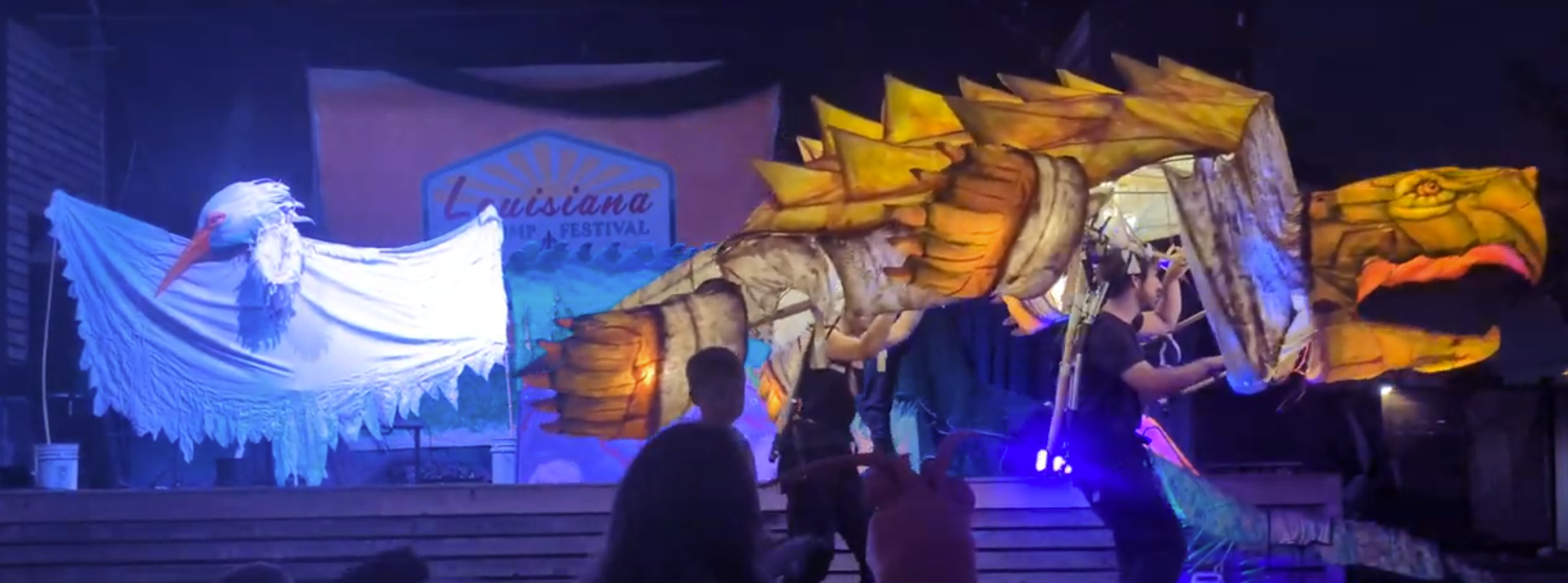
Recognizing that visibility is key to spurring action, Habitat Recovery Project, a local non-profit that serves as a partner on the project, is using art to raise awareness. The organization created a captivating puppet show, The Little Shrimp and the Terrible Noise, which actors presented at local events throughout the region. Through a visually stunning cast of larger-than-life puppets, the show tells the story of a shrimp’s quest to find out what’s happening to the marine environment, ending on a positive note to inspire engagement and action. The show was featured at the Louisiana Shrimp Festival, co-organized by Community Lead Misha Mayeur, along with panel discussions, children’s activities—and, of course, lots and lots of seafood—tapping into the community’s deep connection to the sea to build a collective vision for a more sustainable future.
“These families have lived in the area for hundreds of years, and fishing is their livelihood—their kids are raised to do this,” said Amanda Shores, Senior Manager for Thriving Earth Exchange Cohorts, who attended the shrimp festival. “There were probably a hundred kids there, watching this story unfold and learning why it’s important to advocate for the environment. It was a beautiful thing to see.”
For more information about The Little Shrimp and the Terrible Noise, Shrimpfest, and other conservation activities, see the Habitat Recovery Project 2025 Review.

Kathleen Kirkpatrick of the Capacity Collaborative (left) with Thriving Earth Exchange’s Amanda Shores at the Louisiana Shrimp Festival 
Misha represents the Fisherfamily Advisory Council for Tradition & Stewardship (The FACTS) at the Louisiana Shrimp Festival 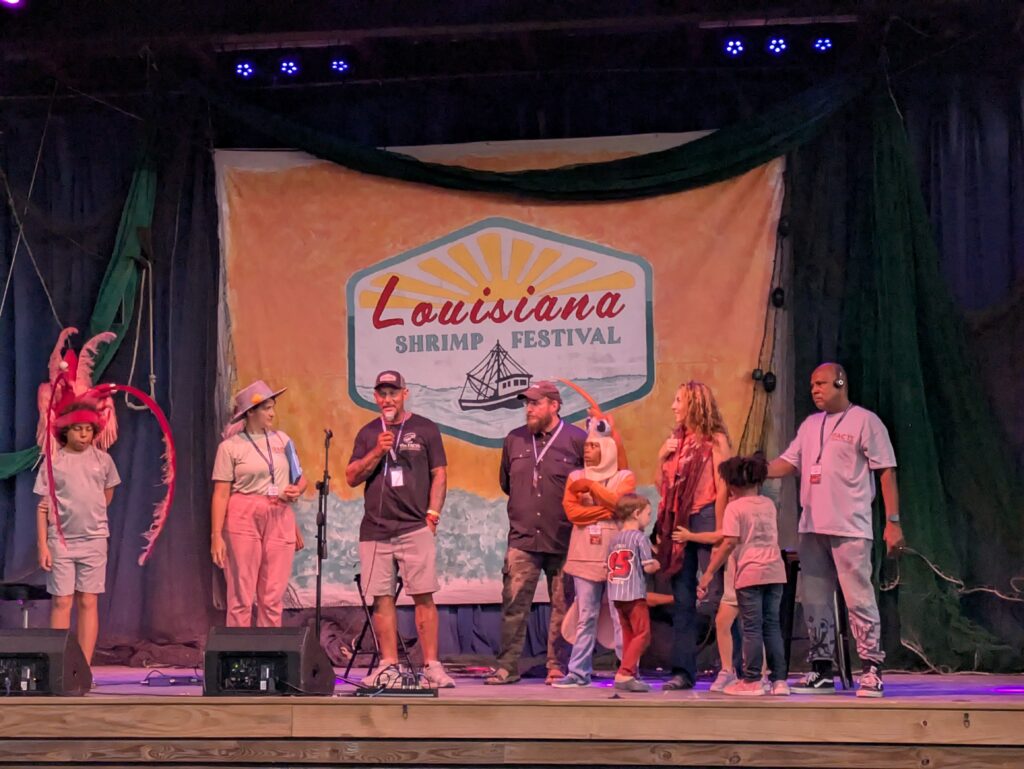
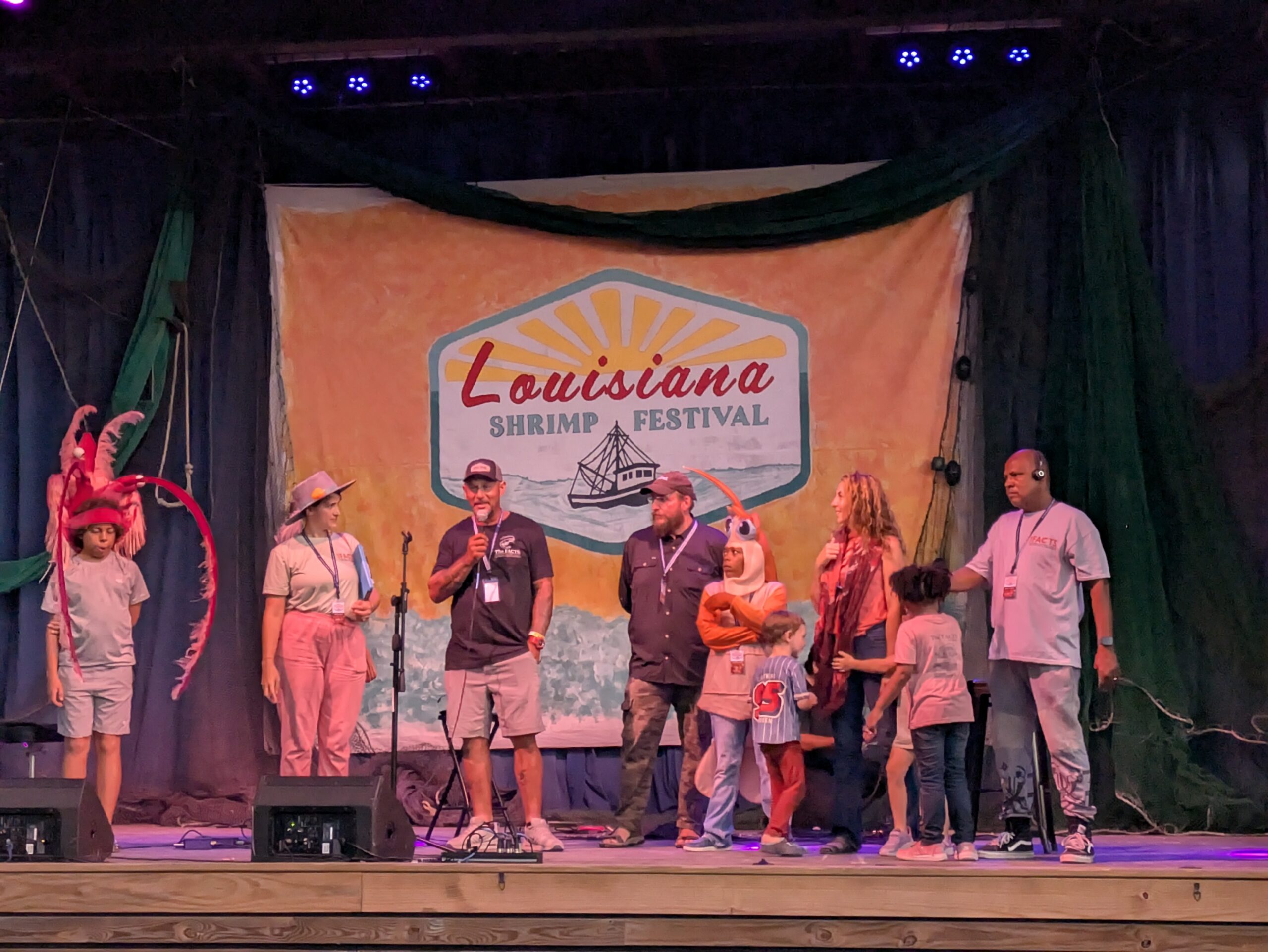
Presenters on stage at the Louisiana Shrimp Festival 
The Louisiana Shrimp Festival offered hands-on engagement for families 
A scene from the puppet show, The Little Shrimp and the Terrible Noise



Lived Experiences and Living Solutions for Extreme Heat in New Orleans
New Orleans residents are no strangers to sweltering summers, but heat waves in recent years have brought the threat of extreme heat to dangerous new levels. For residents of the Hollygrove Dixon neighborhood, the burden is amplified by vast stretches of paved surfaces, scant tree cover, and inadequate infrastructure—think unsheltered bus stops where elderly residents wait in direct sun, roadways that flood during storms, and frequent power outages that knock out fans and air conditioning.
In a Thriving Earth Exchange project facilitated by Community Science Hub Capacity Collaborative, community members are stepping up and speaking out to document the toll and share solutions. Raymond Sweet, who serves as Climate Coordinator for the neighborhood and Community Lead on the project, leads residents in identifying key priorities and finding practical strategies to chip away at the multifaceted challenges they face.
One major objective has been to get a handle on why the neighborhood experiences such extreme temperatures—exacerbated by the urban heat island effect—and where residents are most vulnerable. Among the results of the project are a StoryMap and an interactive heat map that illustrate how environmental factors like major roadways and limited vegetation combine with socioeconomic factors to amplify heat exposure and impacts.
As part of the project, residents gathered to collect data on street-level temperatures Across the entire city and Orleans Parish last August, showing up in such great numbers that organizers had to turn volunteers away. In addition to their focus on addressing extreme heat, community members also gather regularly to discuss intersecting issues around flooding, industrial development, and the neighborhood’s close proximity to major roadways. This project was sponsored by the Center for Collaborative Heat Monitoring and they partnered with the New Orleans East Green Infrastructure Collective to make it happen.
Although the problems are daunting—and in many cases, go back for generations—Sweet and colleagues are focused on solutions that are practical—and carry forward for generations to come. Planting trees has been a major focus. Trees are proven to help mitigate the heat island effect, providing welcome shade and moisture while also serving as a buffer against traffic noise, air pollution and flooding-related erosion and land loss. In the shorter term, the community is also making progress toward alleviating the strain of frequent blackouts with solar generators that can keep refrigerators and fans running when the power goes out.
Reflecting on her recent visit with the Hollygrove Dixon community, Amanda Shores, Senior Manager for Thriving Earth Exchange Cohorts, said what stands out the most is the community’s generous spirit and sense of self-reliance in addressing their daily challenges. By coalescing around shared goals and focusing on small steps that individuals can feasibly take right now, the community continues to strengthen its resilience.
“No scientific solution works without support from the stakeholders involved,” said Shores. “It starts with bringing people in and engaging broadly, but it also ends there, because it really comes down to the ability to get people together around a particular goal. Each person’s contribution, even if small, adds up to be part of the solution.”
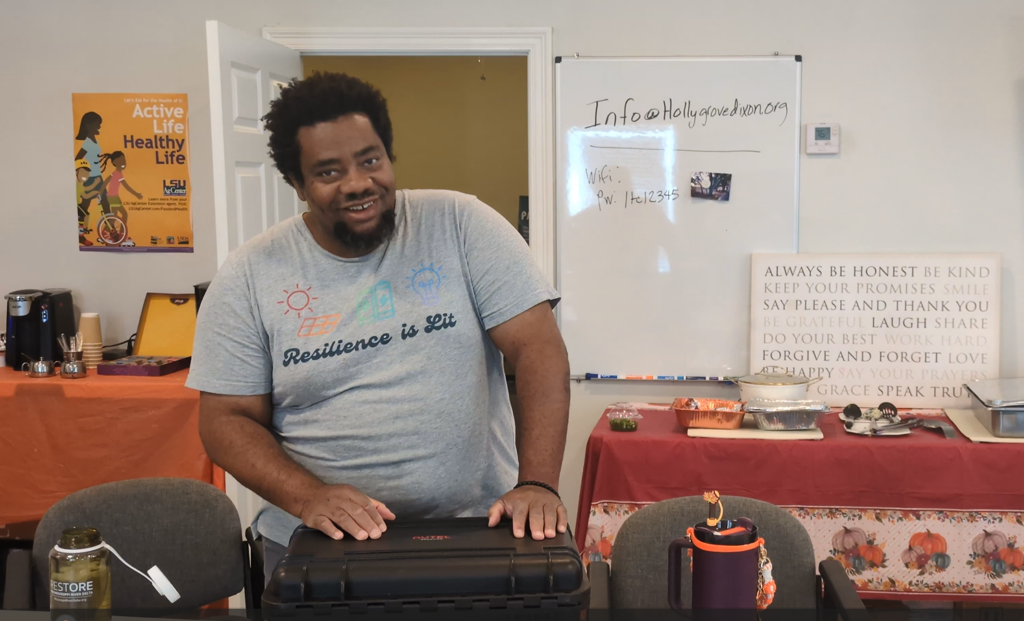
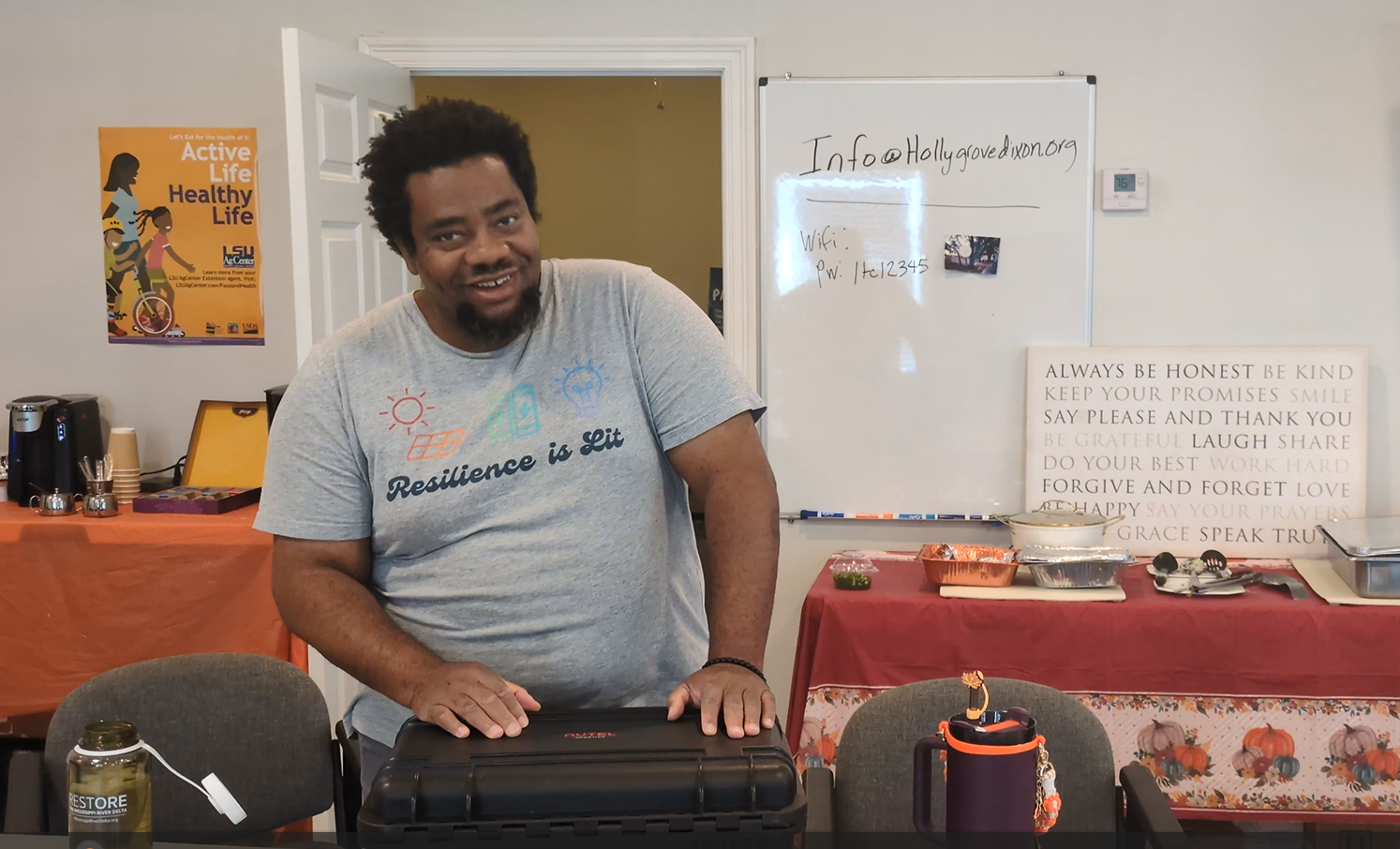
Community Lead and licensed drone pilot, Raymond Sweet stands near a case for a thermal drone that AGU helped purchase 

Alan Deleray and Raymond Sweet stand in front of the Life Transformation Community Center by Celebration Church. It is the only community space in the neighborhood. 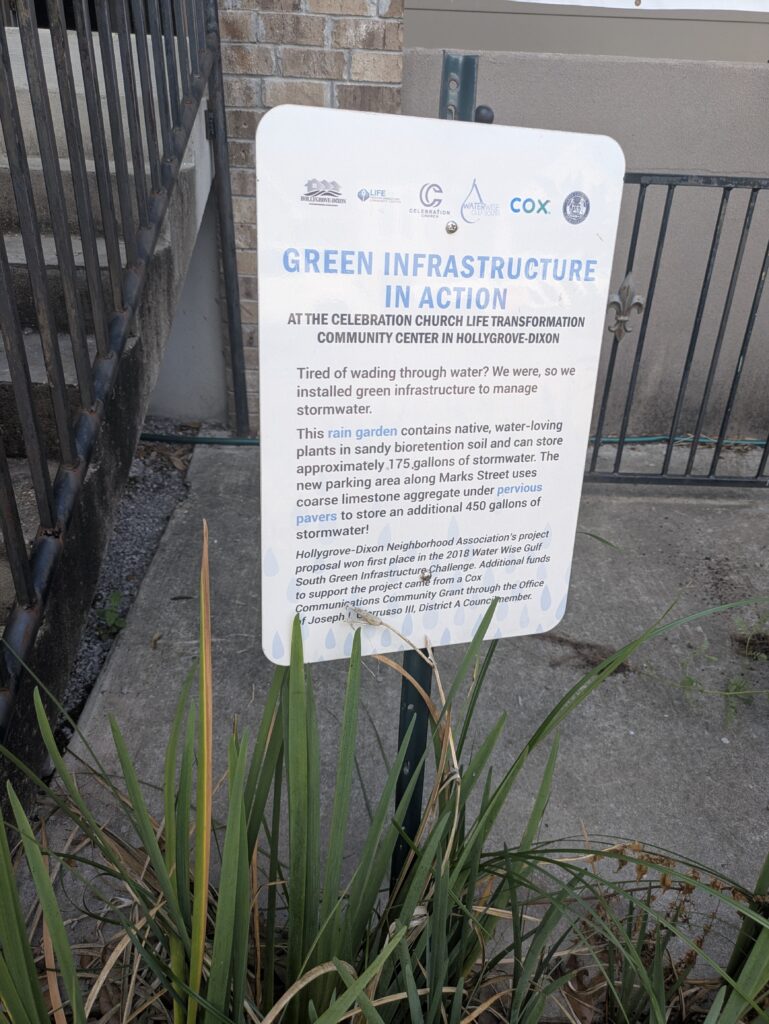
A sign informs passers-by about green flood-control infrastructure 
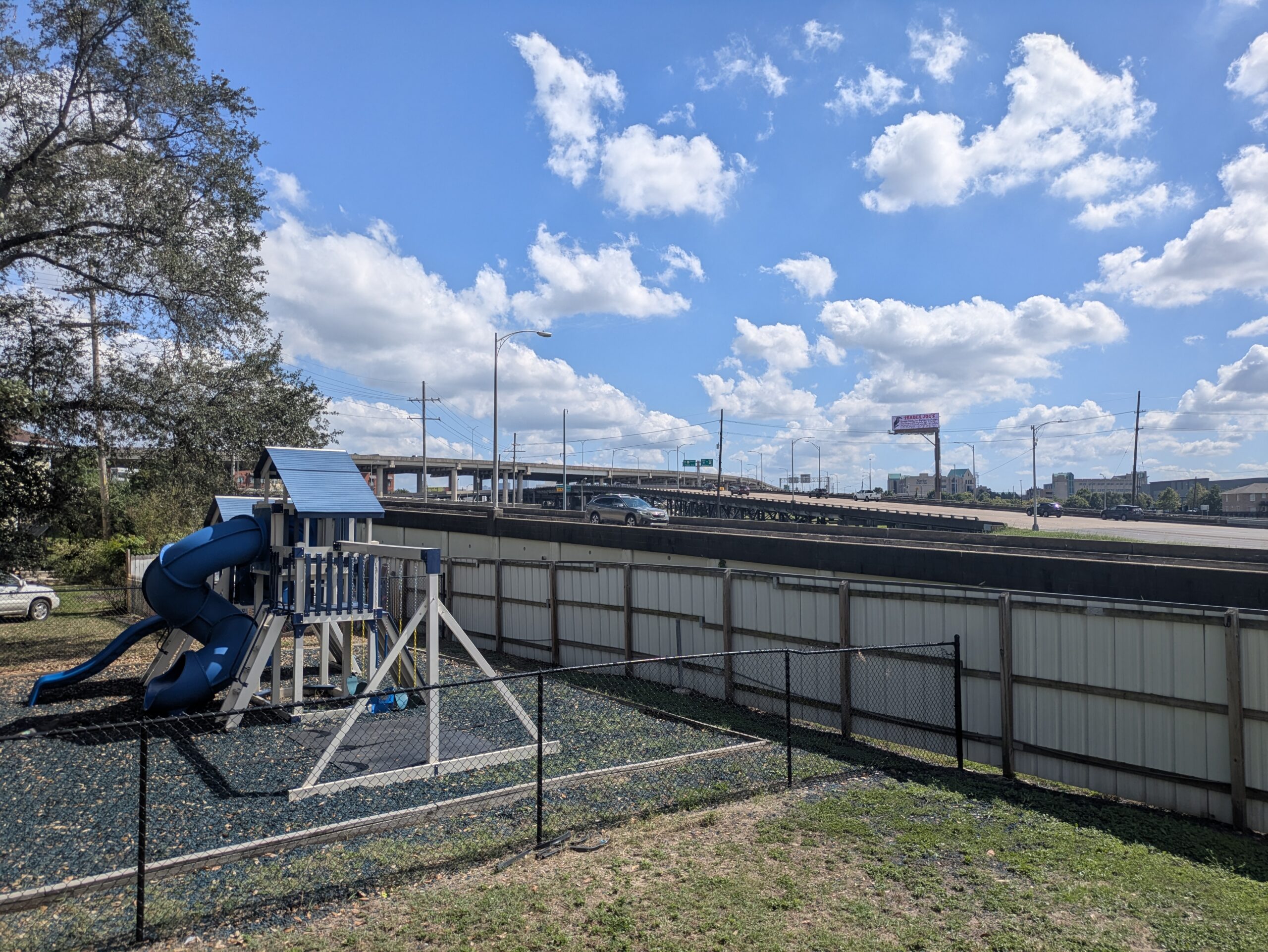
A playground situated close to a major roadway illustrates the neighborhood’s abundant paved surfaces and proximity to highways.


AGU25: Regional Residents on the Global Stage
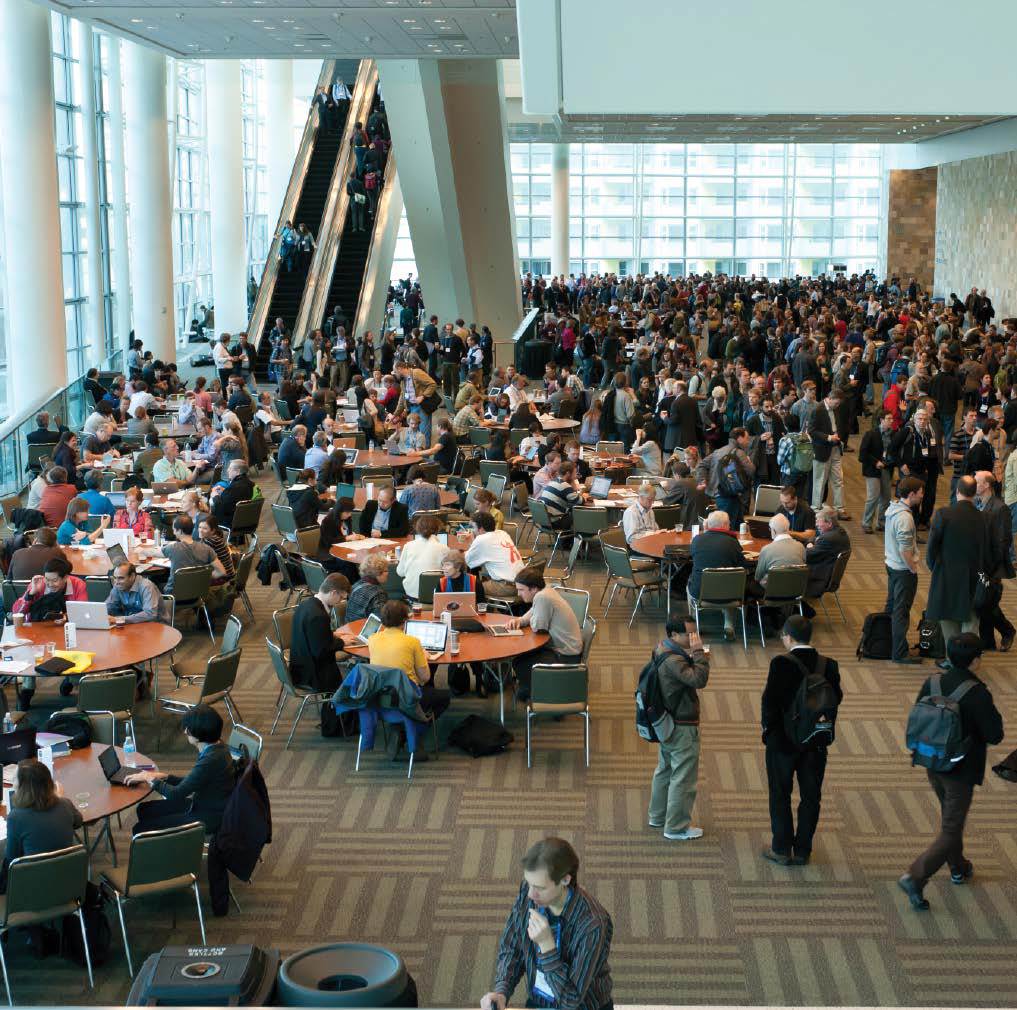
AGU.25, held 11-19 December in New Orleans, brought together over 20,000 leaders, researchers and students in the Earth and space sciences around the theme of “Where Science Connects Us.” The event not only focused attention on the latest scientific discoveries and the benefits these advances bring to communities around the globe, but also provided a global stage to share the vibrant community science activities happening in the region. In presentations, poster sessions, panel discussions, and conversations over heaping plates of jambalaya, project teams spoke about what partnering with scientists has meant for their communities—and their plans for translating the outcomes into tangible actions and impacts.
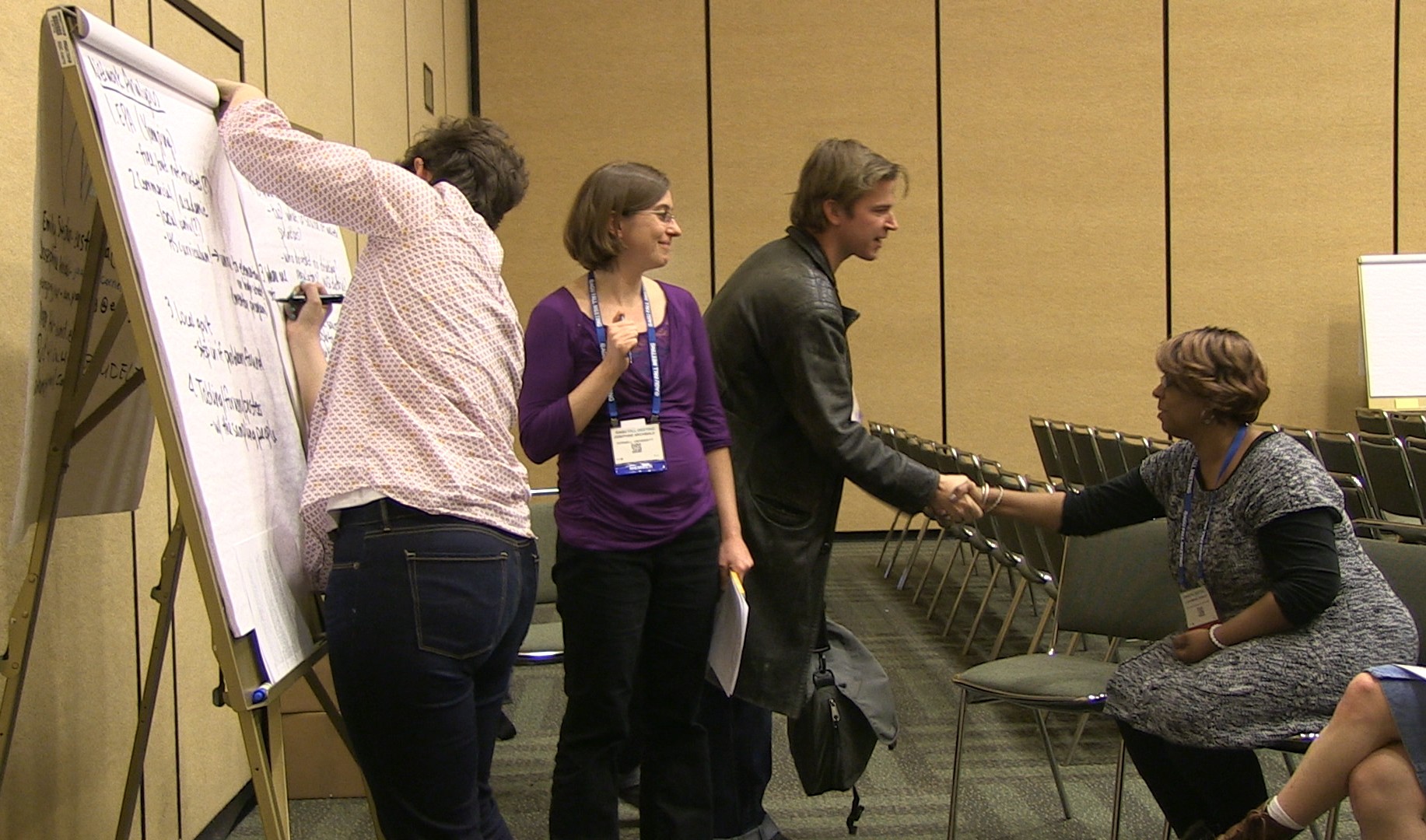
Community Leads from both the Cameron and the Hollygrove Dixon project were among the regional community science leaders who were able to attend and participate in AGU25. This conference provided opportunities for networking, sharing about their work, and learning from others in this space.
The Cameron project team took full advantage of the conference by presenting a poster and hosting a session about their community science project. Their presentations led to robust conversations and engagement, with one scientist saying it was the most important session she had attended at AGU that year. Misha Mayeur also joined a science policy roundtable alongside experts such as a former White House science advisor Kei Koizumi to discuss how scientists can support community engagement with science policy.