2025 Thriving Earth Exchange Year in Review
In 2025, Thriving Earth Exchange continued to demonstrate the power of community-driven science to create tangible, lasting change. Across neighborhoods, watersheds, and regions, our projects gained momentum and visibility—advancing local solutions rooted in trust, collaboration, and shared learning. This year marked a significant milestone with the culmination of the Moore Foundation–supported Community Science Hubs, expanded engagement with Spanish-speaking communities, and the graduation of over 50 projects. At the heart of it all was a robust community of practice and network of contributors dedicated to empowering communities through science.
Welcoming New Projects & People
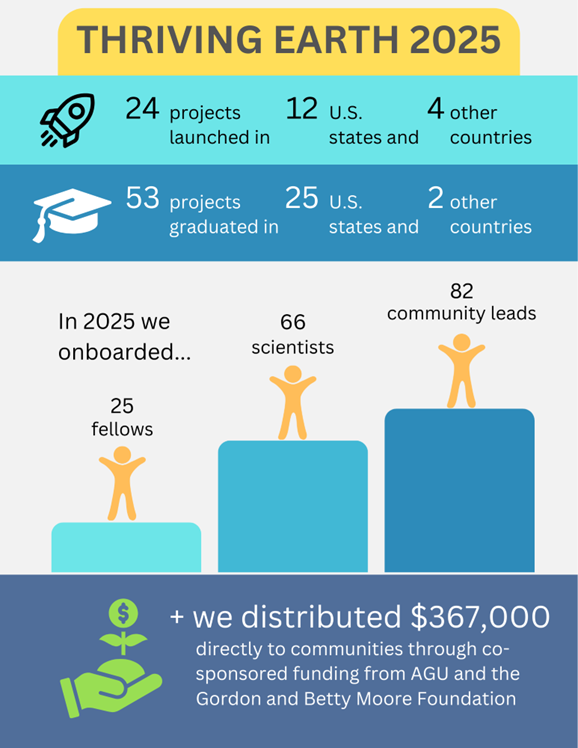
In 2025, Thriving Earth Exchange launched 24 new projects across 12 U.S. states and four countries. Together with ongoing efforts, these projects onboarded 25 Community Science Fellows, 66 scientific partners, and 82 community leads—forming a dynamic, interdisciplinary network dedicated to addressing pressing local challenges through science.
May 2025 cohort
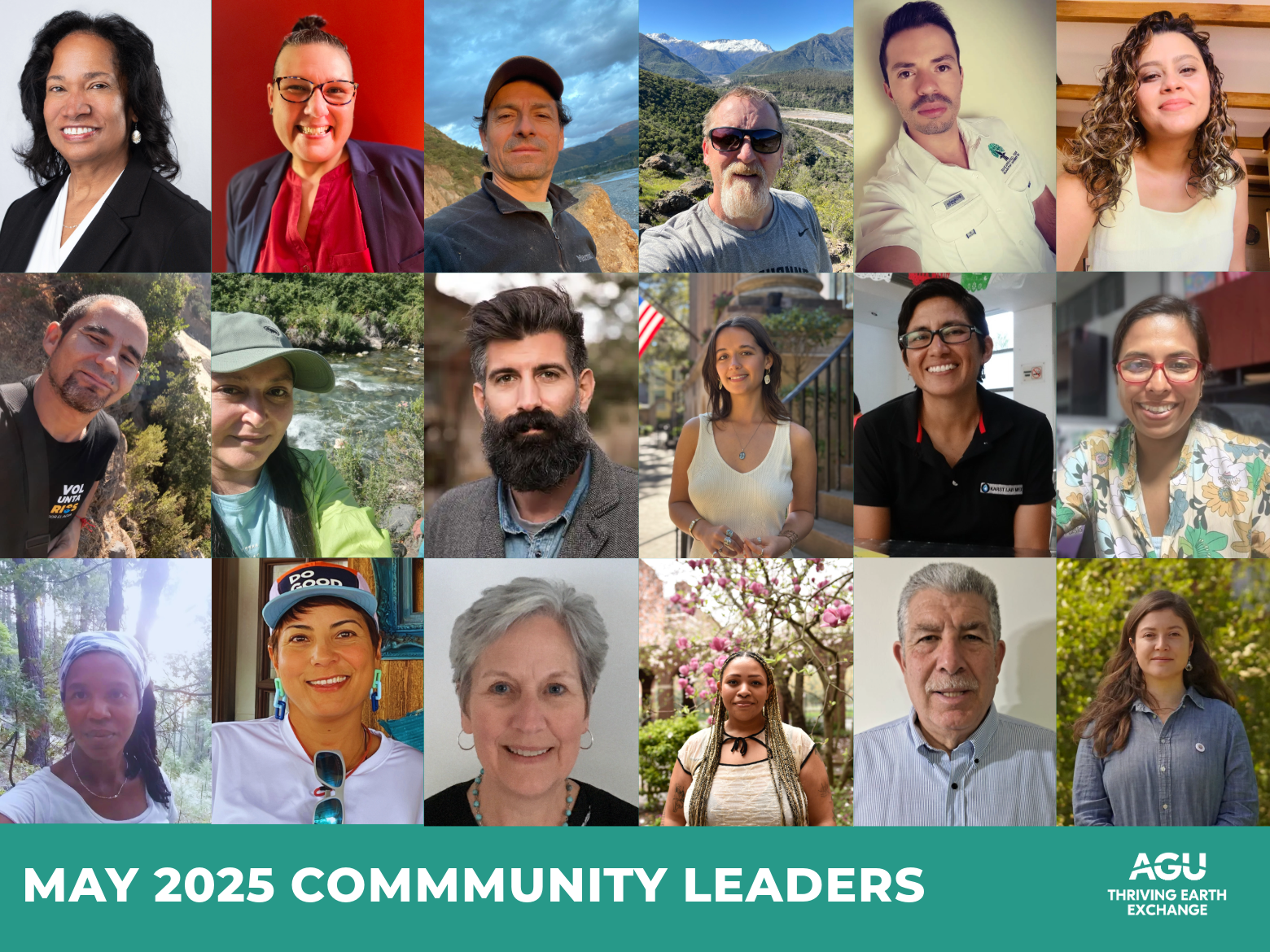
In May, we welcomed Community Science Fellows and Community Leads to spearhead 12 projects in the U.S., Mexico, Chile, and Peru. These teams are addressing a wide range of community priorities, from climate resilience and environmental monitoring to public health and conservation.

- Lake Forest Park, Washington: Spotlighting Local Climate Action with an Interactive Digital Hub to Increase Community Engagement
- Deerfield Beach, Florida: The Zero Waste Lab: Advancing Soil Science Literacy and Composting Initiatives through Community Education
- Saint Paul, Minnesota: Analyzing Air Pollution Data to Understand Community Risk and Inform Local Action
- Bronx, New York: Analyzing soil to create healthy school gardens and restore pollinator habitat
- Charleston, South Carolina: Reimagining Halsey Creek: Nature-Based Strategies for Urban Resilience in Charleston
- Los Queñes, Chile: Strengthening the defense of Los Queñes: Geological risk assessment before the implementation of the La Jaula II reservoir
- Quintero, Chile: Strengthening Community Air Quality Monitoring in Quintero, Chile
- San José de Maipo, Chile (Voluntarios por el Agua)
- Quintana Roo, Mexico: Community Outreach and Participation in Tourist Cenotes
- Superior, Wisconsin: Monitoring Air Quality for a Superior Future
- With additional project development in:
- Waukegan, Illinois
- Palmares, Alajuela, Costa Rica
October 2025 cohort
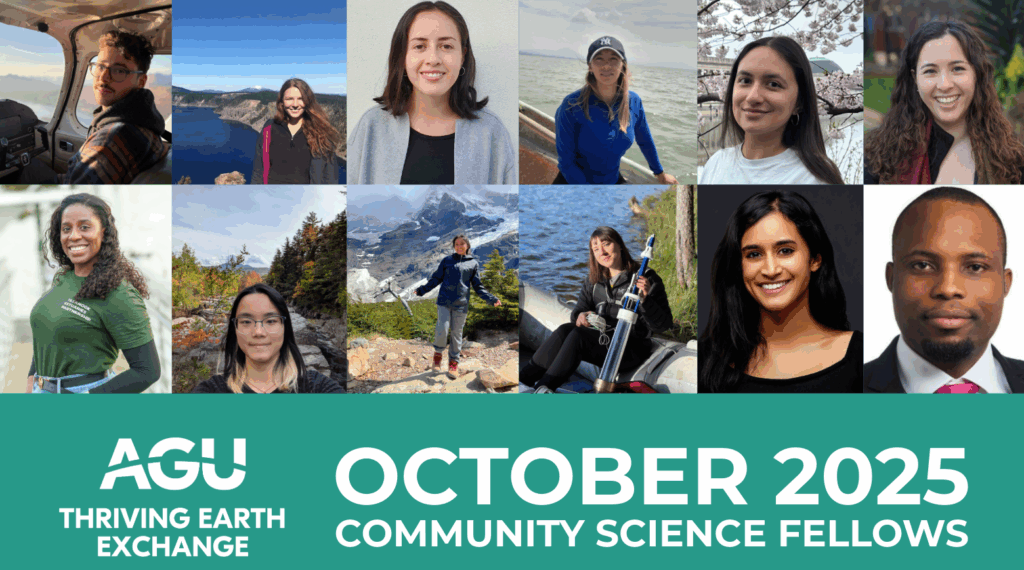
In October, a new cohort of Community Science Fellows and Community Leads began scoping 12 projects in the U.S., Mexico, Chile, and Peru.
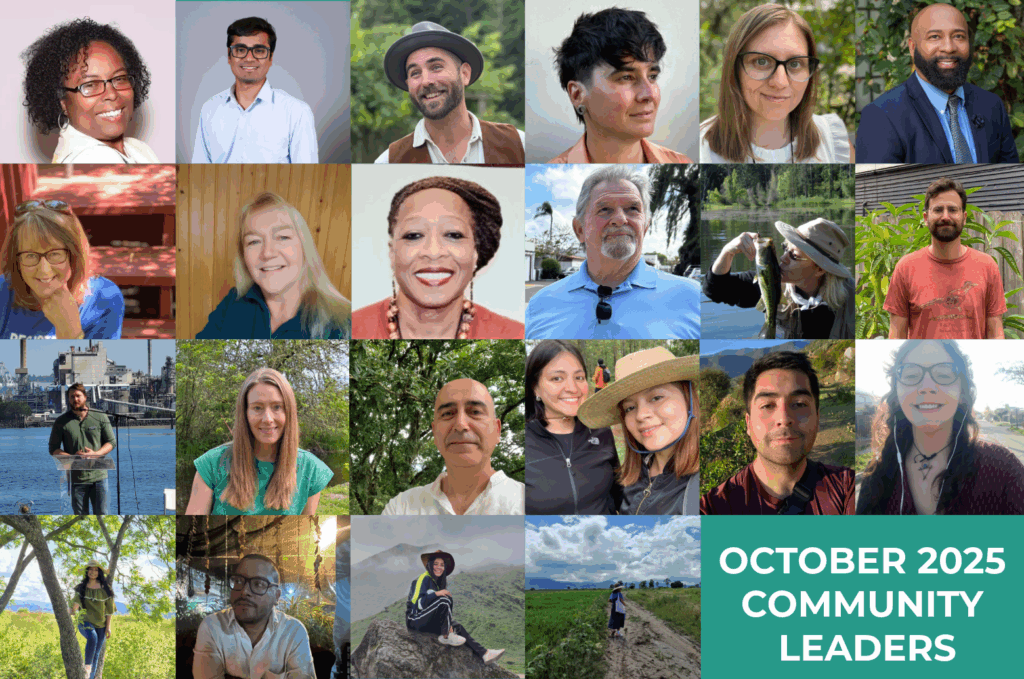
- Boynton Beach, Florida: Hot Zones: Implementing Resilience Hubs (i.e. Cooling Centers) to Combat Extreme Heat in Boynton Beach
- Libby, Montana: Investigating Aquifer and Groundwater Interactions in the Thompson Chain of Lakes, Montana
- Curacaví, Chile: Monitoring the Puangue River: Citizen science to understand and protect our waters
- Lima, Peru: Community-Based Analysis and Monitoring of Water Quality in the Rímac and Chillón Rivers, Lima, Peru
- With additional project development in:
- Baltimore, Maryland
- Port Townsend, Washington
- Dumas (Desha County), Arkansas
- Orange, Vermont
- Martinez, California
- Parkland, Washington
- Loma Alta, Coatepec, México
- Chicoloapan, México
Celebrating Progress
In 2025, our teams graduated 53 remarkable community science projects. These projects spanned diverse geographies and issue areas, including air and water quality monitoring, environmental health, food security, and cultural connection. As we celebrate the completion of each project, our hearts are full knowing that their work helps lay the groundwork for stronger and healthier communities for generations to come.
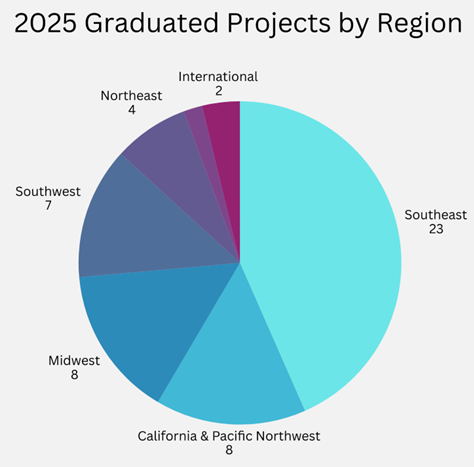
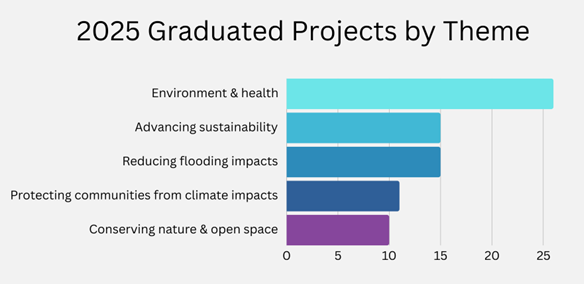
Here are a few highlights from this year:
- In Coatepec, Mexico, more than 50 community members became active volunteers in collecting water quality data, contributing to the generation of valuable local information and empowering agents of change. Upon closing out the project, team members reflected, “The program was exactly what we expected and even more. This project inspired us to give structure and depth to our water monitoring activities, motivating us to continue thanks to the incredible support we received from our volunteer manager and scientist. It set an important precedent for decision-making within our broader conservation project. Most importantly, it allowed us to engage diverse sectors of society — including government, academia, and the private sector — working together toward a shared environmental goal.”
- When community members in Miami, Oklahoma, learned that houses in their area had been built with toxic mining waste material around HVAC ductwork, they were determined to alert residents and help them avoid exposure to toxins. Collecting samples in 11 neighborhoods, the team gathered the data they needed to make a case to government bodies asking for assistance for homeowners to replace dangerous systems. They are also piloting an HVAC replacement project in high-risk homes to illustrate how this can be done. “This is the most important work done in my lifetime,” said one team member. “I can never thank Thriving Earth Exchange enough for providing the guidelines and structure and the CS Fellow that was assigned to this project.”
- In Parrish, Alabama, community members drew upon GIS mapping, drones, and robotic cameras to identify the drivers behind critical drainage issues around a planned community farm. Equipped with new knowledge, the team is now on a path to repair the land and begin building a resilient food system in service to a community facing hunger. “The program far exceeded everything I could have imagined,” said a team member. “It gave u[s] the opportunity to move forward with a project that we were not sure we would ever be able to tackle given the extent of the challenges we were facing.”
Explore our recently-graduated projects to see the incredible work of the communities and the outcomes they’ve generated:
- Assessing Risks Associated with a Proposed Limestone Mine
- Assessing the challenges contract poultry farmers face by leaving the industrial agriculture system
- Assessing the Quality-of-Life Impacts of Municipal Assets, Resources, and Services in Montevallo, AL
- Establishing an indoor air quality monitor library lending program
- Planning the Development of a Community Land Trust on Dynamite Hill
- Utilizing GIS to Restore Water Infrastructure in a Rural Community
- Creating a resource for determining health risks in urban agriculture sites – lessons from our experience at EAT South, Montgomery, AL
- Beneath the Surface: Sustainable Solutions for Culvert Challenges and Water Management in a Community Garden
- Analyzing the environmental impact of illegal dumpsites on the Navajo Reservation
- Explore beyond the shore with underwater robots and the Marine Protected Area (MPA) Collaborative Network
- Monitoring Salton Sea Water Quality
- Activating neighborhood community leaders to increase community participation in composting efforts through a culturally relevant lens
- Assessing Blue Oaks for Climate Impacts and Health to provide Guidance to Central California Land Managers
- Assessing sea level rise and flooding events to promote community engagement and action
- Assessing the impact of new construction on local wetlands on flooding
- Unfolding Our Cosmic Intentions for Earth, People, and the Commons
- RiskAware: Visualizing the environmental health risks in and near Adel, Georgia
- Assessing environmental vulnerabilities in the town of Cicero, IL: an environmental justice map
- Developing a flood susceptibility index to amend the 2021 KIPDA Hazard Mitigation Plan
- What’s in Our Air? Assessing permitted pollution levels to determine collective impact of proposed development
- Understanding the Impact of the Urban Heat Island Effect in the Hollygrove Dixon Neighborhood
- Assessing the Health of Otter Creek Inner Harbor and Potential Pathways to Remediate Problems
- Analyzing upstream inputs to Ore Lake and assessing wetland restoration options for regional flood mitigation
- Analyzing Land Use Changes for Greater Sustainability and Robust Community Support
- Assessing industrial pollution and health impacts in Pascagoula, Mississippi to assist in buyout efforts
- Determining the cost-benefit of residential neighborhood relocation to establish a green infrastructure zone in coastal Mississippi
- Investigating our air
- Development of strategies to prevent, mitigate, and adapt to flooding risks
- Increasing Understanding through Community Outreach in the Duwamish Valley Neighborhood
- Mitigating flooding from the ridge to the valley through strategic planning and demonstration
- Assessing Environmental Benefits of the Mountain Cloud Forest in Coatepec
- Mapping & Attribution of Flood Exposure and its Health Consequences in the Pee Dee River Basin
- Assessing the cumulative groundwater and health impact of facilities in the Lower Richland area of South Carolina
- ROOTED (Restoring Our Own Truth (Through) Education & Demonstration)
- Examining the cumulative impacts of toxic flood waters and disaster vulnerability on the health of communities in Northeast Houston, Texas
- Towards a self-sustaining community: Assessing soil health in the Corpus Christi community
- Understanding and Reducing Risk: Developing impact statements, assessing risk, and determining offsite consequences for a residential neighborhood in close proximity to large, peak shaving propane facilities
- Data Sovereignty, Participatory Action Research, and Transformative Systems Design for the Gulf Coast and Southern Plains of Texas
- Understanding and Mitigating Flooding in Lumberton, NC
- Establishing an Air Quality Monitoring Network to Inform Local Strategies
- Assessing Barriers to Testing Children for Lead
- Assessing the hydrologic regime of the Kiamichi River to support sustainable management
- Portland Harbor Community Resiliency Assessment
- Talent Urban Forest Monitoring Framework
- Assessing the health, environmental, and economic impact of coke production and transition to green steelmaking on Black communities in Clairton, PA
- Identification of Pollutants in the Conodoguinet Creek Watershed: A Recommendation for Protection
- Evaluating Economic Costs & Benefits for Flood Mitigation
- Assessing the impacts of a housing development on community flooding
- Creating a Park County Flood Preparedness and Recovery Resource Hub
- Oíyokiphi Okáwitaya (Pleasant or Happy Place to Gather)
- Creating a Night Sky Friendly Lighting Management Plan for Boulder City, Nevada
- Designing a living shoreline to mitigate flooding and increase community resilience
- Identifying Gaps in Urban Flooding Reporting in Durham
A Culmination for Community Science Hubs
2025 was the final year of our Moore Foundation-supported Community Science Hubs project, bringing an abundance of community science activity led by the four Hub organizations: Capacity Collaborative, Creation Justice Ministries, Nurture Nature Center, and the Kansas State Center for Hazardous Substances Research. Teams convened for three cross-hub meetings throughout the year, providing a forum of exchange to learn from one another as they progressed through projects and program development. A graduation celebration recognized the 56 volunteer scientists, 84 community leaders, and 40 project managers who spearheaded local projects through this program, generating impacts that will better the lives of thousands of people.
The Thriving Earth team was also honored to visit many of our Hub-supported communities throughout the year. We bore witness to a blessing ceremony for a heritage garden being created to serve the Cheyenne and Arapaho tribal communities in Concho, Oklahoma. In Louisiana, we met with residents working to address the challenges of extreme heat and saw firsthand how communities are leading the way to sustain local fisheries, including through creative community engagement at a shrimp festival. In Detroit, we met with community members cultivating environmental stewardship within their church communities and connected with researchers at the University of Michigan, a vital source of many volunteer scientific partners for Thriving Earth Exchange.
Thanks to a generous grant from the Gordon and Betty Moore Foundation, we commissioned filmmakers at Team Three to produce four videos sharing the stories of community science projects. Each video shares the people, stories, and science that make community science so powerful.
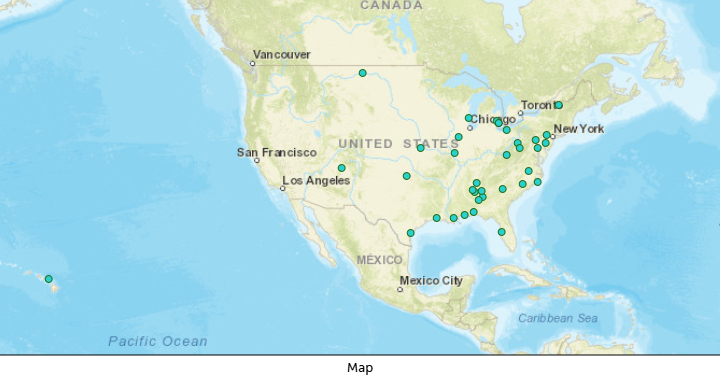
Map of all Community Science Hub projects
Serving Spanish-speaking Communities
Language isn’t just a tool for communication—it’s a foundation for connection, collaboration, and trust. As project coordinator for Spanish-language projects, Marina Cox has brought communities, volunteer fellows, and scientists together across borders and cultures. In total, we have launched 23 Spanish-speaking projects since 2024. The results offer a testament to the potential of science when inclusivity is built into its foundation. Cox’s participation in the Annual Meeting of the Mexican Geophysical Union—alongside team members from four Thriving Earth projects across Latin America—sparked new opportunities to expand community science engagement through regionally-tailored strategies and partnerships.

Cox (center) with Community Leaders Ana Laura Novoa Rodríguez (left) and Eva Guzmán (right), who presented during the session, “Geoscience with and for communities: collaboration, reciprocity, and reflexivity in Earth system research with AGU’s Thriving Earth Exchange program.” 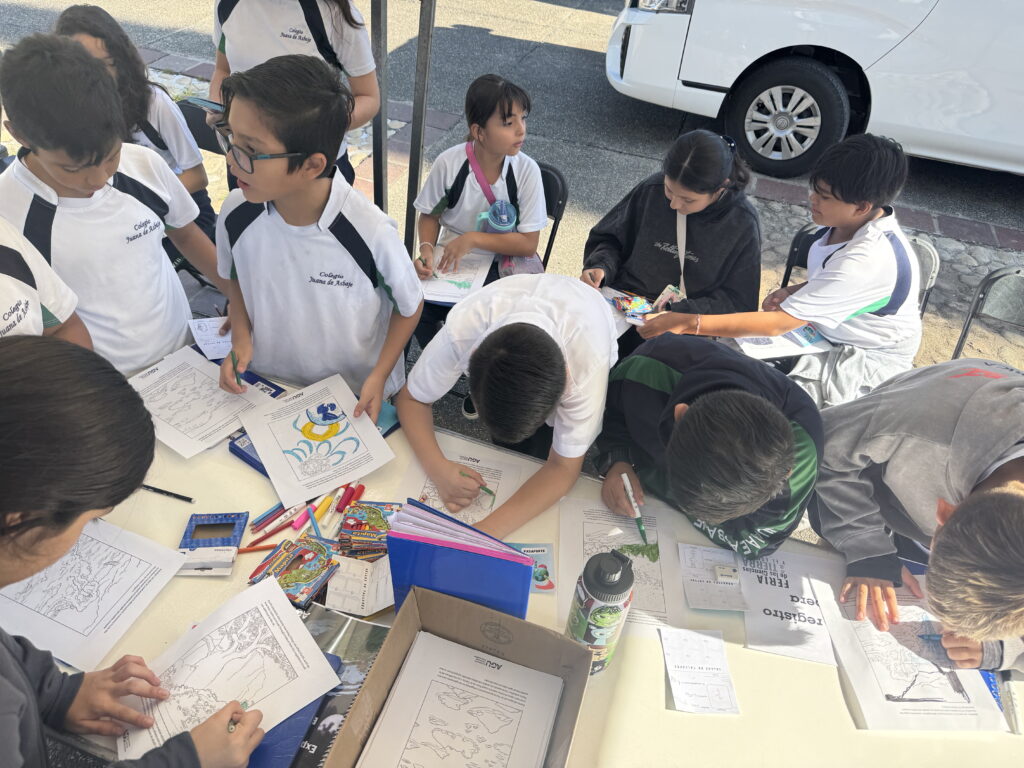
Cox (center) with Dr. Américo González, current Vice President and 2026 President-Elect of the Mexican Geophysical Union (second from right), and other members of the RAUGM 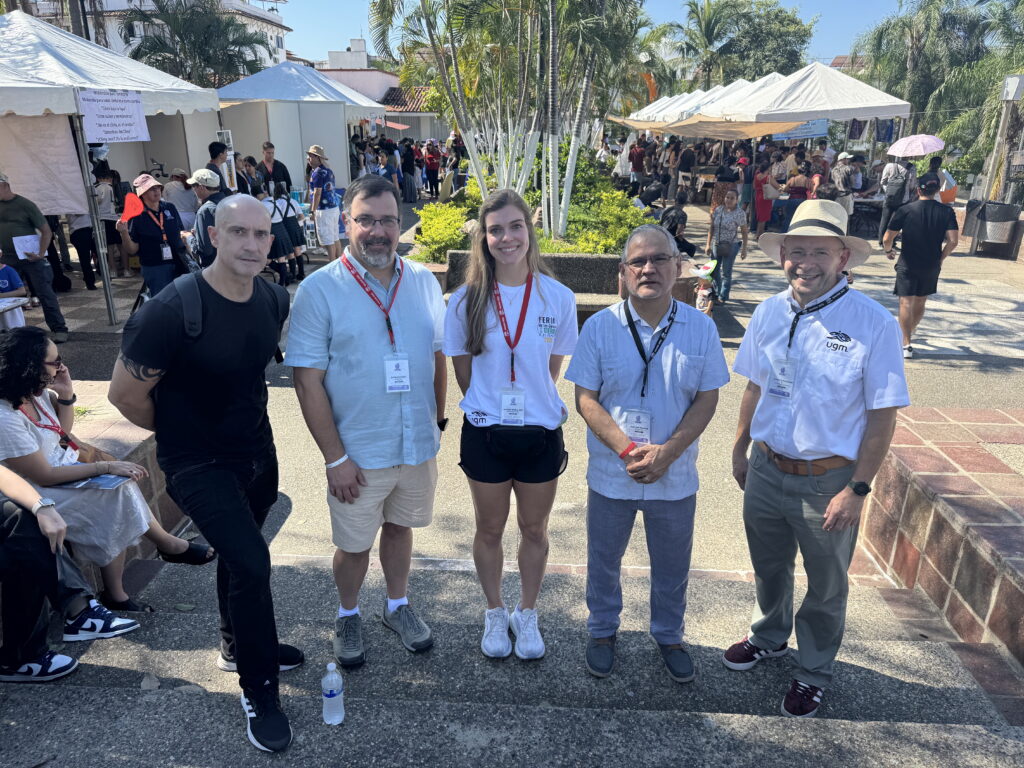
Cox (center) with Dr. Américo González, current Vice President and 2026 President-Elect of the Mexican Geophysical Union (second from right), and other members of the RAUGM organizing committee. Dr. González expressed enthusiasm for expanding collaborations between AGU and the Mexican Geophysical Union around community-led projects.
Elevating Conversations about Community Science
Thriving Earth Exchange shared lessons and best practices through conferences, panels, and media throughout 2025. In addition to leading multiple sessions at AGU25 featuring Thriving Earth staff and teams, our community was honored to join in on powerful conversations at many other conferences this year. Britt Forsberg attended the Tribal Lands and Environment Forum and Advancing Indigenous People in STEM conferences to learn how to better support community science efforts with tribal communities; Shari Rose participated in New York Climate Week along with several community science teams; and Liz Crocker presented with partners from Kansas State University and Community Lead Lisa Renner at the Engagement Scholarship Consortium, among other events.
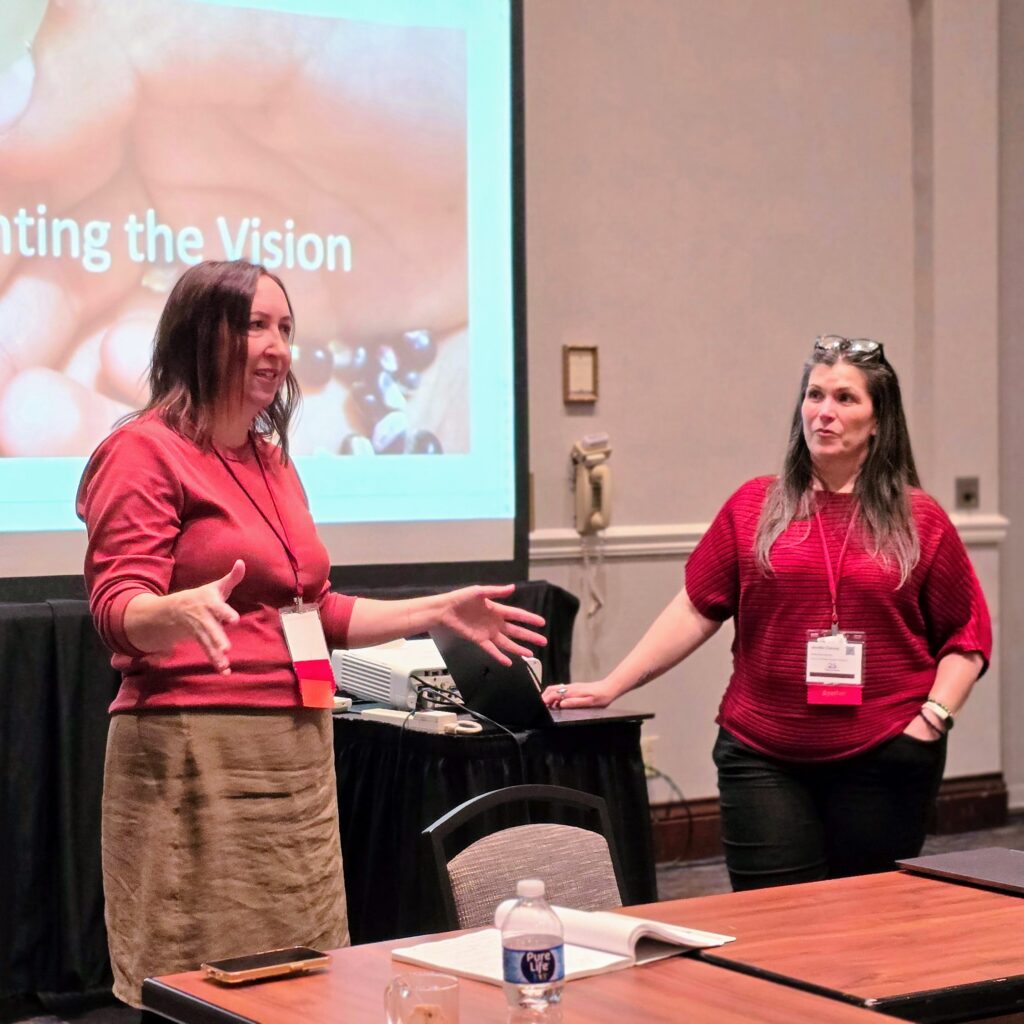
Several of our event activities were even highlighted in articles and podcasts, elevating these exchanges to a broader audience. The Climate Story Project produced several podcast episodes featuring Thriving Earth following New York Climate Week, including one with Community Leads Aracelia Cook and Kathy Rufus and another with Community Lead Elizabeth Blaney. Following Liz Crocker’s participation in an event hosted by the National Academies of Sciences, Engineering, and Medicine, Civic Science Media Lab published an article with highlights of the conversation about building institutional capacity for public engagement with science.
Media coverage of projects and the people behind them can be instrumental in expanding awareness of and participation in community science. This year saw Thriving Earth communities in over a dozen news outlets, including a ProPublica investigation featuring the plight of residents near industrial facilities in Pascagoula, Mississippi. In Wisconsin, the Beloit Gazette celebrated Community Lead Brittany Keyes’ tireless work to serve her community, while The Land highlighted Robin Brown’s mission to address lead poisoning in Cleveland, Ohio. Community Science Fellow Agnes Pasco Conaty shared her experience in the Laurel Independent, encouraging others to get involved in serving their community with science.
Fostering a Community of Practice
We continue to seek opportunities to better engage and empower the people who make community science happen. This year, we developed a Community Leader Guidebook that has become an indispensable resource for teams and revisited our Core Values Statement, clarifying and strengthening the commitments team members make when they join a Thriving Earth project. We also enhanced our outreach to prospective and current members of our network with webinars on getting involved with community science, how to become a volunteer scientist, and how to publish community-focused work with AGU, in addition to a relaunched website for improved accessibility. We also fostered the expertise of our own team members through professional development activities. Britt Forsberg was invited to join a training workshop of the Transdisciplinary Training Collaboratory after a competitive selection process, preparing her to share lessons on topics such as co-design, co-production, and reflexivity with the communities, scientists, and project managers who make up our community science teams. Amanda Shores attended the Annual Meeting of the Association of American Geographers to learn about the latest GIS techniques and also earned her Monitoring and Evaluation certification with the ITC-International Labour Union.
Celebrating Our Staff & Network
Liz Crocker’s promotion to Director of Thriving Earth Exchange marked an exciting new chapter for the program this year, and we celebrate her leadership as well as the contributions and continued professional growth of the whole Thriving Earth team.
As we look toward 2026, we are deeply grateful to the community members, scientists, fellows, partners, and funders who make this work possible. Together, we will continue to advance science that is inclusive, impactful, and grounded in community priorities.
Special thanks to our collaborators and funders who help make all of this happen